Introduction
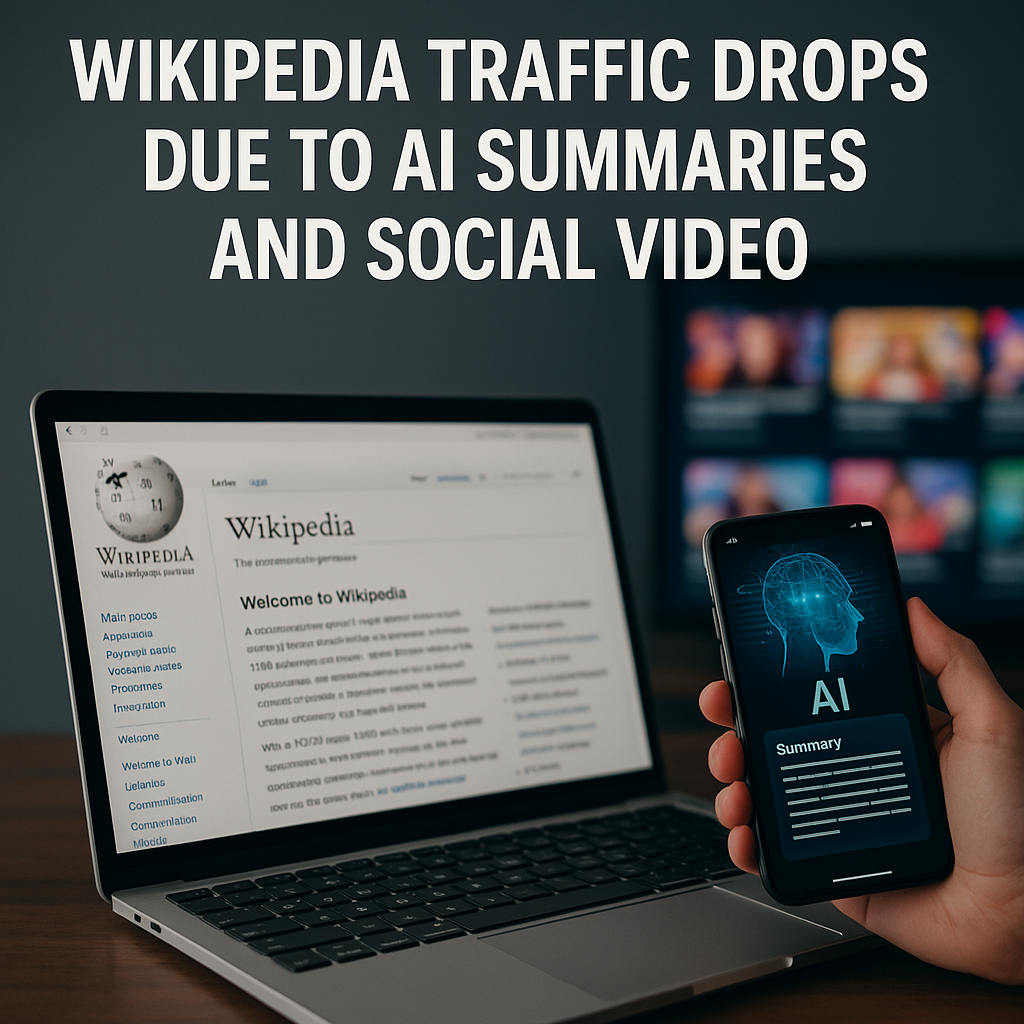
Wikipedia — the world’s free encyclopedia and a backbone of internet knowledge — is seeing a measurable decline in traffic as major search engines and AI-driven services surface answers directly in results, and short-form social video captures user attention. The Wikimedia Foundation and editors have pointed to AI-generated search summaries and the rise of social video platforms as key drivers reducing direct visits to Wikipedia pages. The shift has implications for technology companies, startups building on public knowledge, blockchain-based knowledge projects, and the funding landscape for civic platforms.
How AI summaries and social video change discovery
Search engines and large language model (LLM) products increasingly provide users with concise, synthesized answers in the search interface or chat windows. These AI summaries often rely on aggregated sources — including public-domain and Creative Commons content — and can satisfy queries without prompting users to click through to source pages. At the same time, short-form video platforms such as TikTok, Instagram Reels and YouTube Shorts have shifted attention away from traditional search and reading formats, especially among younger demographics.
For Wikipedia, which has long benefited from search-engine-driven referrals, that pattern reduces pageviews and direct engagement. While the encyclopedia remains a crucial underlying dataset for many AI systems, being used as a reference rather than a destination changes how value is captured across the industry.
Implications for technology and startups
Startups that rely on Wikipedia traffic for user acquisition — or on public pages for thought leadership and community-building — must rethink discovery strategies. Companies building consumer-facing experiences around knowledge discovery are racing to adapt by embedding multimedia, creating short-form explainers, or optimizing content for AI consumption. Meanwhile, infrastructure startups are emerging to provide verified datasets, structured knowledge graphs, and API access optimized for LLM training and inference.
Investors are increasingly targeting startups that can bridge the gap between authoritative sources and AI services: enterprises that provide provenance, data licensing, and tooling to make public knowledge machine-readable and verifiable. This creates new funding opportunities but also raises business-model questions about monetizing open content without compromising accessibility.
Blockchain, decentralization and trust
The traffic shift has spurred interest in decentralized knowledge initiatives and blockchain-based provenance. Advocates argue that immutable ledgers, decentralized identifiers, and token incentives could help track content provenance, reward contributors, and provide tamper-evident audit trails for source material used by AI models. Several early-stage projects and research efforts are exploring how Web3 primitives can be combined with open knowledge to create alternative reward models and reduce dependency on centralized platforms.
However, blockchain solutions face scalability, UX, and governance hurdles. They are more likely to complement — rather than replace — established commons like Wikipedia unless they can demonstrate clear usability and funding advantages.
Geopolitics and regulation
The migration of knowledge access into AI interfaces raises geopolitical and regulatory questions. Governments are increasingly attentive to how AI systems surface information, attribute sources, and shape public understanding. Policies focused on transparency, content provenance, and platform responsibility could influence how search engines and AI services integrate third-party knowledge and how they compensate or partner with source communities.
Conclusion
Wikipedia’s traffic decline driven by AI search summaries and social video is a bellwether for broader shifts in how people discover information online. For the tech ecosystem — from startups and VCs to blockchain innovators and policymakers — the change presents both a challenge and an opportunity: to build new discovery experiences, create sustainable funding models for public knowledge, and ensure that the authoritative sources that underpin AI remain accurate, accessible and fairly credited.
About the Author