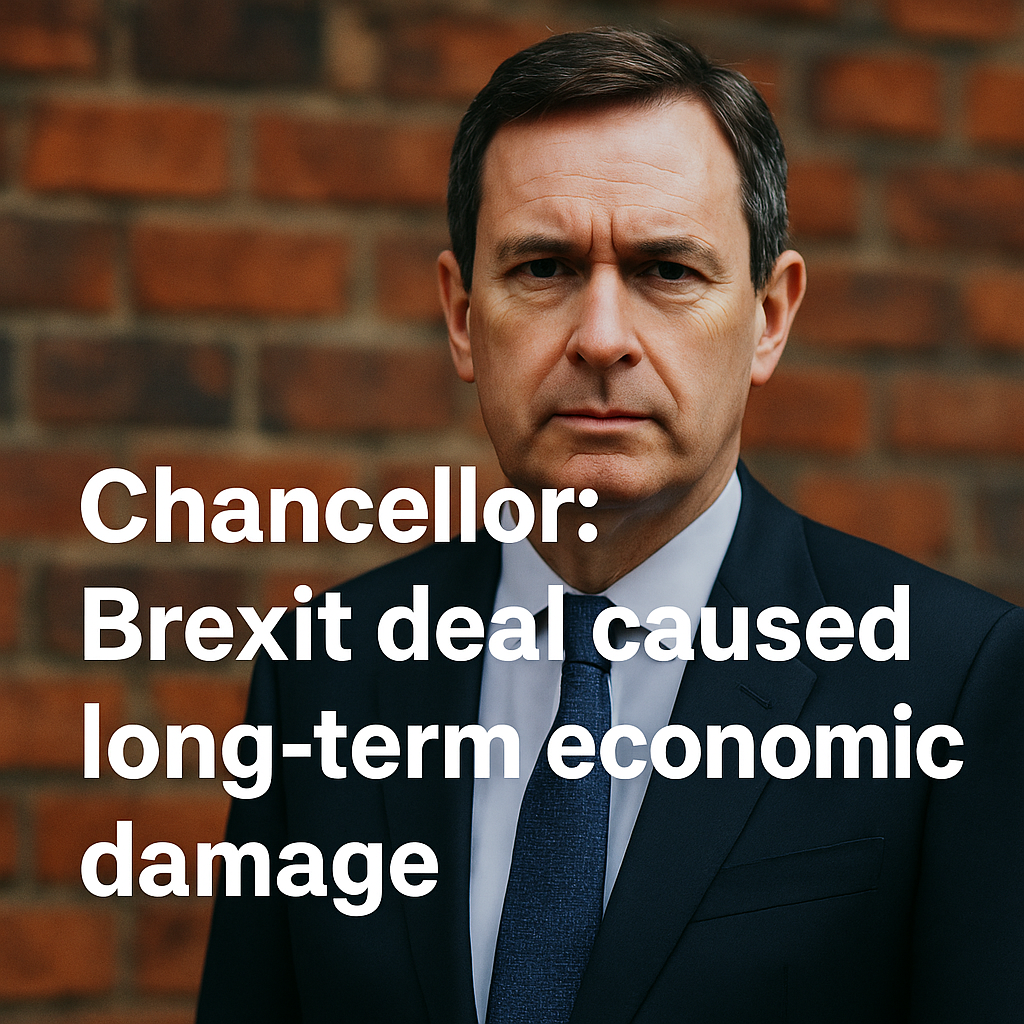
In a stark assessment that has reverberated across Westminster and the City, the Chancellor has said the Brexit deal has caused long-term damage to the UK economy. Framed as a candid appraisal of post‑exit trade arrangements and regulatory divergence, the statement has renewed debate over how the UK should balance sovereignty with economic competitiveness—particularly in technology, AI, blockchain and startup ecosystems that rely on global talent and capital.
Economists and institutional analysts have long warned that leaving the single market and customs union would alter trade flows, investment patterns and supply chains. The Chancellor’s comments underscore those warnings and bring them into sharper political focus. While the precise size of the economic loss remains a matter for technical debate, the implications for high‑growth sectors are already apparent: reduced access to EU talent pools, new friction for cross‑border services, and emerging regulatory fragmentation all complicate growth strategies for tech firms.
Technology and AI companies feel the impact in multiple ways. Talent mobility constraints and visa complexity have made recruiting EU researchers and engineers more challenging for UK AI labs, while limits on pan‑European data sharing and collaborative grants have reduced participation in some large research consortia. The UK’s strengths in AI research and startups remain robust, but long‑term advantage depends on policy that keeps funding, talent and regulatory clarity flowing.
Blockchain and fintech startups have faced specific consequences. Loss of passporting rights for financial services has encouraged some firms and talent to establish operations in EU hubs to retain market access, while regulatory divergence on crypto and digital assets has created a patchwork of standards that founders must navigate. At the same time, the uncertainty has prompted accelerated innovation: some blockchain teams are exploring tokenized fundraising and cross‑jurisdictional strategies to diversify investor bases.
Venture capital and funding patterns have shifted since the referendum and subsequent deal. While London remains an influential tech hub with substantial investor interest, fundraising cycles have seen more due diligence on cross‑border risk, and some later‑stage capital has flowed to EU cities perceived as more seamless gateways to the single market. The government has responded with a mix of incentives—tax credits for R&D, targeted grants, and initiatives to attract international talent—but many founders and VCs say more stability and easier access to EU markets would materially boost investment confidence.
Geopolitically, the fallout has pushed the UK to diversify trade and security relationships beyond Europe. Efforts to deepen ties with the United States, join Indo‑Pacific trade frameworks, and strike bilateral tech and research agreements are part of a broader strategy to mitigate economic isolation. Those moves can create new opportunities for UK startups seeking non‑EU markets, but they also require time and negotiation to deliver the scale that EU access provided.
Policy choices now will matter for whether the damage is permanent or reversible. For the tech sector, that means prioritizing visa reform for skilled workers, streamlined R&D collaboration mechanisms with European partners, and clear regulatory roadmaps for emerging technologies such as AI and blockchain. For capital markets, easing cross‑border investing frictions and expanding public‑private funds aimed at scaling deep tech companies could help restore investor appetite.
Conclusion: The Chancellor’s assessment is a blunt reminder that political decisions carry long economic consequences. The UK still possesses world‑class research institutions, vibrant startup communities, and strong investor networks. But turning those assets into sustained growth requires pragmatic policy that addresses talent, funding, and regulatory certainty—especially in AI, blockchain and other cutting‑edge sectors that will define competitiveness in the decades ahead.
About the Author