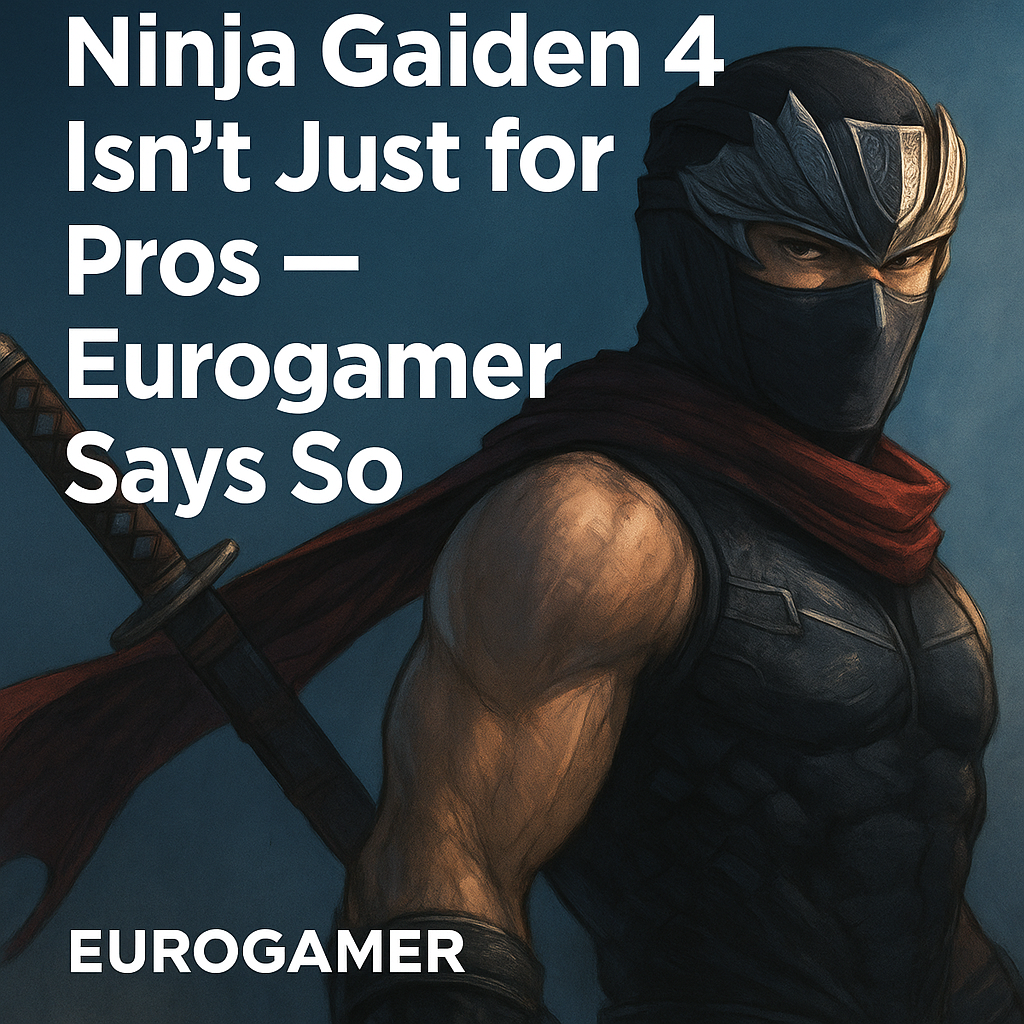
Eurogamer’s recent piece headlined “Don’t let anyone tell you you’re not skilled enough to enjoy Ninja Gaiden 4 – I’m near-incompetent yet having an absolute blast with Xbox’s hack ‘n’ slash” is more than a personal review — it’s a window into how modern game development, platform strategy and emerging tech are widening who gets to enjoy traditionally brutal franchises.
The tidy takeaway is simple: accessibility sells. But the industry forces behind that message are decidedly complex. Microsoft’s Xbox division has pushed hard on breadth — from Game Pass distribution to cloud streaming — and publishers are increasingly pairing difficulty tuning with AI-powered systems to make action titles playable without diluting challenge for veteran players.
Eurogamer’s account emphasizes the design shifts that let a self-described near-incompetent player still have an “absolute blast.” Those shifts increasingly rely on technology: machine learning for dynamic difficulty, procedural generation to tailor encounters, and telemetry-driven balancing that tweaks enemy behavior in near real time. These features aren’t just niceties; they reflect how studios and investors are prioritizing engagement metrics that matter for subscription services like Game Pass, where retention directly drives revenue.
Startups are taking notice. Venture funding into gaming-focused AI tools — from automated QA to adaptive difficulty engines — has grown as publishers look to accelerate development and reduce post-launch tuning costs. Tools that previously required large teams can now be leased as middleware, lowering the barrier for mid-size studios to adopt advanced accessibility features.
Blockchain and web3 remain more contested. While early hype around NFTs in gaming cooled, blockchain’s promise of verifiable digital ownership and cross-game economies still attracts niche studio activity and selective enterprise experiments. For mainstream console releases such as Ninja Gaiden 4, big platform holders remain cautious: the focus for many players and publishers is on inclusive gameplay and smooth monetization models that align with regulatory scrutiny and user expectations.
Geopolitics and supply chains also play a role. Microsoft’s big moves over the past few years — including the high-profile acquisition activity that reshaped console competition — are part of a strategic acceleration toward services and IP control. Meanwhile, chip supply and export controls tied to US-China tensions continue to shape hardware rollout and cloud infrastructure investments, affecting how easily players around the world can stream graphically demanding titles.
From a business perspective, Eurogamer’s article signals a valuable marketing and development insight: accessibility can be a competitive differentiator. Xbox’s platform-level investments in cloud gaming and subscription models create incentives for developers to broaden their audiences. That means studios, investors and platform holders may prioritize features that increase discoverability and long-term engagement over gatekeeping high difficulty as a badge of honor.
There are trade-offs. Maintaining the core identity of a franchise like Ninja Gaiden — famed for its precision combat — while offering gentler entry points is an art. But technological advances make it feasible: AI-driven practice modes, optional assist systems, and analytics-informed tutorial design can preserve depth for hardcore players while lowering the activation energy for newcomers.
In short, Eurogamer’s takeaway is emblematic of a broader industry pivot. The convergence of AI, cloud platforms, and renewed VC interest in gaming tools is creating an ecosystem where traditionally uncompromising genres can reach wider audiences without losing their soul. For players who feared they weren’t skilled enough — and for the businesses building games — that’s good news.
Whether Ninja Gaiden 4 becomes a model for other franchises remains to be seen, but the lesson is clear: modern tech and funding trends are expanding who gets to play, how they play, and how the business of games grows around inclusivity.
About the Author