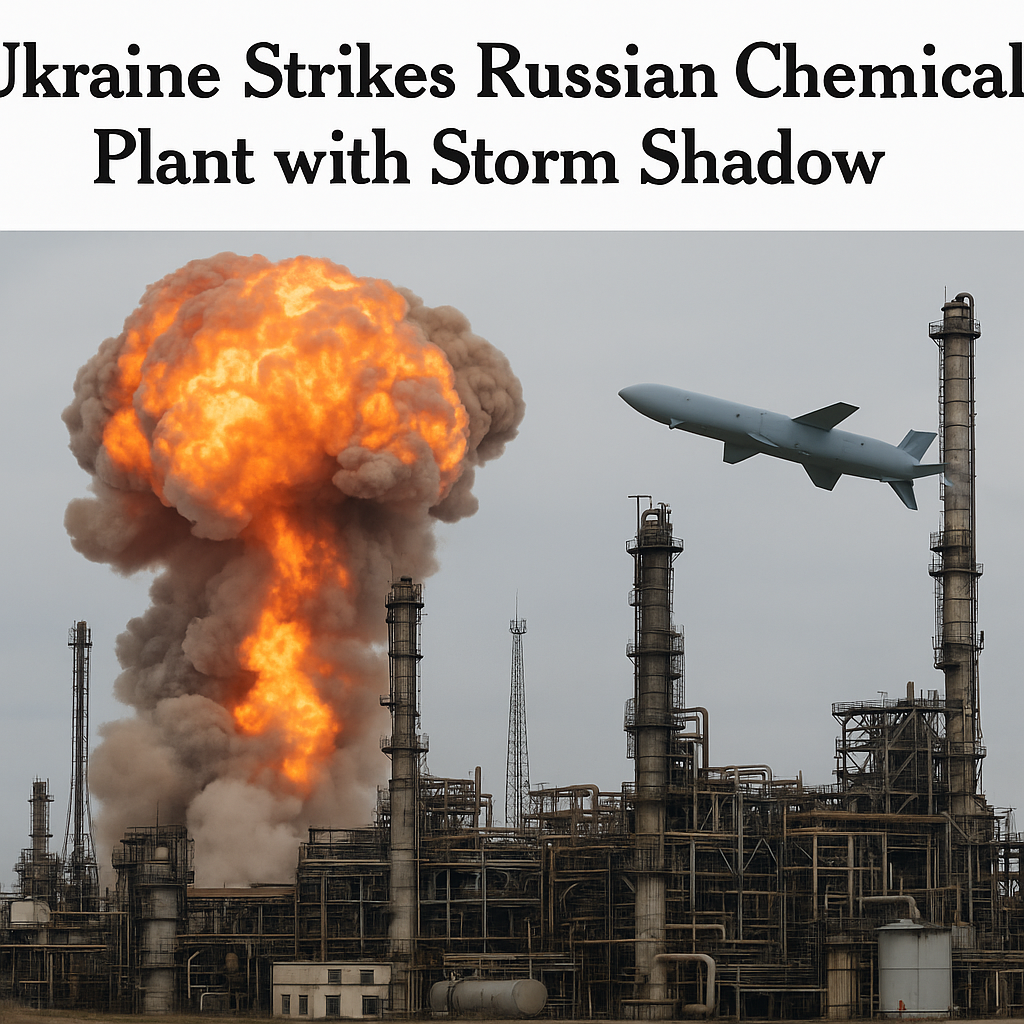
Kyiv has reported a strike on a Russian chemical plant using UK-supplied Storm Shadow cruise missiles, a development that mixes high-end military technology with growing geopolitical and economic ripple effects. While independent verification is evolving, Ukrainian officials and Western commentators say precision long-range munitions enabled the operation, raising questions about escalation, industrial risk, and the role of advanced tech in modern conflicts.
Storm Shadow: the technology that matters
Storm Shadow, manufactured by European defence firm MBDA, is a long-range, air-launched cruise missile designed for precision strikes against high-value, hardened targets. The weapon employs inertial navigation augmented by satellite positioning and terrain-referenced navigation to fly low and evade air defenses. Its combination of stand-off range and guidance accuracy has made it a preferred choice for forces aiming to degrade strategic infrastructure without sending manned platforms deep into contested airspace.
Beyond propulsion and guidance, the strike highlights growing intersections between modern weapons and software. AI-assisted imagery analysis, automated targeting workflows, and real-time intelligence fusion have tightened kill chains, allowing militaries to identify critical nodes like chemical plants with greater speed and confidence. Open-source intelligence and commercial satellite data have also accelerated independent verification, with analysts using machine learning tools to assess damage and timing.
Geopolitical and industrial fallout
Attacks on chemical facilities carry heightened risk, including potential hazardous releases and humanitarian consequences. For Kyiv, striking industrial sites inside Russia signals a strategic attempt to disrupt military logistics and materiel production. For Moscow, the attack—if confirmed—represents a clear escalation and will likely drive a diplomatic and propaganda response, including calls for expanded sanctions and military countermeasures.
Economically, damage to chemical production can ripple through supply chains that underpin agriculture, pharmaceuticals and specialty materials. Businesses tied to affected regions may see contract interruptions, insurance claims, and compliance challenges as sanctions and export controls respond to the evolving conflict.
Startups, funding, and the defense tech market
The conflict has accelerated investor interest in dual-use technologies: defense-focused AI, satellite analytics, resilient communications, and autonomous systems. Startups building AI models for imagery analysis, blockchain-based supply chain provenance for hazardous materials, and secure logistics platforms have gained traction among institutional and strategic investors. Analysts expect continued contract inflows for established defence primes like MBDA and an uptick in venture capital for niche firms that can demonstrate rapid, field-relevant innovation.
Blockchain is also emerging as a tool for traceability in volatile supply chains. Chemical firms and logistics startups are piloting distributed ledgers to certify origin, custody and compliance, reducing risk when traditional trade lanes are disrupted. Meanwhile, AI-driven safety monitoring tools are being deployed to predict hazardous releases and prioritize emergency response where infrastructure is damaged.
What comes next
Any confirmed use of UK-made Storm Shadow missiles against a Russian chemical plant will have layered consequences: military, humanitarian, economic, and technological. For policymakers, the event underscores the need for clearer norms around strikes on industrial facilities and enhanced safeguards to protect civilians and critical supply chains. For the tech and startup community, demand for resilient, ethical, and verifiable dual-use solutions will likely intensify.
As independent verification continues and governments respond, observers should watch procurement announcements, MBDA and defence sector contract flows, and funding rounds for startups in AI, space-based observation, and supply chain integrity. Those signals will indicate how defence technology, private capital, and geopolitics converge in the next phase of the conflict.
About the Author