Lede: Who, What, When, Where, Why
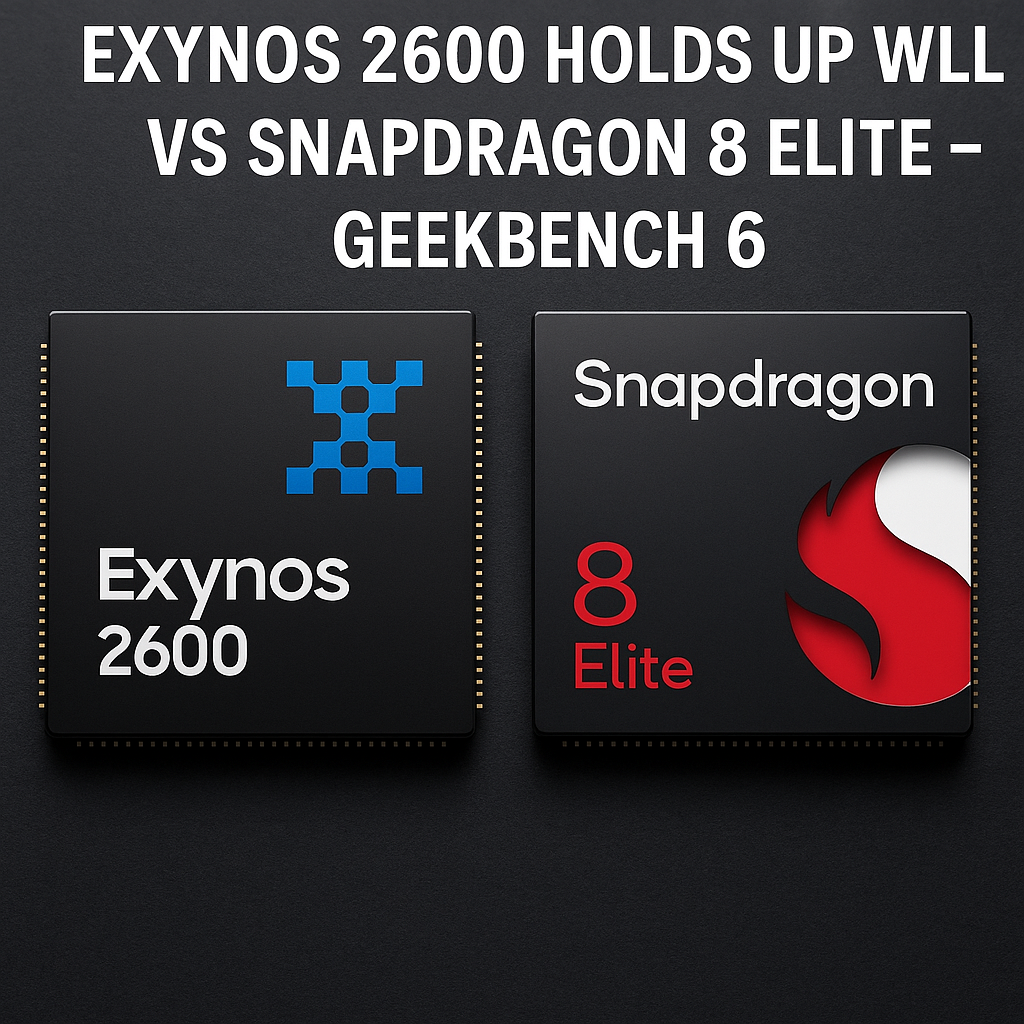
On October 29, 2025, Wccftech published a set of leaked Geekbench 6 results that cast Samsung’s upcoming Exynos 2600 in a stronger light than many expected. The tests pit the Exynos 2600 against Qualcomm’s flagship Snapdragon 8 Elite Gen 5, and while Qualcomm still leads, the gap is notably smaller — a development that could influence OEM sourcing and phone performance expectations heading into 2026.
What the Geekbench 6 Leak Shows
According to the Wccftech coverage, the Exynos 2600 posts single-core and multi-core scores that sit within a single-digit to low double-digit percentage of the Snapdragon 8 Elite Gen 5. In practical terms, the report suggests the Exynos 2600 trails the Snapdragon by roughly 8% on single-core workloads and about 11% on multi-core tasks in these specific Geekbench 6 runs. Those margins are tight enough to make real-world differences less obvious for many typical smartphone users.
Technical Context and Named Players
Geekbench 6 remains a widely used cross-platform benchmark developed by Primate Labs. The comparison involves two major industry players: Samsung (Exynos 2600) and Qualcomm (Snapdragon 8 Elite Gen 5). Wccftech’s report highlights benchmark runs executed on developer or engineering devices rather than final retail hardware, a distinction that matters because software, thermal tuning and power profiles can change before launch.
Why the Numbers Matter
Benchmarks like Geekbench offer a controlled way to compare raw CPU performance, but they don’t tell the full story around GPU performance, AI inference, modem capabilities or battery life. Still, the reported 8%–11% performance delta is meaningful: it indicates Exynos 2600 is competitive enough that Samsung could close regional performance gaps versus Qualcomm-powered devices without sacrificing cost or supply-chain flexibility.
Market Implications
If these results hold when retail firmware is applied, Samsung and other OEMs could have more room to deploy Exynos-powered flagships in more markets. That has strategic implications for Qualcomm, which has long maintained a performance lead in flagship SoCs. OEMs such as Samsung, Xiaomi and OnePlus historically weigh raw performance alongside modem integration, software support and thermals — and a narrower gap could tip decisions back toward in-house Exynos adoption in some regions.
Limitations and Caveats
Wccftech’s story is based on a leaked Geekbench 6 test. Leaks are useful early indicators but are not definitive. Hardware stepping, OS-level scheduler changes, driver updates, and thermal management all materially affect final device performance. Primate Labs’ Geekbench 6 focuses on CPU throughput; it does not measure GPU sustained rates, AI accelerator throughput under long workloads, or real-world application responsiveness under mixed loads.
Analysis: Why Exynos 2600 Is More Competitive
Industry observers point to several factors that could explain the stronger-than-expected Exynos showing: refined microarchitecture tuning, improved binning and power-delivery optimizations, and closer software collaboration between Samsung’s silicon team and its Android firmware group. Even absent formal statements from Samsung or Qualcomm, the trend underscores the growing maturity of non-Qualcomm flagship silicon.
Expert Insight & Future Outlook
While we have no official quotes tied to this specific leak, analysts frequently emphasize that benchmark parity is only one part of a package that matters to consumers. Moving forward, expect follow-up coverage showing GPU tests, sustained thermal performance, and battery drain comparisons. If Exynos 2600 consistently narrows the gap on those fronts as well, Samsung could regain more control over flagship hardware differentiation in 2026.
For now, Wccftech’s October 29, 2025 Geekbench 6 disclosure is an early but notable sign that competition at the top of the mobile SoC market remains fierce — and that Qualcomm’s lead is no longer guaranteed, particularly as OEMs and carriers weigh total platform value beyond single benchmark headlines.
About the Author