Who, what, when, where and why
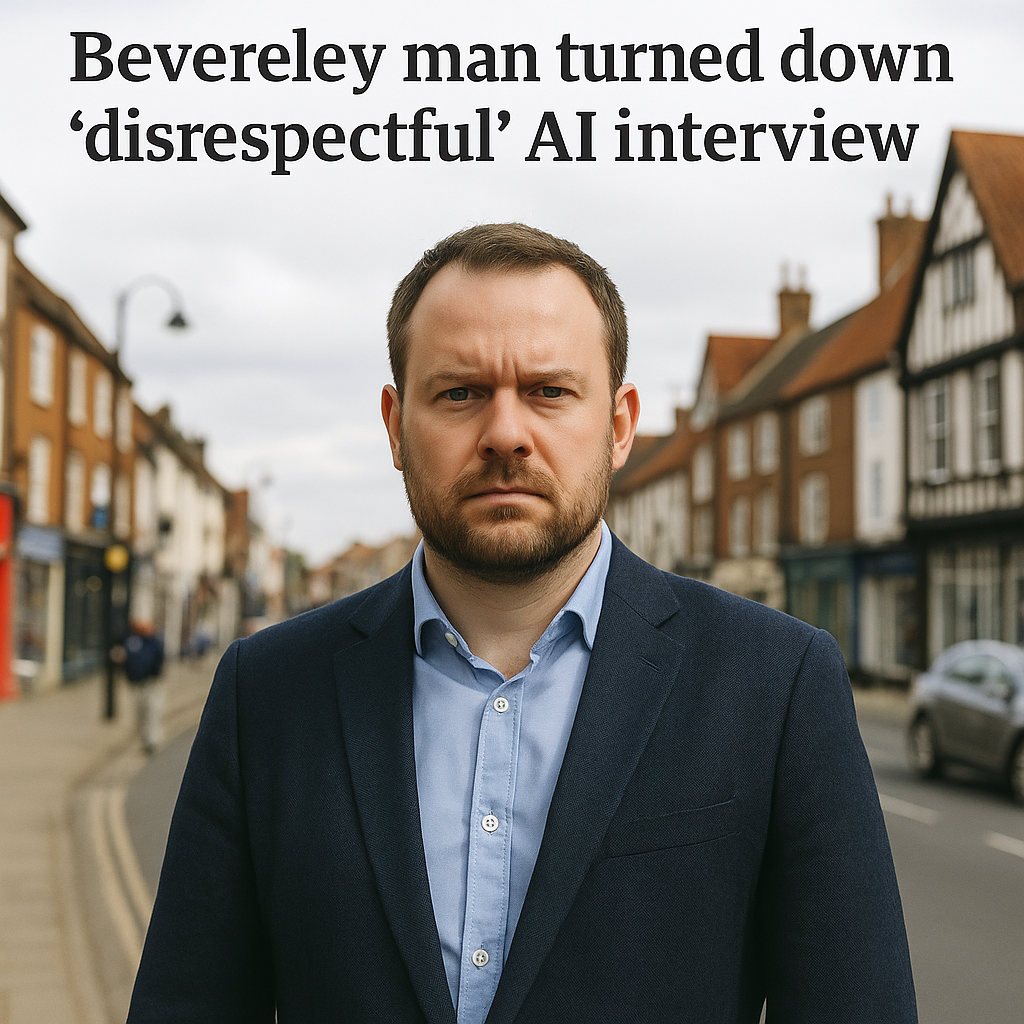
According to a BBC report, a man from Beverley in the East Riding of Yorkshire recently refused to take part in a news interview after discovering the interview would be led by an artificial intelligence avatar he described as “disrespectful.” The episode, reported by the BBC, has stirred debate about consent, dignity and newsroom use of generative AI across the UK.
What happened and immediate reactions
The BBC article says the subject turned down the interview once he learned an AI system would ask the questions rather than a human journalist. While the report does not name the interview partner or the outlet that proposed the AI-led format, it highlights a growing number of media experiments using synthetic presenters, voice clones and AI-driven question scripts. For audiences and participants, the perceived tone and manner of AI interviewers — often generated from text-to-speech and large language models — can feel less nuanced or even insulting, prompting some people to withdraw their cooperation.
Why this matters for interview consent
The incident raises questions about informed consent in media practice. Journalistic standards have long required interviewees to understand the purpose, format and use of their remarks. Experts in media ethics note that substituting an AI avatar for a local presenter changes the social contract: interviewees expect human judgement, on-the-fly empathy and the capacity to follow up in ways current AI systems do not reliably provide. That gap increases the risk that participants will feel misrepresented or treated disrespectfully.
Broader context: rising use of AI in journalism
Newsrooms worldwide have accelerated adoption of AI tools for transcription, content summarisation and even AI-generated anchors. Proponents point to efficiency gains — faster turnaround, 24/7 content production and cost savings — while critics warn of loss of nuance, bias amplification and erosion of trust. The Beverley case illustrates how local-level experiences can become test cases for national policy conversations about when, where and how media organisations should deploy AI.
Regulatory and legal implications
Although the BBC report focused on one individual’s decision, the episode has implications for regulators and industry bodies. In the UK, watchdogs such as Ofcom and the Information Commissioner’s Office (ICO) already scrutinise privacy, fairness and transparency in digital media. Industry observers say repeated incidents where interviewees feel misled could spur clearer guidance or mandatory disclosure rules for AI use in interviews and broadcasting.
Industry perspective and expert analysis
AI ethicists and media analysts argue that transparency is the minimum standard. Interview participants should be told in advance if an AI will lead questioning, whether their responses may be used to train models, and how the final output will be edited. From a newsroom operations perspective, editorial risk assessments and updated consent forms could mitigate fallout and preserve public trust.
Practical recommendations for newsrooms
Best practice suggestions include explicit on-camera disclosures, human oversight of AI-generated questions, and opt-in consent for any voice or likeness synthesis. Public-facing guidance that explains when and why AI is used can reduce surprise and perceived disrespect among interview subjects, improving relationships between local communities and media outlets.
Implications and future outlook
The Beverley incident signals a wider cultural and regulatory test for AI adoption in journalism. If more participants follow the Beverley man’s lead and decline AI-led interviews, media organisations may be forced to recalibrate their practices. The event is likely to intensify conversations about consent, transparency and the limits of automation in public-facing journalism.
Industry observers expect continued experimentation with AI, but also a parallel push for standards. Clearer disclosure rules, third-party auditing of synthetic outputs and stronger participant consent processes are probable outcomes. For now, the BBC report serves as a reminder that technological capability does not automatically translate to social acceptability — especially when people feel their dignity or voice is compromised.
Expert insights
AI and media ethics specialists say cases like the Beverley refusal underscore the importance of putting human relationships at the center of editorial decisions. As newsrooms balance innovation with responsibility, the prevailing view among observers is that transparency, consent and editorial accountability will determine whether AI-enhanced interviews become accepted practice or a reputational liability.
About the Author