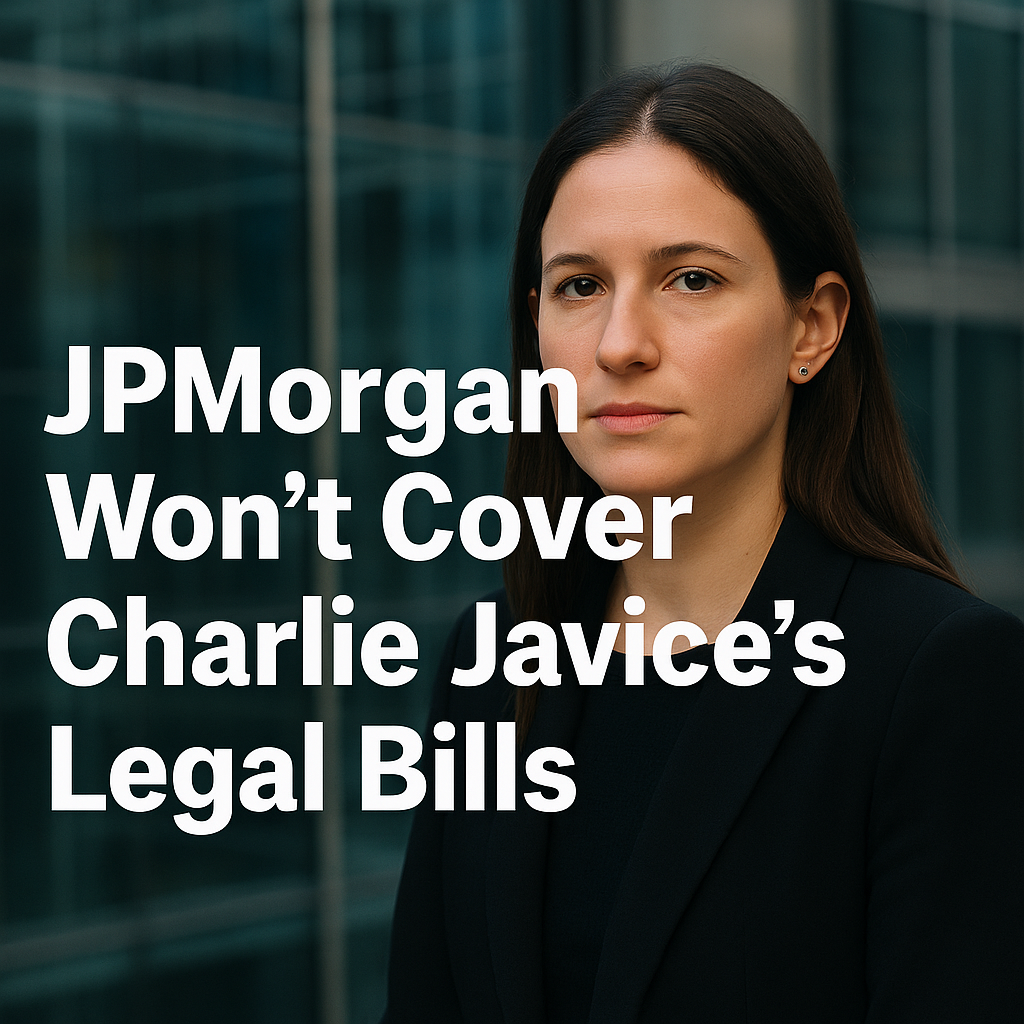
JPMorgan refuses to advance legal fees for Frank founder
JPMorgan Chase has told a New York court it won’t pay or advance legal fees for Charlie Javice, the co‑founder of student financial‑aid startup Frank, after the bank accused her of fabricating data tied to its 2021 acquisition. The dispute over indemnification and fee advancement was outlined in recent court filings, which come amid civil and criminal investigations into Javice’s conduct following the roughly $175 million deal.
Background: the Frank acquisition and fraud allegations
Frank, a fintech that helped students navigate the Free Application for Federal Student Aid (FAFSA) process, was acquired by JPMorgan in 2021 for about $175 million. Within a year, the bank alleged that Javice and associates had misrepresented Frank’s customer base—reportedly creating a dataset of roughly 4.25 million purported user accounts—to inflate the company’s value at the time of sale.
JPMorgan filed a lawsuit against Javice and Frank in 2022 seeking rescission and damages, saying the company had been induced into the deal by false representations. Federal prosecutors later brought criminal charges against Javice in 2023 alleging fraud and related offenses; she has pleaded not guilty and has been fighting the allegations in both civil and criminal venues.
What JPMorgan is arguing in court
At the center of the current fight is indemnification language in the acquisition agreement and whether JPMorgan is obligated to advance Javice’s defense costs while investigations and litigation proceed. In recent filings, JPMorgan has asserted that its indemnity obligations do not extend to covering legal bills arising from alleged intentional fraud and that Javice’s actions—if proven—fall squarely within fraud exclusions typically found in M&A contracts.
JPMorgan’s stance is that allowing fee advancement would be inappropriate where the bank alleges deliberate misconduct that induced the purchase, and that the bank should not be required to underwrite the defense of someone it alleges defrauded it.
Why this matters: indemnities, advancement and M&A practice
Indemnification and fee‑advancement clauses are standard in startup exits: buyers typically agree to indemnify founders for third‑party claims that arise out of the business, and to advance legal costs while disputes are resolved. But most acquisition agreements also include carveouts for intentional wrongdoing, fraud or material breaches of representations and warranties.
“Advancement provisions can be powerful protections for founders, but they’re not ironclad,” said a New York‑based M&A lawyer not involved in the matter. “When a buyer alleges fraud, the dynamics change—the buyer will resist advancing fees, and the fight often ends up in court.”
Implications for startups, buyers and investors
The Javice fight highlights several industry takeaways. First, acquirers will continue to push for rigorous due diligence and strong reps and warranty insurance in fintech deals—sectors where user data and compliance posture are mission‑critical. Second, founders should scrutinize indemnity and advancement language in sale documents; what seems like a routine protection can evaporate if a buyer claims intentional misrepresentation.
For investors and acquirers, the case underscores reputational and regulatory risk when acquiring smaller fintechs. Banks like JPMorgan face intense scrutiny over consumer and regulatory compliance; getting drawn into protracted litigation over a bolt‑on acquisition can be costly and distracting.
Expert perspectives
Legal and M&A advisers say the outcome of the indemnity dispute could set tone‑setting precedent for how aggressively buyers can push back on fee advancement where fraud is alleged. Litigation partners and corporate counsel note that courts sometimes order advancement pending a final determination, but that a convincing fraud record can persuade judges to deny advancement.
Regulatory observers add that the case also spotlights broader enforcement trends: prosecutors have shown a willingness to pursue alleged startup frauds that impute significant losses to institutional buyers.
Conclusion: what to watch next
The immediate next steps will be rulings on JPMorgan’s motions related to indemnification and advancement, and parallel progress in the civil and criminal cases. If a court rules for JPMorgan, Javice would likely need to fund her own defense or seek third‑party financing—adding pressure to her legal and financial position. If the court orders advancement, it would provide a high‑stakes check on how fraud carveouts are applied post‑acquisition.
For founders, investors and acquirers, the dispute is a reminder that legal language matters as much as valuation. Readers interested in more — see our coverage on startup M&A best practices, reps and warranties insurance, and fintech regulatory enforcement.
About the Author