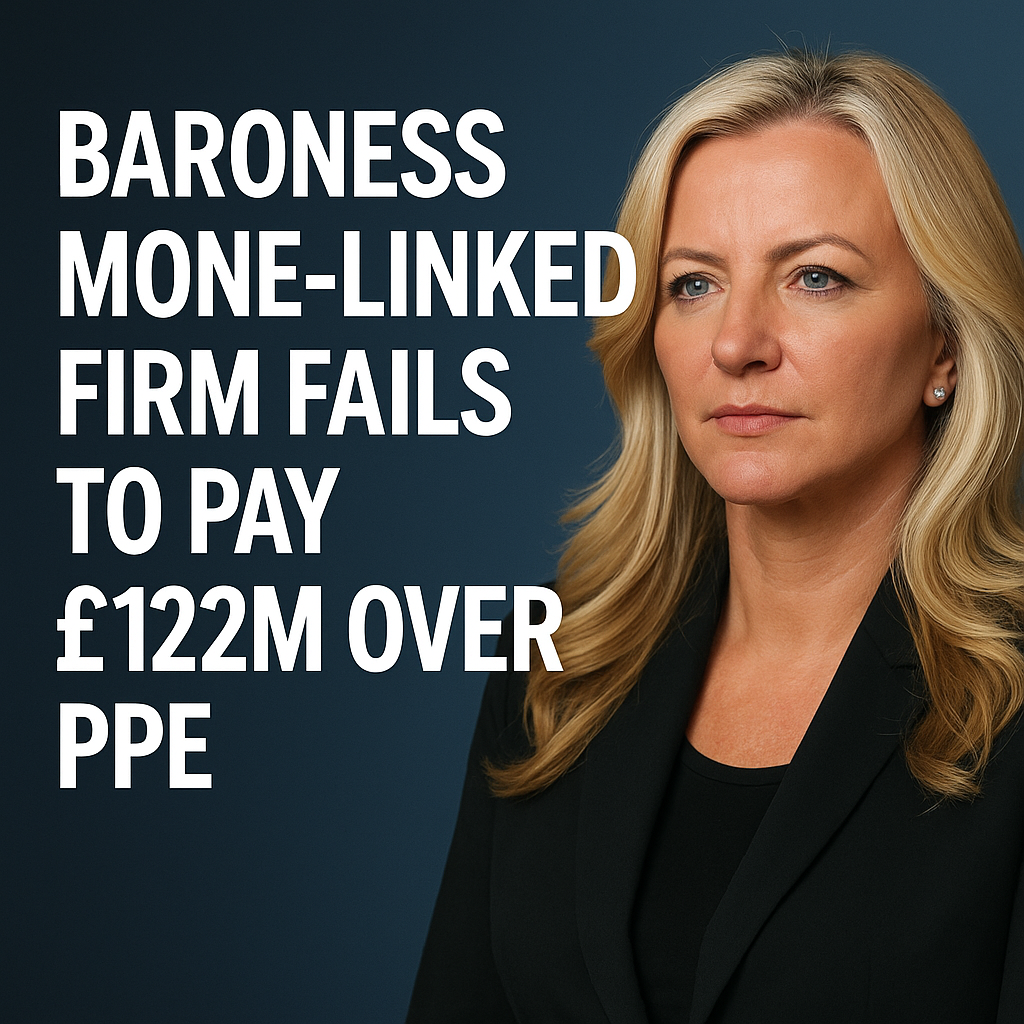
Reports have emerged that a company linked to Baroness Michelle Mone has failed to pay roughly £122 million connected to personal protective equipment (PPE) contracts secured during the COVID-19 pandemic. The alleged shortfall, which has prompted court action and industry scrutiny, underscores ongoing problems in emergency procurement and highlights opportunities for technology-driven reform in supply chain transparency, fraud detection and contract enforcement.
According to media coverage and legal filings reported by national outlets, the dispute centers on payments and deliveries tied to high-value pandemic-era contracts awarded amid extreme demand and expedited procurement processes. While the company linked to Baroness Mone has been publicly associated with supplying PPE during 2020–2021, the precise legal responsibilities and the nature of the alleged £122m liability remain subject to ongoing litigation and investigation.
Beyond the reputational fallout, the episode has broader implications for the business and tech ecosystems. Fast-tracked procurement during crises can create governance gaps that opportunistic actors or undercapitalized firms may exploit. For tech startups and investors, the case serves as a reminder that accelerated contract wins do not guarantee long-term viability without robust fulfilment, working capital and compliance frameworks.
AI and machine learning tools now available to procurement authorities could help reduce such risks. Predictive analytics can flag at-risk suppliers by analyzing financial health, delivery patterns and historic compliance. Natural language processing can speed contract review to detect clauses that leave public bodies exposed. Deploying these tools at scale can improve decision-making when governments face future emergencies.
Blockchain and distributed ledger technologies are often proposed as a solution to supply chain opacity. Immutable, time-stamped records of order placements, manufacturing milestones and shipment tracking can create an auditable trail that helps prove delivery and payment obligations. While blockchain is not a silver bullet, pilot programs have shown it can lower reconciliation costs and improve trust among buyers, suppliers and financiers in complex, cross-border PPE supply chains.
The financial angle matters for startups and the venture ecosystem. Firms that pivoted to supply PPE in 2020 did so to capture rapid revenue, but many lacked the capital structure to absorb disputed receivables or scale logistics. Lenders and venture investors are now more cautious about late-stage pivot strategies that depend on concentrated, government-backed contracts with complex fulfilment requirements. The alleged £122m failure may encourage more rigorous due diligence on contract enforceability and counterparty risk.
Geopolitically, the PPE scramble exposed vulnerabilities in global sourcing, particularly reliance on manufacturing hubs in East Asia and single-source suppliers. Countries are increasingly investing in onshore capacity, strategic stockpiles and diversified supplier networks. That shift creates new startup opportunities in local manufacturing tech, automation, and industrial AI to increase resilience without sacrificing cost efficiency.
For policymakers and procurement officers, the case reinforces the need for transparency and stronger oversight when emergency mechanisms are invoked. Integrating AI-driven risk scoring, clearer contractual milestones, escrowed payments and blockchain-enabled provenance could reduce exposure of public funds and improve outcomes for taxpayers.
As litigation proceeds, investors, tech vendors and procurement authorities will be watching to see whether the courts enforce the alleged liabilities and what recovery, if any, is possible. Regardless of the outcome, the episode is likely to accelerate adoption of technology solutions aimed at preventing similar disputes and restoring confidence in public-private partnerships for critical supplies.
In conclusion, the reported failure to meet £122m in PPE obligations highlights systemic weaknesses revealed by the pandemic. Technology — from AI-driven compliance and risk analytics to blockchain-backed supply-chain provenance — offers practical tools to prevent future breakdowns, but they must be implemented alongside stronger governance, funding due diligence and strategic geopolitical sourcing decisions.
About the Author