Rivian’s gamble: who, what, when and why
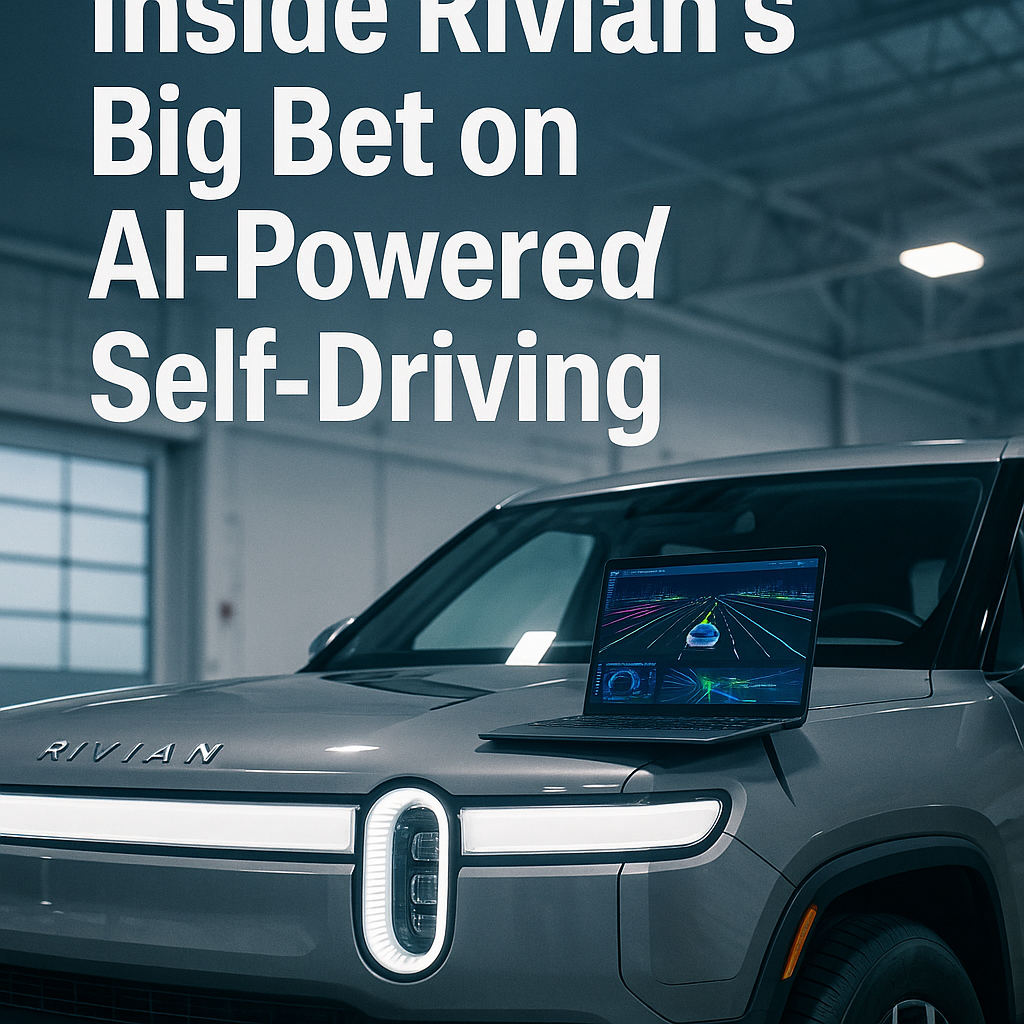
Rivian, the California-based EV maker led by CEO R.J. Scaringe, has quietly made autonomy one of its strategic priorities as it scales production at its Normal, Illinois factory. Since delivering its first R1T pickup to customers in September 2021 and going public in November 2021, Rivian has balanced the twin challenges of ramping hardware production and building software. Now the company is making a big bet on AI-powered self-driving — aiming to add advanced driver-assistance features and, eventually, higher levels of autonomy across its R1T, R1S and the electric delivery vans (EDVs) it builds for Amazon following a 2019 order for up to 100,000 vans.
Background: software is the new battleground in EVs
Autonomy is where many vehicle makers hope to capture recurring revenue and fleet value. Rivian has positioned itself as a software-forward automaker: its vehicles receive over-the-air (OTA) updates, and the company has emphasized its ability to iterate vehicle features in software. That mirrors moves by legacy automakers and startups alike, from Tesla’s Autopilot and FSD suite to Waymo’s and Cruise’s ride-hailing ambitions.
For Rivian, the stakes are both strategic and financial. A successful AI-driven driver-assistance platform could differentiate its consumer trucks and SUVs from rivals such as Ford’s F-150 Lightning and electric offerings from GM, while unlocking operational efficiencies and new services for Amazon’s delivery fleet. But building reliable autonomy requires massive data collection, compute power, sensor calibration and regulatory engagement — all costly and time-consuming.
What Rivian is investing in
Rivian’s investment covers three broad areas: sensor hardware, in-vehicle compute and machine-learning software. Commercial autonomy stacks typically fuse cameras, radar and lidar (where used) into perception systems trained on large labeled datasets. Companies also need edge compute capable of running neural nets in real time and backend cloud systems for training and fleet telemetry.
Rivian has publicly signaled its intent to expand its software team and to develop advanced driver-assistance capabilities that go beyond basic lane-keeping and adaptive cruise control. The company’s vehicles already support OTA updates and a suite of driver-assist features; the next phase is heavier use of AI models for perception, prediction and planning.
Product and timeline considerations
Rivian’s roadmap is constrained by hardware cycles and regulatory scrutiny. Automakers typically ship ADAS at Level 2 today — where the driver must remain engaged — and cautiously test higher autonomy levels. Industrywide, many expected fully driverless operations to take longer than initial projections, and Rivian’s timeline is likely measured in years, not months. For Amazon’s EDV fleet, advanced assistance and telematics could be deployed sooner to improve safety and efficiency at scale.
Analysis: risks, advantages and market implications
Rivian’s autonomy push has upside and material risks. On the plus side, Rivian’s vertically integrated approach — control over vehicle design, battery, telematics and customer experience — allows it to optimize hardware and software together. Tight integration can speed feature rollouts and improve performance versus retrofitting autonomy tech onto legacy platforms.
However, autonomy development is capital intensive and technically challenging. Training robust perception systems requires diverse driving data under many conditions; validating safety to regulators and consumers takes rigorous testing and third-party scrutiny. Rivian also competes against deep-pocketed rivals: Alphabet’s Waymo, GM-backed Cruise, Tesla and hardware+software suppliers like Mobileye and NVIDIA (which supplies DRIVE compute to many automakers).
For investors, the question is whether autonomy will produce profitable software margins or simply add to near-term cash burn. For fleet customers such as Amazon, even incremental driver-assist improvements that reduce accidents and improve route efficiency can have immediate ROI.
Expert perspectives
Industry analysts generally view Rivian’s move as necessary to remain competitive in the long term. Observers point out that differentiated software is now a key determinant of EV brand loyalty and lifetime value. At the same time, analysts warn that timelines are uncertain and regulation could slow commercial deployment of higher-level autonomy.
Autonomy researchers and safety advocates emphasize the importance of transparent testing and standardized metrics for AI-driven systems. As companies push new features via OTA, public scrutiny and clear communication about capabilities and limitations are critical to maintain trust.
Conclusion: long game for Rivian and the auto industry
Rivian’s bet on AI-powered self-driving is less a single product launch than a multi-year transformation of the company from an electric vehicle OEM into a software and data-driven mobility player. Success could yield new revenue streams, stronger differentiation and tighter ties to fleet customers like Amazon. Failure or delays would increase pressure on Rivian’s balance sheet and stretch investor patience. Either way, Rivian’s autonomy efforts will be an important test case for how midsize automakers navigate the costly, complex path to AI-driven vehicles.
Related topics: Tesla Autopilot, Waymo, Cruise, electric delivery vans, OTA updates, ADAS.
About the Author