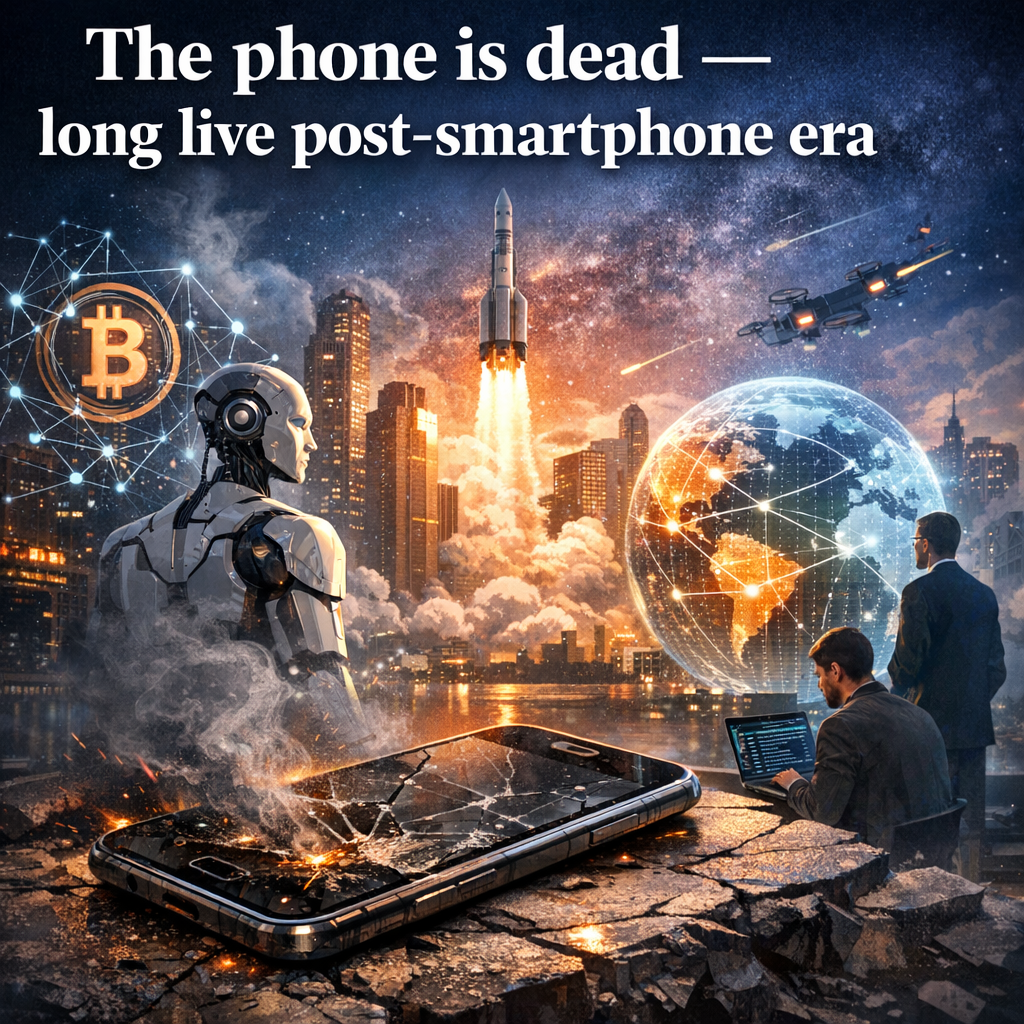
The headline: who, what, when, where and why
For more than a decade the smartphone ruled personal computing — the hub for communication, navigation, media, commerce and photography. But in 2023–24 the industry began asking a blunt question: is the phone’s dominance ending? A confluence of factors — slowing upgrade cycles, rising on‑device artificial intelligence, the commercial arrival of mixed‑reality headsets and smarter wearables — has pushed handset makers, platform owners and carriers to rethink the future of mobile. Apple’s Vision Pro launch (announced at WWDC 2023 and shipped to early buyers in February 2024), Meta’s Quest line, and heavy investments from Google and Microsoft in AI have crystallized a new set of devices and interfaces that could displace some phone functions, even as handsets remain ubiquitous.
How the landscape is shifting
The change is not a single event but a set of overlapping trends. Smartphone replacement cycles have lengthened in mature markets as devices get better and prices rise; consumers now commonly use phones three to four years or longer. At the same time, breakthroughs in large language models and generative AI — popularized by products like OpenAI’s ChatGPT (launched end of 2022) and subsequent models from multiple vendors — have moved conversational assistants from cloud demos into everyday utilities. That has led to a redistribution of tasks away from a single touch screen toward ambient, voice and spatial interfaces.
Hardware makers are responding on several fronts. Apple has pushed spatial computing with Vision Pro, positioning a headset as a new computing category for productivity and media. Meta has doubled down on Quest and its Reality Labs work. Google has iterated on Pixel devices and Android to better integrate AI and foldables. Samsung, Microsoft and other suppliers are investing in on‑device AI and seamless handoff between devices. Automakers and infotainment suppliers are also betting the car will become a primary computing surface, as 5G and edge compute make richer experiences possible in vehicles.
What replaces the phone in practice?
There is no single replacement. Instead, a more pluralistic ecosystem is emerging: wearables and earbuds for persistent audio and health monitoring; glasses or headsets for spatial computing and immersive content; in‑car systems for navigation and contextual apps; and ambient AI assistants that live in the cloud and on devices. Handsets will remain central for many people — they are portable, versatile and deeply integrated with identity and payments — but their role could shift from primary display to one of several surfaces users switch between depending on context.
Business and industry implications
For app developers and platform owners, the fragmentation of surfaces creates both opportunity and complexity. Developers must design for multiple form factors, new input modalities (voice, gaze, gesture) and tighter privacy constraints. For carriers and component suppliers, revenues tied to handset upgrades may decelerate, but new markets — AR hardware, connected cars, edge compute services — may offset declines. Advertisers and media companies will have to adapt to devices that emphasize presence and privacy differently than phones do.
Regulators are watching too. The EU’s work on AI rules and ongoing scrutiny of platform gatekeeping affect how companies can collect data and deploy generative AI features across devices. Privacy and safety will be decisive for consumer adoption, especially in wearables and headsets that capture audio and visual data continuously.
Expert perspectives and market reading
Industry analysts emphasize the transition is gradual. Market research firms have reported slower handset growth in many regions and note rising consumer interest in wearables and mixed reality, but they stop short of declaring an immediate phone extinction. Analysts point out that software ecosystems, app stores and payments are tightly bundled with phones — unbundling those services will take years and coordination among hardware makers, OS vendors and carriers.
Executives at device firms express a similar view: new categories will augment rather than instantly replace phones. The strategic play for many is to create seamless experiences across devices so that users can pivot from a phone to a headset or car without losing context, identity or purchased content.
Conclusion: a more distributed future
The phone is not collapsing into irrelevance overnight, but its monopoly over personal computing is loosening. Over the next five to ten years, expect a more distributed set of devices and interfaces — AI assistants, earbuds, glasses, cars and the occasional foldable — to share the workload the phone has carried. For consumers, the shift promises convenience and context; for businesses it demands new design patterns, privacy guardrails and monetization models. The question is not so much what will replace the phone, but how the industry will orchestrate a multi‑device world where the phone remains part of a broader constellation of personal computing surfaces.
About the Author