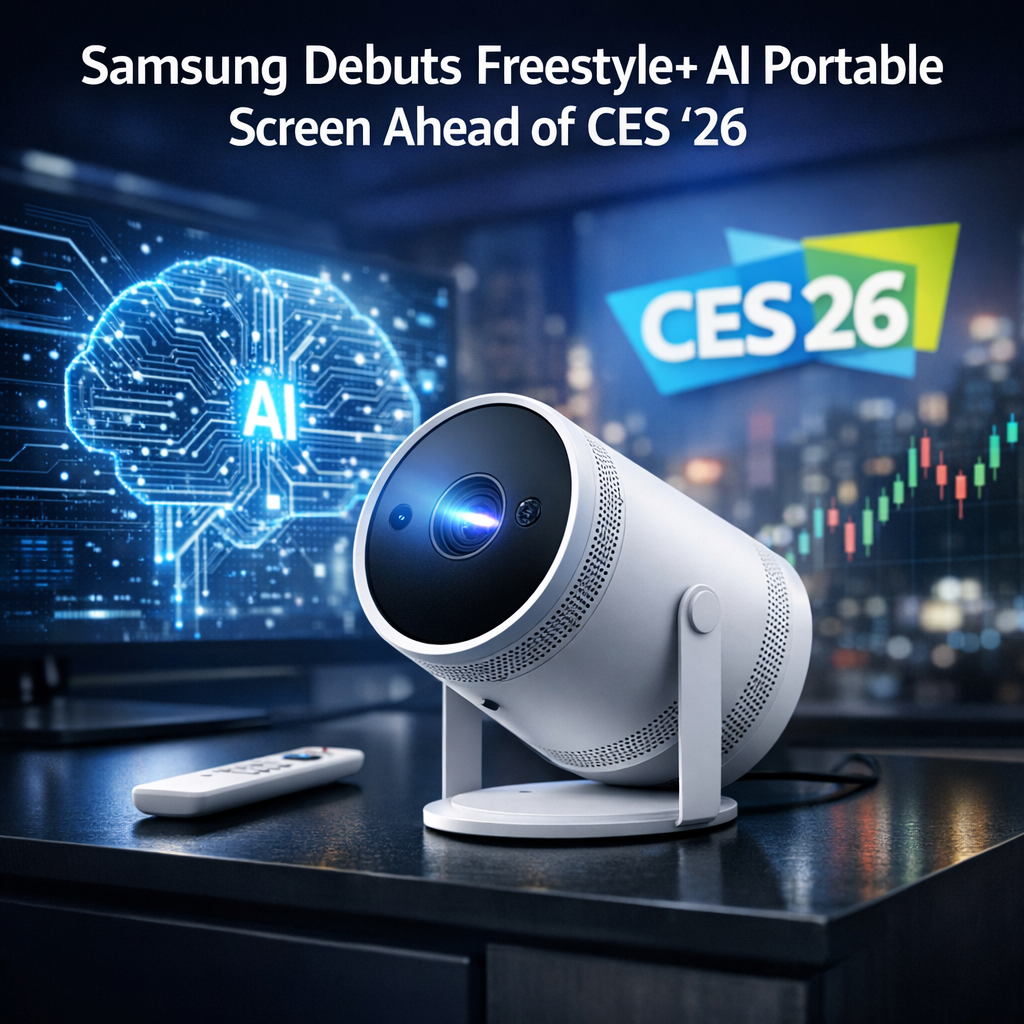
Samsung unveils Freestyle+ ahead of CES 2026
Samsung this week introduced the Freestyle+, a new portable screen that the company is positioning as a smarter, AI-driven successor in its Freestyle line. Announced on samsung.com ahead of the January 2026 Consumer Electronics Show (CES), Samsung said the Freestyle+ blends projection-style display with on-device artificial intelligence to improve picture calibration, content discovery and user interaction in mobile and living-room settings.
What the Freestyle+ is and how it differs
The Freestyle+ is promoted as a battery-powered, compact display aimed at customers who want large-screen experiences without a full TV setup. Samsung’s product page emphasizes artificial intelligence features that automatically adapt color, contrast and aspect ratio to the content and ambient environment, plus tighter integration with streaming services and smart-home ecosystems. Unlike fixed televisions, the Freestyle series is designed to be repositioned or taken on the road, and Samsung says the new model focuses on smarter software orchestration as much as hardware improvements.
Key features Samsung highlights
Samsung’s announcement places the Freestyle+ around three core pillars: adaptive display intelligence, portability and ecosystem connectivity. The adaptive display system is described as using on-device AI to tune screen parameters in real time; the company also notes expanded streaming compatibility, cast and mirroring options, and hands-free operation through voice and gesture detection. Samsung framed the product as suitable for home entertainment, remote work presentations, and travel where a quick larger screen is needed.
Context and industry background
The Freestyle+ arrives as consumer-electronics makers increasingly pair display hardware with AI software layers to differentiate products. Over the last several years Samsung has pushed modular and lifestyle displays — from The Frame to projector-like products in the Freestyle line — and the addition of AI functions follows a broader trend of embedding machine learning into TVs, soundbars and cameras. Rival manufacturers and startups are also incorporating on-device AI for picture enhancement, low-latency streaming, and contextual voice features, turning displays into more proactive devices rather than passive screens.
Analysis: why Samsung is betting on AI for portable screens
Samsung’s move signals two strategic priorities. First, the company wants to extend its display leadership beyond traditional TVs into portable and hybrid use cases where convenience and smart automation matter. Second, adding AI-driven automation creates ongoing service and feature differentiation that can be updated over time. For consumers, that means a portable screen that requires less manual tweaking; for Samsung, it opens opportunities to tie the hardware into subscription services, advertising or ecosystem lock-in.
That said, important questions remain. Samsung’s announcement on samsung.com did not immediately include detailed pricing, battery life metrics, or a full launch schedule for all markets. Those specifics will likely influence whether the Freestyle+ appeals to casual users, prosumers, or business buyers who need reliable brightness and resolution for presentations.
Industry perspectives
Industry observers view the Freestyle+ as part of a competitive wave of AI-first consumer hardware. Analysts note that embedding intelligence at the display level can improve user experience but also raises expectations for regular software updates and privacy safeguards when features rely on sensors or voice interaction. From a market standpoint, portable displays that can double as smart home endpoints compete with tablets, projectors and compact TVs — meaning Samsung will need to balance price, performance and ecosystem advantages.
What experts expect
Observers expect Samsung to use CES 2026 to showcase real-world demos and to clarify availability. If the Freestyle+ delivers reliable picture quality, long battery life and genuinely useful AI enhancements, it could accelerate adoption of mobile large-screen experiences. Conversely, marginal improvements or unclear pricing could limit its appeal to niche users and early adopters.
Conclusion and outlook
The Freestyle+ represents Samsung’s latest attempt to reframe the role of displays in everyday life: portable, smart and connected. Ahead of CES in January, Samsung has set the stage for conversations about how AI can make displays more adaptive and useful outside the living room. The product’s ultimate impact will depend on execution — particularly on battery longevity, image fidelity and the usefulness of its AI features — and on how Samsung positions pricing and availability during the show.
About the Author