What is an AI hub — and why it matters now
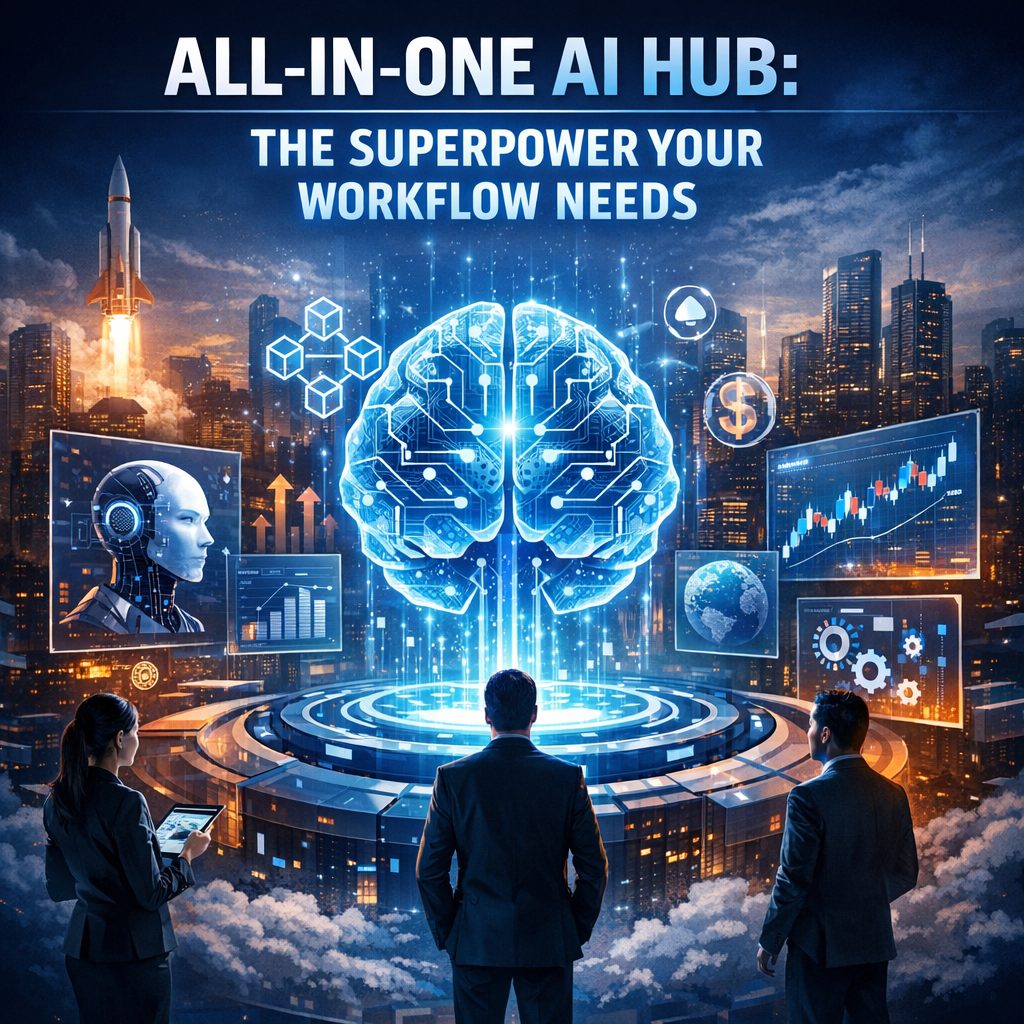
Enterprises seeking to move past point solutions toward platform-scale AI are increasingly turning to so-called all-in-one AI hubs. These platforms consolidate model hosting, data connectors, orchestration, observability and governance into a single interface so teams can design, deploy and manage AI-augmented workflows without stitching together dozens of services. The trend accelerated after major advances in large language models — notably OpenAI’s GPT-4 (released March 2023) — and a wave of platform announcements from vendors such as Microsoft, Google and Hugging Face through 2023–2025.
How the hubs work: components and capabilities
At their core, AI hubs combine several technology layers that used to be separate:
- Model registries and runtimes — hosted LLMs or integrations with APIs from OpenAI, Anthropic, Google and others, plus on-prem or private models available through repositories like the Hugging Face Hub.
- Data connectors — built-in integrations for product suites (Microsoft 365, Google Workspace), CRM systems (Salesforce), knowledge bases (Notion, Confluence) and cloud storage, enabling retrieval-augmented generation and real-time context.
- Orchestration and pipelines — workflow builders and SDKs (for example, offerings influenced by open-source frameworks such as LangChain) that string together prompts, transformations, tools and human-in-the-loop steps.
- Governance, security and observability — enterprise controls for access, data lineage, audit logs and model performance metrics to satisfy compliance and IT requirements.
Vendors differ on emphasis. Microsoft has pushed Copilot-style integrations inside Microsoft 365 and Azure, stressing enterprise-grade security, while Hugging Face focuses on openness and a marketplace-style model hub. Specialist platforms and startups are also emerging, packaging orchestration, cost controls and fine-tuning workflows into single products aimed at product managers, analysts and developers.
Real-world use cases
Companies are using AI hubs to automate routine knowledge work (drafting emails, summarizing meetings), scale customer support with hybrid AI-human flows, and accelerate R&D through automated literature synthesis. For example, product teams can wire a documentation repository, a ticketing system and a fine-tuned model into a single pipeline that surfaces suggested fixes for bugs, drafts PR descriptions and pushes context into sprint planning tools.
Business and technical implications
Consolidation into an AI hub changes how organizations budget, staff and secure AI projects. On the plus side, platforms reduce integration overhead, shorten time-to-value and centralize governance — making it easier for legal and security teams to enforce data handling policies. From an engineering standpoint, a unified hub simplifies observability: teams can trace inputs, model versions and outputs across the pipeline.
But there are trade-offs. Vendor lock-in becomes a real concern if a hub makes heavy investments in proprietary connectors or runtimes. Cost predictability is another issue: running large models at scale or routing high-volume queries through external APIs can produce surprising bills. And while hubs can centralize governance, they can also concentrate risk: a single misconfiguration could expose multiple systems.
Expert perspectives and industry context
Industry observers note that the market is moving toward platformization. Open-source communities, led by projects hosted on the Hugging Face Hub and supported by tools like LangChain and LlamaIndex, continue to push interoperability, while cloud incumbents emphasize managed services and enterprise SLAs. Analysts expect a bifurcation where large enterprises prioritize security and support offered by hyperscalers, and mid-market and developer-heavy organizations opt for composable, open solutions.
Practitioners emphasize organizational change as much as technology. Effective adoption typically requires clear ownership (often a centralized AI platform or MLOps team), updated procurement practices for model and compute costs, and cross-functional governance bodies to assess risk and ROI. These operational shifts determine whether an AI hub functions as a ‘superpower’ or merely a shiny new silo.
Conclusion: what to watch next
All-in-one AI hubs are shaping up to be a critical infrastructure layer for 2026 and beyond. Expect ongoing innovation around cost optimization, model-switching at runtime, more robust private model hosting, and richer enterprise connectors. Organizations evaluating a hub should balance the promise of faster, more integrated workflows against vendor and operational risks — and treat the platform as both a technical and organizational investment. Done right, a unified AI hub can feel like a superpower for knowledge work; done poorly, it becomes another integration headache. The winners will be those who align platform choice with governance, cost controls and clear workflow outcomes.
About the Author