Who, what, when and why
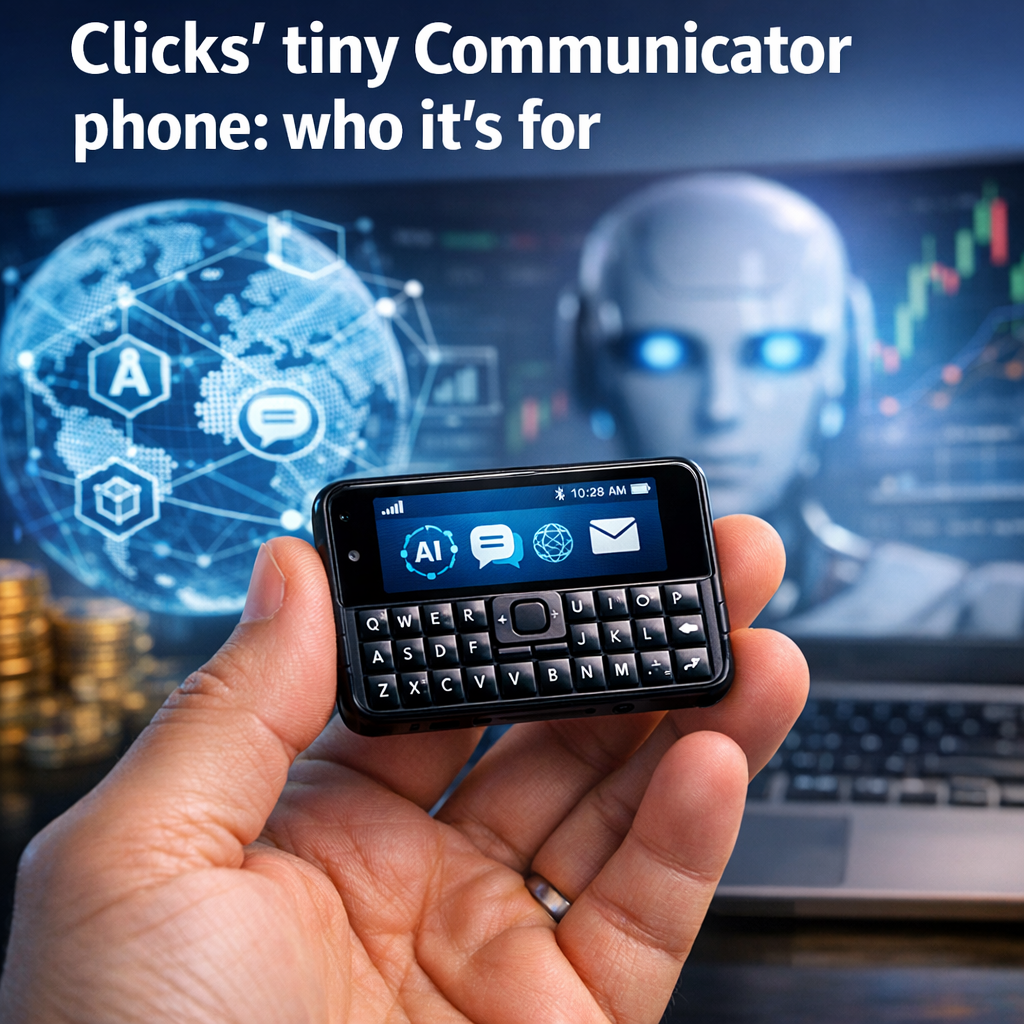
In a recent conversation with Engadget, the co-founder of wearable-tech firm Clicks laid out the company’s rationale for the Communicator, a deliberately tiny mobile device that eschews many smartphone conventions. The device — positioned by the company as a pocket-sized alternative to full-featured phones — is aimed at users who prioritize simplicity, reduced screen time and discreet connectivity. Clicks introduced the product this year as part of a broader trend toward minimalist, single-purpose devices that respond to growing consumer interest in digital wellbeing and focused use.
Design and market positioning
The Communicator follows a line of compact phones and “dumbphone” alternatives from startups and legacy firms alike. While Clicks hasn’t tried to directly compete with flagship handset makers, its pitch is specific: offer essential calling, texting and lightweight messaging without the distractions of app stores, social feeds and continuous notifications. That positioning taps two market currents. First is the digital detox movement, where products such as the Light Phone and Punkt. have attracted buyers willing to trade features for intentionality. Second is the parental- and safety-oriented segment, where caregivers seek devices that let children or elderly relatives stay reachable without granting full smartphone access.
Product trade-offs and features
On the Communicator, Clicks prioritizes battery life, physical ergonomics and a reduced software stack. The company describes the interface as intentionally constrained to lower cognitive load and limit app proliferation. That approach helps keep hardware costs down and simplifies over-the-air support, but it also narrows the device’s appeal: users who require navigation, streaming, mobile banking or heavy app ecosystems will find it unsuitable. Clicks has said the Communicator supports standard cellular voice and SMS and includes basic messaging features for contacts, though the company is keeping some implementation details — such as precise network partnerships, pricing tiers and global availability — under wraps as it ramps production and distribution.
Context: why small phones matter again
Small, purpose-built phones have re-emerged periodically as reactions to the increasing complexity of mainstream devices. In the 2010s, feature phones held on for affordability and simplicity; later, startups turned minimalism into a differentiator for consumers fatigued by feature bloat. For manufacturers, these devices offer a way to innovate on form factor and user experience without directly confronting ecosystem incumbents like Apple and Google. For carriers and software partners, they can extend service lifecycles and reach specific demographics — children, seniors, travelers who need a secondary device, and privacy-minded professionals seeking a limited second line.
Expert perspectives and industry implications
Industry analysts see Clicks’ move as both opportunistic and cautious. Niche hardware can be profitable at modest volume if the brand secures the right channel partners and builds a clear identity. The Communicator’s success will hinge on distribution, price point and whether Clicks can create or license a simple, dependable software stack that integrates with carrier services. Analysts also point out regulatory and carrier certification hurdles: small devices that handle voice and SMS still need to pass network compatibility testing and sometimes require operator buy-in for messaging features.
From a consumer standpoint, the product benefits those who explicitly want fewer distractions. Parents looking for a first phone for a child, adults attempting to manage screen time, and professionals wanting a stealthy secondary device all represent addressable niches. At the same time, the larger smartphone market remains dominated by multifunctional platforms and app ecosystems that show little sign of shrinking.
What the co-founder emphasized
In the Engadget interview, Clicks’ co-founder framed the Communicator as a tool designed around constraints rather than as a feature-deficit device. The emphasis was on deliberate omission: by leaving out an app marketplace and the typical notification feeds, Clicks aims to create a focused communication experience. That framing underscores a larger product philosophy that prioritizes behavioral design over feature counts.
Outlook and takeaways
The Communicator arrives into a market that can reward narrow, well-executed devices but that also punishes unclear value propositions. If Clicks can clarify pricing, secure carrier relationships and demonstrate reliable software updates, the device could carve a sustainable niche. Otherwise it risks being another stylistic alternative that appeals to a small cohort of early adopters without scaling. For consumers, the takeaway is straightforward: the Communicator is not a smartphone replacement for most people, but it could be a useful addition for those seeking intentional disconnection and straightforward communication tools.
About the Author