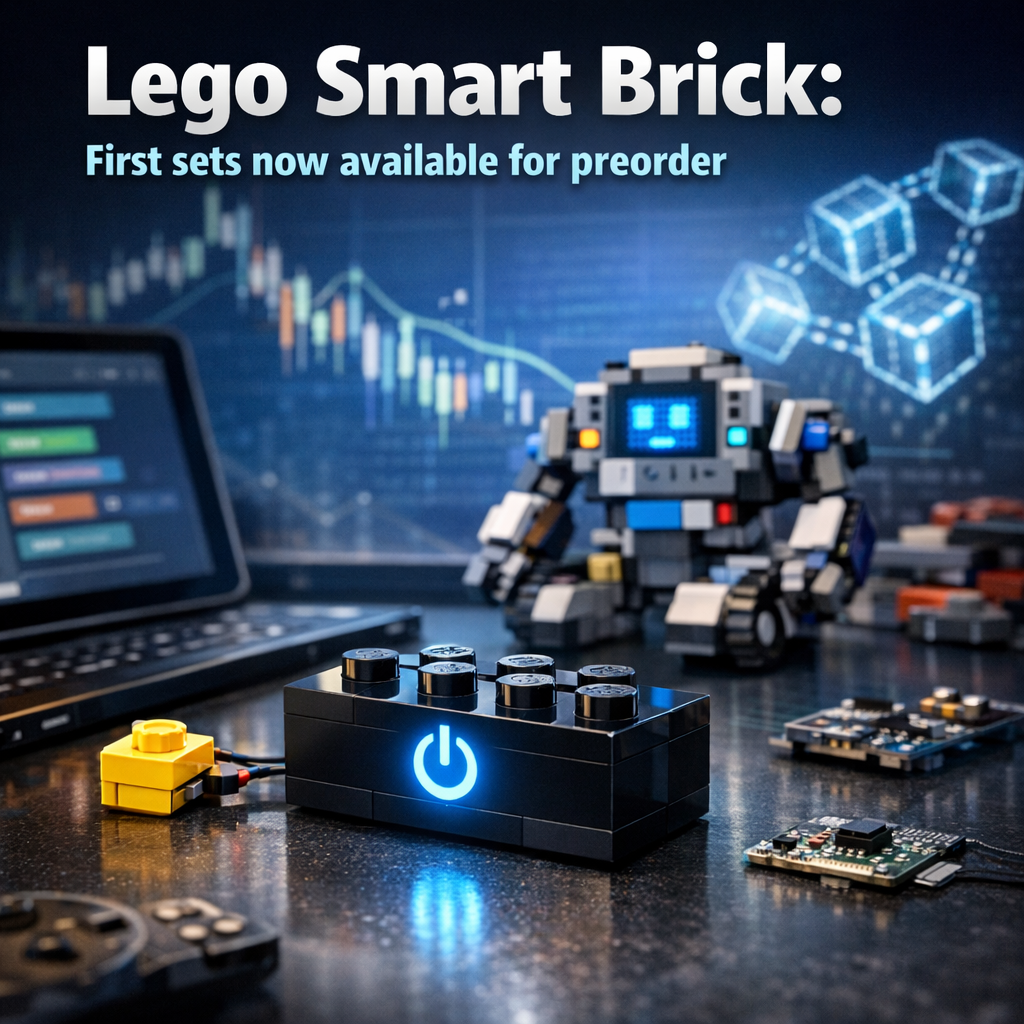
Preorders open for Lego’s new Smart Brick sets
Lego has begun taking preorders for the first retail sets that include its new Smart Brick, according to reporting from The Verge. The move brings the company’s latest programmable hub into consumer hands for the first time, and signals Lego’s continued investment in combining traditional brick play with modern electronics and software. Preorders are listed through Lego’s channels and select retailers; the company is positioning the Smart Brick as the central control unit for a next generation of motorized, sensor-enabled builds.
What the Smart Brick is and why it matters
The Smart Brick is Lego’s newest programmable hub that unifies motors, sensors and app control into a single module designed to be integrated into standard Lego builds. Lego has experimented with powered elements and hubs for years—products such as Mindstorms, Powered Up and Boost offered varying levels of programmability and connectivity—but the Smart Brick represents a refreshed, consolidated approach aimed at both hobbyists and educational markets.
For builders, the Smart Brick promises easier wiring, more compact integration inside Technic and Creator models, and a standardized interface for motor and sensor attachments. For educators and developers, the promise is a common platform that can simplify lesson planning, coding exercises and third-party integrations. Industry observers see the device as Lego’s attempt to make smart, programmable Lego more accessible while protecting the company’s long-term ecosystem of bricks, apps and accessories.
Context: Lego’s smart-hardware evolution
Lego’s journey into embedded electronics stretches back decades, but accelerated in the 2010s and 2020s with programmatic kits aimed at children and hobbyists. Mindstorms targeted advanced robotics and education, Boost aimed at younger builders, and Powered Up provided Bluetooth control for sets such as trains and Technic models. Each product line addressed part of the market, but left gaps in compatibility and development tooling. The Smart Brick appears intended to reduce that fragmentation by serving as a single, flexible hub for new sets.
Details, availability and ecosystem implications
According to the preorder listings, the initial slate of Smart Brick sets spans multiple themes, suggesting Lego’s intent to embed the hub across its portfolio rather than confine it to a single product line. That approach can accelerate adoption—customers who buy a Smart Brick-enabled set could reuse the hub in other builds, increasing long-term value—but it also raises questions about backward compatibility with older Powered Up and Mindstorms components.
Lego has historically guarded its connectors and platform layers carefully, which helps ensure parts fit together across decades but can complicate interoperability between generations of electronic hubs. How seamless the Smart Brick will be with legacy motors and sensors will be an important factor for both hobbyists with existing collections and schools that standardize on one platform for classroom use.
Expert perspectives and community reaction
Coverage by The Verge included perspectives from educators and builders who welcomed a unified hub but emphasized the need for robust software and developer tools. Industry commentators note that hardware alone won’t win converts: strong APIs, accessible coding environments and a commitment to long-term firmware support are crucial for adoption in education and among tinkerers.
“A single, well-supported hub can lower friction for educators and builders,” said an education-technology lecturer quoted in reporting. “But Lego will need to demonstrate software longevity and backwards compatibility to truly become the default platform for classroom robotics.” Community reaction on social channels and fan forums has been a mix of excitement—over improved integration and smaller electronics—and cautiousness about cost and compatibility with legacy parts.
What to watch next
Key questions going forward include pricing strategy, the range of developer tools Lego releases, and the company’s approach to firmware and compatibility updates. If Lego offers flexible programming options—block-based coding for younger users alongside more advanced Python or JavaScript APIs for older students and hobbyists—the Smart Brick could become a bridge between play and formal learning in STEM classrooms.
For consumers, the immediate step is preorder availability and initial shipping windows listed by Lego and retailers. For the wider industry, Lego’s rollout will be a test of whether a mass-market toy maker can successfully standardize smart hardware in a way that satisfies consumers, educators and the vibrant third-party developer community that has grown up around Lego’s programmable bricks.
Bottom line
The arrival of the Smart Brick in retail sets is an important milestone for Lego’s connected-play strategy. Preorders make it possible for early adopters—fans, educators and hobbyists—to evaluate the new hub in real projects. The long-term impact will hinge on software support, pricing, and how well Lego balances innovation with compatibility for the millions of builders who already own electronic Lego components.
About the Author