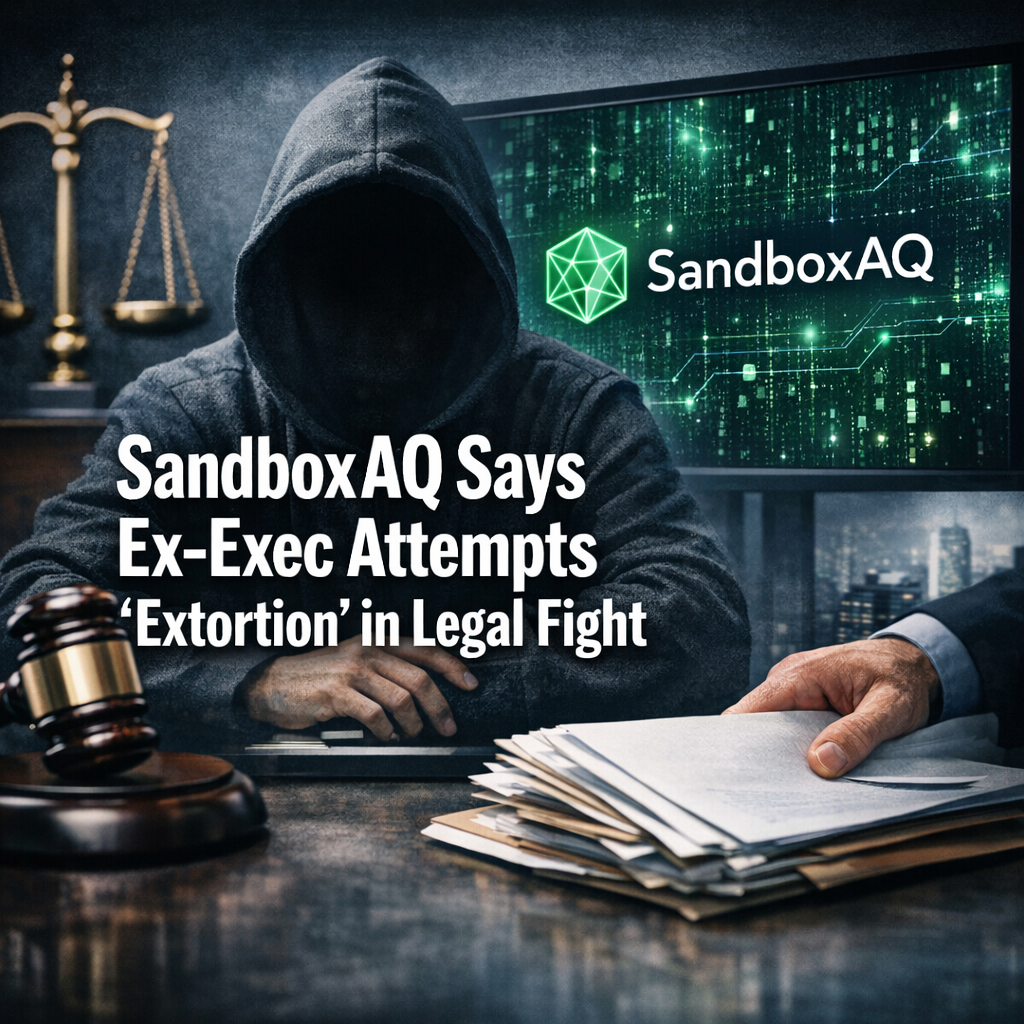
SandboxAQ alleges former executive sought to extort proprietary material
SandboxAQ, the quantum- and AI-security company that traces its origins to projects tied to Google’s moonshot research units, says a former executive has attempted to extort the startup by threatening to disclose proprietary information unless demands were met. The company made the allegation in a public statement this week, describing the behavior as an effort to leverage confidential materials for personal gain.
What the company says and what is public
SandboxAQ’s statement identified the conduct as ‘extortion’ and said it has pursued legal remedies to protect intellectual property, customer relationships and sensitive technical work. The company did not disclose the individual’s name in its public messaging, citing ongoing legal action and privacy considerations. Representatives for the former executive did not immediately respond to requests for comment.
SandboxAQ is known in the industry for its work at the intersection of quantum-resistant cryptography and applied AI for enterprise security. The allegation, as described by the company, involves threats to release code, design documents or other sensitive materials unless the company acceded to the individual’s demands — a pattern companies classify as extortion when the threats aim to obtain money, reinstatement or other concessions.
Background: sandboxing a moonshot
SandboxAQ emerged from efforts connected to large-scale research initiatives that explore next-generation computing and security. The startup has positioned itself to address risks posed by quantum computing to current cryptographic systems and to build AI-enabled tools for hardening enterprise systems. Companies working at those frontiers hold datasets, model weights, algorithms and design processes that are both commercially valuable and potentially damaging if exposed.
Insider risk is a known vulnerability for deep-technology firms. Former employees or contractors who retain access — or who possess copies of code and documentation — can become vectors for IP loss or reputational damage, particularly if they are disgruntled or financially motivated.
Legal and technical implications
If the alleged behavior meets the statutory elements of extortion, SandboxAQ could pursue criminal referrals in addition to civil claims such as breach of contract, misappropriation of trade secrets under the Defend Trade Secrets Act, and injunctive relief. Companies typically seek temporary restraining orders or preliminary injunctions to block threatened disclosures while disputes are litigated.
On the technical side, firms in SandboxAQ’s space must evaluate whether compromised artifacts could enable adversaries to replicate defenses, weaken customer systems, or accelerate exploitation of cryptographic vulnerabilities. Even the threat of disclosure can prompt clients to reassess risk, pause deployments or demand contractual assurances.
Expert perspectives and industry context
Cybersecurity lawyers and industry observers say situations like this highlight the need for robust access controls, least-privilege practices and post-employment protections. One industry security consultant commented that ‘the combination of cutting-edge research and small, mission-driven teams raises the stakes when a trusted insider turns adversarial. Swift legal and technical responses are essential to contain harm.’
Legal analysts note that proving extortion requires showing that the defendant intentionally sought to obtain property or something of value by threatening harm — and that courts will examine the nature of the threat, communications, timing and any supporting evidence such as emails or file access logs. Separately, claims of trade-secret misappropriation hinge on whether reasonable measures were in place to protect the information and whether the information derived independent commercial value from not being generally known.
What this means for SandboxAQ and the wider market
For SandboxAQ, the immediate priorities are likely to be damage control with partners and customers, forensic investigation to determine the scope of any data exposure, and pursuing legal avenues to prevent dissemination. More broadly, the episode serves as a reminder to startups — especially those emerging from major research organizations — to harden operational security and to have contingency plans for insider incidents.
Investors and enterprise customers tend to watch how companies respond. Firms that move quickly to contain technical risk and transparent communication typically manage reputational fallout better than those that delay. The outcome of any court proceedings or criminal investigations will also shape precedent for how emerging-tech companies handle similar disputes going forward.
Outlook
At this stage, the case remains in the early phase of public disclosure. Key next steps will include any filings in civil or criminal court, the result of forensic examinations, and whether the company can secure injunctions to stop threatened disclosures. For the sector, the incident underscores that talent and access controls — as much as cryptographic innovation — are central to protecting high-value work.
About the Author