Luminar seeks buyer for lidar arm as stake sale surfaces
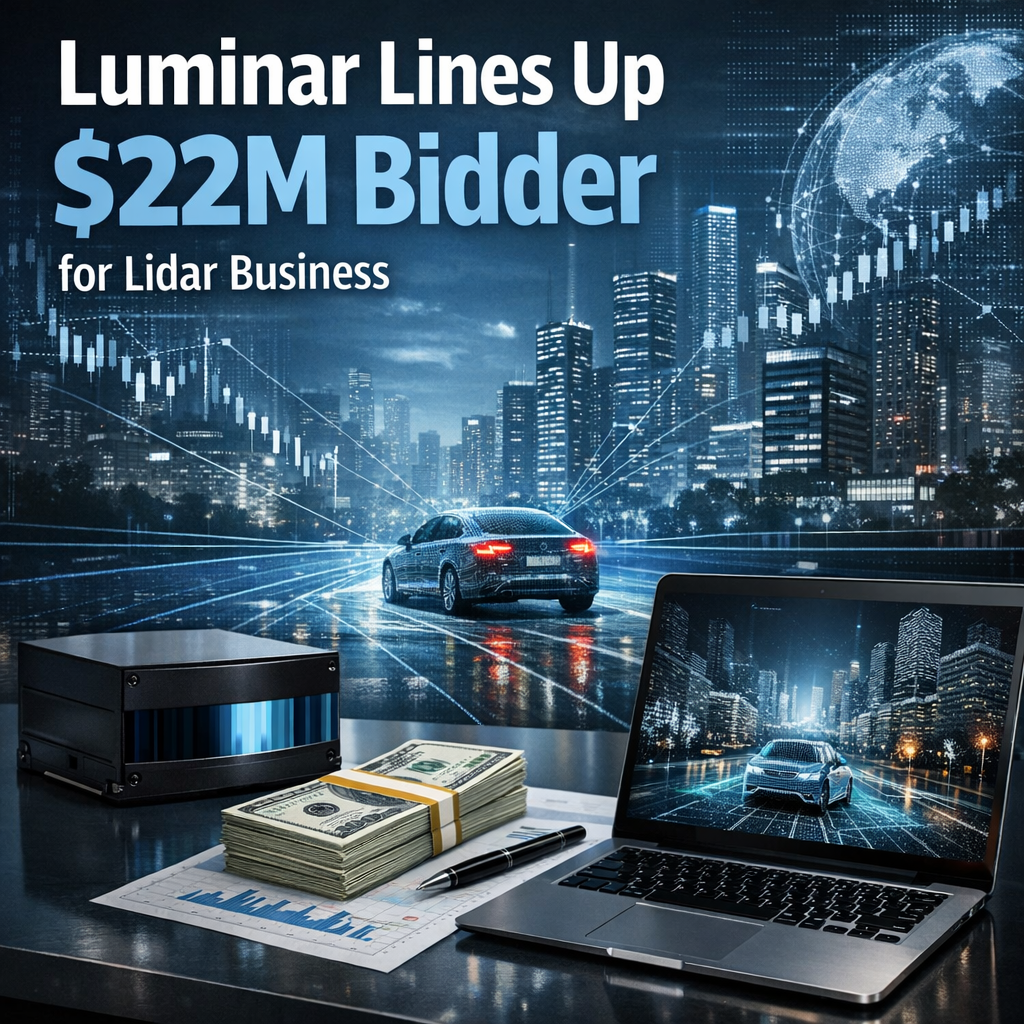
Luminar Technologies (NASDAQ: LAZR), the lidar specialist led by founder and CEO Austin Russell, has reportedly identified a bidder willing to pay about $22 million for its lidar business, according to people familiar with the matter. The potential transaction, which sources say surfaced this week, would mark a major strategic retreat for a company that helped popularize long-range lidar for passenger vehicles and autonomous systems.
Why the sale is unfolding
Officials at Luminar declined to comment on the report. The move comes amid a sustained reassessment across the lidar industry as demand timelines for mass-adoption of advanced driver-assistance and autonomous driving systems have slipped, and customers have pushed for lower-cost hardware and longer integration timelines. For Luminar, which went public in 2020 and at times commanded high expectations for its long-range Iris lidar and full-stack perception efforts, a sale of the hardware business would free management to prioritize software, IP licensing or other strategic priorities.
Sources say the potential $22 million offer would likely cover the assets and certain liabilities tied to Luminar’s sensor manufacturing operation rather than the company’s broader intellectual property portfolio or ongoing vehicle programs. That would leave open options for Luminar to retain software stacks, software development teams or selected program relationships with automakers.
Background and industry context
Lidar — light detection and ranging — has been pitched for years as a critical sensor for safe, robust autonomy. Companies including Luminar invested heavily to develop high-performance optical hardware, custom chips and safety-grade production processes. But the market has evolved: automakers have been cautious in deploying full autonomous stacks at scale, and many OEMs have experimented with camera- and radar-heavy sensor suites that target improved driver assistance at lower cost.
The combination of longer revenue ramp timelines and the high capital intensity of manufacturing has pressured several lidar vendors to cut costs, consolidate or explore non-core asset sales. In that context, a transaction at the reported $22 million price tag would be a sign of the difficult arithmetic facing hardware businesses that have yet to reach volume production across multiple OEM platforms.
What it means for customers and partners
For automakers and tier suppliers with active or prospective programs tied to Luminar hardware, the immediate concern is continuity: warranties, ongoing deliveries and program timelines. If the buyer is a strategic acquirer with manufacturing capability, it could preserve supply chains and execution for existing vehicle programs. If the buyer is a financial investor focused on dismantling or integrating the manufacturing assets, automakers could face program disruption or need to renegotiate terms.
Expert perspectives
Industry analysts and executives following lidar consolidation see the potential sale as emblematic of a maturing market. An industry analyst who requested anonymity said, ‘A $22 million bid for a hardware operation tells you that buyers are valuing tangible production assets conservatively, especially when future volume is uncertain. The real value for Luminar might be in its software and IP, which it can keep to pivot toward higher-margin offerings.’
Another perspective from a veteran supplier executive: ‘OEMs want predictable, low-cost supply. If Luminar can divest manufacturing and focus on systems integration and perception software, that can be a sensible recalibration — but it depends on the terms and the transition plan.’
Implications for Luminar’s strategy and valuation
If pursued, the sale could reshape Luminar’s capital allocation and public-market narrative. The company may use proceeds to extend its cash runway, pay down liabilities or reinvest in software, perception, and validation tools — areas where margins can be higher and recurring revenue more likely. For investors, however, the size of the bid relative to prior market expectations could raise questions about the valuation of hardware-first business models in the lidar space.
Market observers will watch whether the buyer is disclosed and whether the deal includes transitional service agreements or intellectual property carve-outs. Those specifics will determine how much of Luminar’s historical value proposition — high-performance long-range sensing — is preserved in the hands of a new owner.
Conclusion: a test of lidar’s next chapter
The reported $22 million bidder for Luminar’s lidar business, if confirmed, is a signpost of change for a sector that has oscillated between exuberance and consolidation. For Luminar, the next steps will reveal whether the company can pivot to software and systems leadership while ensuring program continuity for vehicle partners. For the broader industry, the case underscores that the path to profitable, large-scale lidar production remains complex and that strategic flexibility may be the key to surviving the current phase of market recalibration.
About the Author