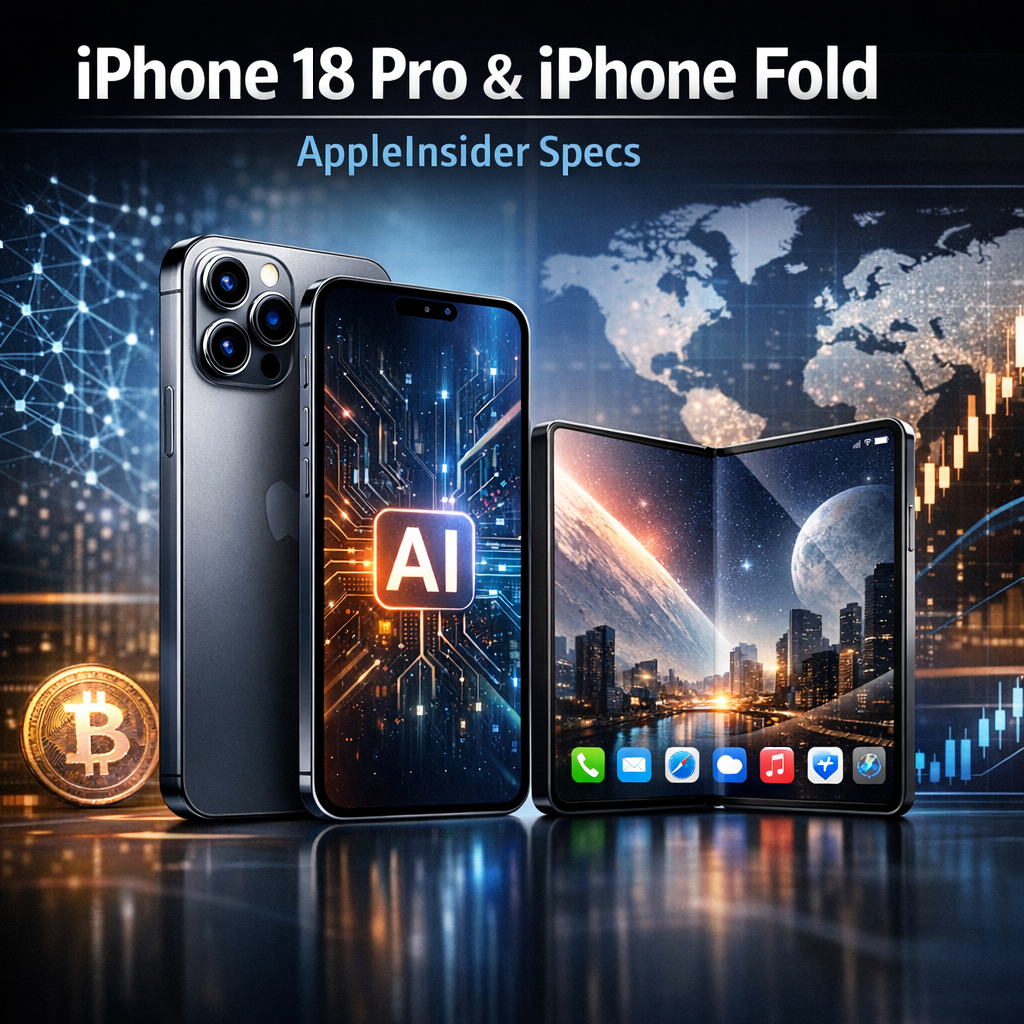
AppleInsider report summarizes alleged new iPhone hardware
In a recent AppleInsider report, sources described detailed, yet unconfirmed, specifications for two next-generation Apple devices: the iPhone 18 Pro and a long‑rumored iPhone Fold. The piece sketches how Apple may combine materials, camera technology and display engineering to push both its flagship Pro line and its first foldable offering into new territory. AppleInsider did not provide a release date, and Apple has not commented on the report.
What the report says about the iPhone 18 Pro
According to the report, the iPhone 18 Pro will continue Apple’s emphasis on premium materials and camera performance. The writeup highlights a refined chassis likely built with advanced alloys and a focus on weight reduction and thermal management. On imaging, AppleInsider outlines rumored upgrades to sensor size and optical systems that would enhance low‑light performance and zoom capability, aligning with multi‑year trends toward periscope lenses and larger sensors in flagship phones.
Display technology is another focal point: the report says Apple is expected to persist with LTPO OLED panels that support adaptive refresh rates, paired with improvements in peak brightness and color accuracy for HDR content. Internally, the report reiterates that Apple will continue to use custom silicon for its performance cores and neural engines, optimizing power efficiency for the Pro models.
Hardware and software integration
AppleInsider’s account emphasizes the company’s vertical approach—matching sensors, optics and on‑device machine learning to deliver computational photography gains. For enterprise and prosumer workflows, that could translate into faster RAW processing, enhanced video stabilization, and tighter integration with iOS camera and editing tools.
iPhone Fold: Apple’s first foldable, according to the report
The AppleInsider piece also outlines a prototype foldable design that would mark Apple’s formal entry into the foldable smartphone market. The report describes a dual‑screen arrangement with an inward‑folding main OLED and a usable outer cover display. Engineering notes in the report focus on a redesigned hinge system intended to minimize the visible crease and improve long‑term durability—two areas where early foldables from other manufacturers have been critiqued.
Durability and materials are flagged as priorities: the report suggests Apple is exploring ultra‑thin glass variants, revised internal chassis elements and sealing techniques to address ingress and hinge wear. On the software side, AppleInsider says iOS has been iterated to support windowed multitasking and adaptive app layouts, though those claims remain tied to internal builds rather than public betas.
Positioning against competitors
If these specifications hold, Apple would be aiming to squarely challenge Samsung and other Android makers that have led the foldable category. For the Pro line, incremental hardware improvements combined with Apple’s silicon and software stack would preserve its premium positioning. Pricing and timing were not disclosed in the report—two variables that will determine how quickly consumers adopt either product.
Industry perspectives and implications
Analysts and supply‑chain observers AppleInsider spoke with (and that have followed Apple’s hardware cadence) note that the company’s biggest hurdles will be display supply, hinge reliability and maintaining battery life in the thinner, multi‑panel form factors. Even modest gains in camera hardware require coordinated improvements in lens modules, sensors and on‑device processing, which can affect sourcing and yields.
From a market perspective, a credible foldable iPhone would broaden Apple’s portfolio, letting it compete across form factors while likely commanding a premium price. For developers, a foldable iPhone would mean adapting iOS apps to take advantage of larger, variable canvases—an engineering push that could open new use cases in productivity and creative apps.
Conclusion: cautious optimism and next steps
The AppleInsider report provides one of the more detailed views yet of what Apple may be planning for its next Pro handset and a potential foldable device. While the account offers useful context on engineering priorities—materials, cameras, displays and software—these remain unverified claims until Apple offers official specifications. For now, the report underscores Apple’s ongoing strategy: iterate the Pro experience while exploring new form factors that could reshape the premium smartphone market. Buyers and developers should watch for confirmations from Apple and production‑level details from component suppliers before drawing firm conclusions.
About the Author