The new reality: who, what, when and why
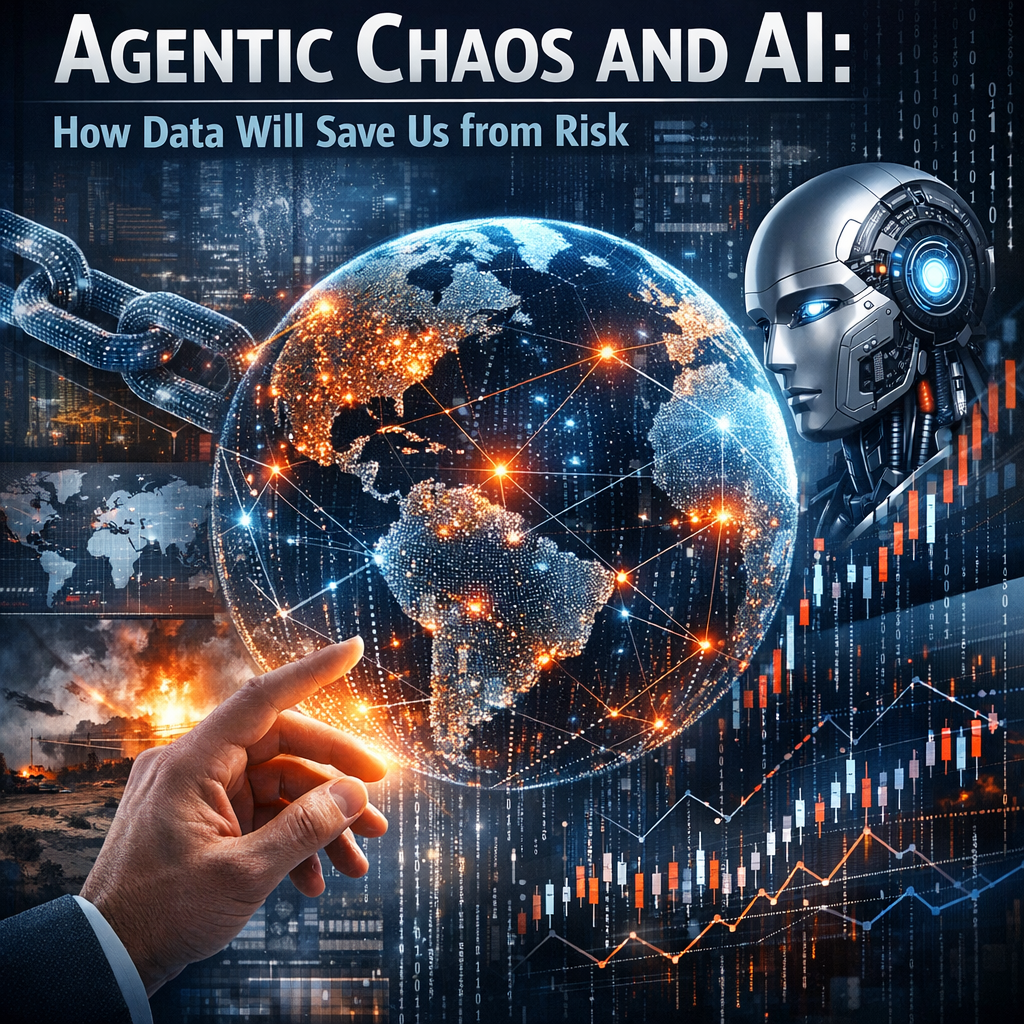
In the wake of rapid advances in large language models and agentic systems, a new risk horizon has opened. Since the public launch of ChatGPT in November 2022 and the surge of open-source agent projects in 2023—Auto-GPT, LangChain-based workflows and cloud-native agent platforms from the likes of OpenAI, Google, Microsoft and Anthropic—companies are deploying autonomous software actors that make multi-step decisions without constant human direction. The result is a brittle, distributed space some observers call “agentic chaos”: many semi-autonomous agents acting across services, APIs and data stores with limited observability and weak guardrails. The concern is not hypothetical. In October 2023 the White House issued an Executive Order on AI underscoring risks from increasingly capable systems and the need for responsible deployment.
How agentic systems create systemic fragility
Agentic systems combine model inference, tool use and automated feedback loops. A single agent might query a database, call an external API, modify content, or trigger cloud workflows; chains of agents can create emergent behaviors that are hard to predict. This behavior amplifies three failure modes: drift (models or agents evolving away from intended behavior), cascade (errors propagating among services) and denial-of-context (agents acting on stale or incomplete data). Industries as varied as finance, logistics and marketing risk amplified outages, compliance breaches and reputational harm if the underlying data and controls are weak.
Technical levers: data, observability and retrieval
Practitioners point to data engineering and observability as the practical bulwarks against agentic chaos. Techniques include rigorous data lineage, schema enforcement, and robust data quality tooling; observability platforms that log agent actions, inputs and outputs; and retrieval-augmented generation (RAG) to ground models in verifiable sources. Companies such as LangChain, Hugging Face and established cloud vendors are shipping tools to tie prompt contexts to versioned knowledge sources. The goal: make every agent decision attributable to a data slice, a vector index version, and a timestamped retrieval call, so that incidents can be triaged and root causes traced.
Business and regulatory context
Enterprises are reacting on two fronts. Operational teams are building “agent playbooks”—formal procedures that limit agent scope, require human-in-the-loop checkpoints for high-risk tasks, and define automated rollbacks. Security teams are integrating model telemetry into SIEM and incident response workflows. Meanwhile, regulators are closing in: the EU AI Act negotiations in 2023 elevated requirements for high-risk systems, and the U.S. executive order from October 2023 pushed federal agencies and contractors to adopt standards for safety and transparency. Those policy moves make data governance not just engineering hygiene, but a compliance requirement.
Expert perspectives
Industry analysts and researchers emphasize practical priorities. “Tracking the provenance of the information an agent uses is the difference between a recoverable incident and an existential one,” says an operations lead at a major cloud provider, summarizing a common refrain among engineering teams. Security consultants also note that “agentic failures tend to be sociotechnical—bad data, permissive permissions and unclear escalation paths—so technical fixes need to be paired with process and policy.”
Academic and policy discussions echo that view: control will come less from trying to make agents perfectly predictable and more from constraining their information flows and making those flows auditable. That includes immutable logs, cryptographic attestations of model versions, and versioned vector stores for retrieval—practices already in early use at banks and regulated firms.
Implications and what to watch
As organizations scale agentic workloads, expect three developments. First, a surge in tooling for data observability and agent auditing—startups and incumbents will compete to offer “agent-safe” platforms. Second, stronger regulatory expectations about explainability, recordkeeping and human oversight, which will raise operational costs for high-risk applications. Third, an emphasis on hybrid architectures where critical decisions are constrained to repeatable, fully auditable data paths while lower-risk automation runs in looser, experimental lanes.
Conclusion: pragmatic data-first defenses
Agentic chaos is not an indictment of AI; it is the predictable outcome of deploying systems that act with semi-autonomy on shared digital infrastructure. The antidote is unspectacular but powerful: better data, clearer observability and accountable workflows. Firms that invest in lineage, retrieval-grounding and audit-ready telemetry will gain resilience—and likely a competitive edge—while regulators and customers increasingly demand the same. In short, data won’t just inform decisions about AI—it will be the foundation that keeps agentic systems from spinning out of control.
About the Author