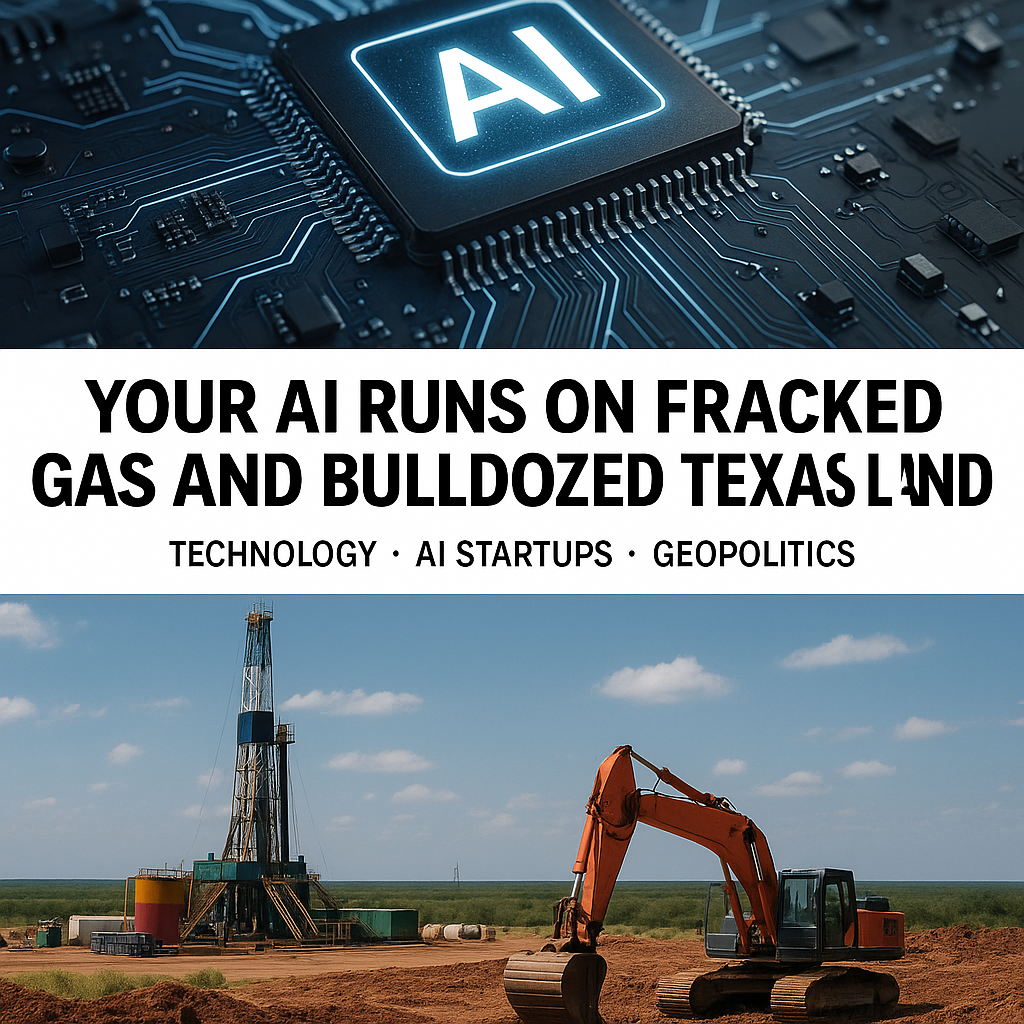
As artificial intelligence and blockchain services scale, the physical infrastructure behind them is drawing scrutiny. Many AI models and crypto operations rely on massive data centers that have sprung up across Texas, often on land cleared for development and supplied by a grid still heavily dependent on natural gas extracted by hydraulic fracturing. The collision of tech growth, energy policy, and local land use is changing the economics and geopolitics of the digital economy.
Why Texas? The state offers low-cost power, permissive zoning, and an independent grid operated by ERCOT. Those factors, combined with abundant land and proximity to major fiber routes, have made Dallas, Austin, and smaller West Texas towns magnets for hyperscale data centers and smaller startup campuses. Developers tout fast permitting and stable power delivery, but the power mix behind the sockets is not purely renewable.
Natural gas provides a large share of electricity generation in Texas. The boom in shale production, primarily in regions such as the Permian Basin and Eagle Ford, transformed local energy markets and enabled cheap, dispatchable power. For data center operators and AI startups focused on cost-per-compute, that price signal is decisive. But it comes with environmental trade-offs: methane leaks, flaring practices, and the lifecycle emissions of fracked gas complicate claims of carbon neutrality.
AI model training and blockchain mining are energy intensive. Large language model training runs thousands of GPUs for days or weeks, and crypto miners deliberately seek cheap or stranded energy. In recent years, some miners have collocated with oil and gas operations to utilize associated gas that would otherwise be flared, while others have located near gas-fired plants to access low-cost electricity. Those choices lower operating expenses but lock growing portions of the digital economy to a fossil-fuel supply chain.
Startups and venture capital continue to pour money into AI, edge computing, and blockchain infrastructure despite these challenges. Investors are funding companies that promise more efficient models, carbon-aware training, and hardware optimizations to reduce energy footprints. At the same time, enterprise buyers and hyperscalers are signing long-term power purchase agreements for renewables, and purchasing renewable energy credits. Those market instruments can offset marginal emissions on paper, but critics call out the gap between contractual renewables and the actual grid mix powering compute at any given hour.
There are also land-use consequences. Data centers require cleared plots and substantial construction, transforming ranchland, farmland, and prairie habitat. Local economies can benefit from construction jobs, tax revenue, and new fiber assets, but residents and conservationists warn about lost ecosystems, water use for cooling, and changing rural character. Municipalities often compete to attract data center investment with tax abatements and infrastructure subsidies, raising questions about long-term community benefit versus short-term development.
Geopolitically, the reliance on fracked gas ties US tech infrastructure to volatile energy markets and export dynamics. Natural gas exports, pipeline politics, and international demand shape domestic prices and can influence the cost base for cloud providers. Meanwhile, supply chain tensions around semiconductors and AI hardware add another layer of strategic vulnerability that intersects with where compute gets built and how it is powered.
Conclusion: The physical footprint of AI and blockchain is neither virtual nor benign. As startups and established firms scale compute, the choices about where to build, how to power, and how to account for emissions will shape business risk, investor scrutiny, and geopolitical exposure. For buyers and funders of AI and blockchain services, energy sourcing and land-use impact are emerging as material factors — not just moral considerations but practical drivers of cost, reputation, and regulatory risk. Technology leaders and policymakers will need more transparent emissions accounting, smarter siting decisions, and stronger incentives for genuinely low-carbon, land-conscious infrastructure.
About the Author