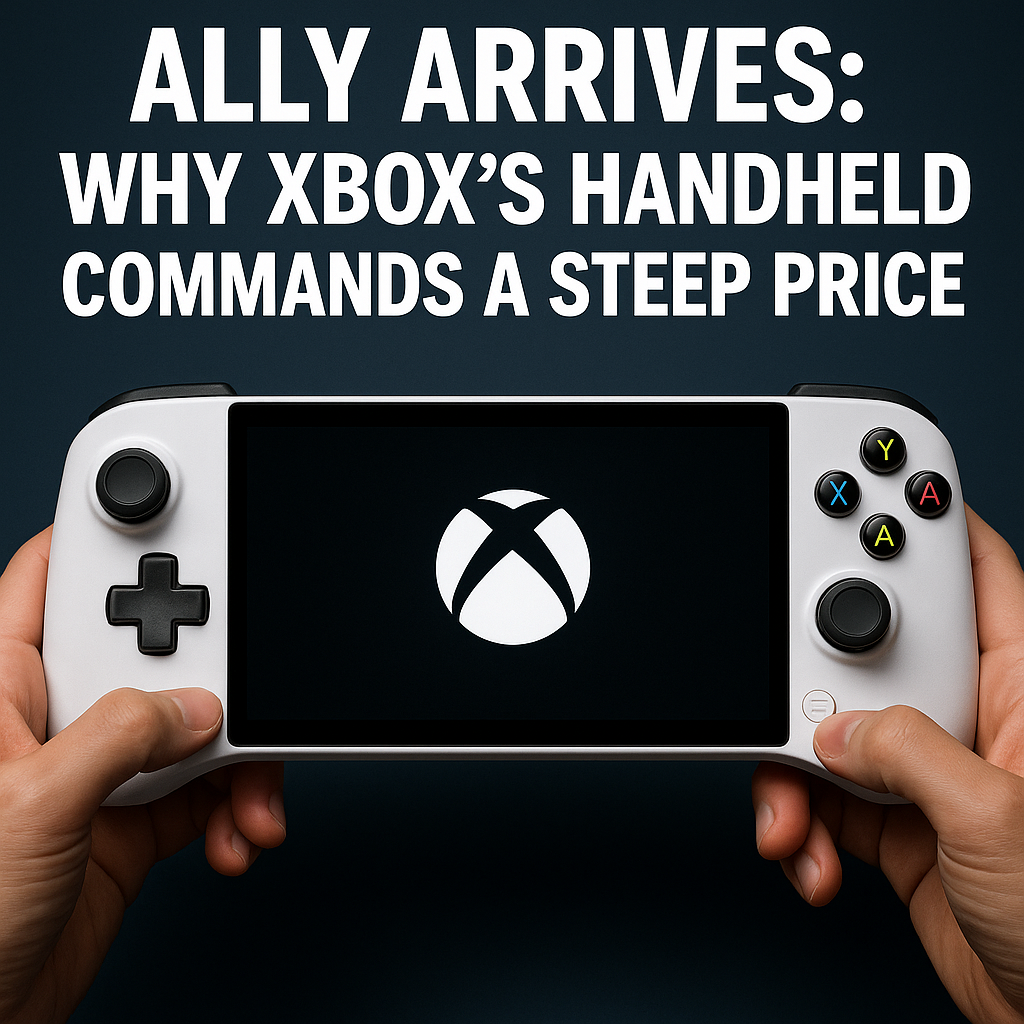
Xbox President Sarah Bond has sought to reframe expectations around Microsoft’s new handheld, Ally, explaining that the device’s premium pricing reflects a deliberate emphasis on a full “Windows experience,” integration with cloud services and a roadmap that dovetails with next‑generation console planning heading into 2026. The conversation, first reported by Variety, positions Ally not as a casual novelty but as a strategic product that blurs the lines between PC, console and cloud gaming.
Bond framed Ally as a high-end, PC‑adjacent platform rather than a budget mobile gadget. That positioning helps explain the device’s steep price tag and the investment in higher‑grade components and software parity with Windows. For Microsoft, Ally is as much about user experience continuity—one account, one library, cross‑device play—as it is about opening new revenue channels for Game Pass, Xbox cloud streaming and developer tools tailored to a Windows‑like ecosystem.
From a business perspective, the handheld serves multiple strategic goals. First, it strengthens Microsoft’s lock‑in across devices: games that run on Xbox consoles and Windows PCs can be streamed or played natively on Ally, which supports the company’s broader subscription and cloud ambitions. Second, it showcases Microsoft’s hardware capabilities and signals to partners and developers that the company is serious about a unified platform. Third, Ally provides another vector for Azure monetization as cloud gaming workloads and multiplayer services scale.
Bond’s comments arrive at a moment of intense competition and innovation in gaming hardware. Sony and Nintendo continue to iterate on their own portable and hybrid offerings, and Valve’s Steam Deck proved there is appetite for PC‑grade handhelds. Microsoft’s bet appears to be combining Windows compatibility, strong cloud integration and first‑party content to justify a premium. That premium also reflects current realities: global chip constraints, logistics costs and elevated R&D spending on areas such as thermal engineering and power efficiency for portable devices.
Beyond hardware, the announcement ripples into adjacent technology trends. AI is increasingly embedded in development pipelines and player experiences; Microsoft has made AI a core priority across Azure and gaming services, and Ally may ship with features that leverage on‑device or cloud AI for scalable matchmaking, content recommendations and performance optimization. Blockchain and on‑chain ownership remain nascent in mainstream console ecosystems. While Microsoft has experimented cautiously with digital ownership and marketplace services, Bond’s messaging suggests the near term emphasis is on delivering a consistent Windows and cloud experience rather than integrating blockchain features into first‑party platforms.
The handheld launch also carries implications for startups and funding. Indie studios that can optimize for both Windows and cloud streaming stand to gain, as cross‑platform reach expands. Venture investors tracking gaming infrastructure—cloud tooling, analytics, AI‑assisted development, middleware—may see new opportunities as major platform holders push for deeper integration. Microsoft’s investment cadence, anchored by Xbox content spending and Azure capacity expansion, signals continued capital flow into gaming‑adjacent services rather than direct hardware subsidies.
Geopolitics and supply chain dynamics remain relevant. Microsoft must navigate semiconductor supply, export controls and regional data‑hosting regulations as it scales cloud gaming—factors that can affect pricing, availability and feature parity across markets. Bond’s candid framing of price as a reflection of both ambition and cost signals that Microsoft is prepared to prioritize product integrity over aggressive discounting.
Conclusion: Ally represents more than a portable gaming gadget—it’s a strategic bridge linking Windows, cloud services and Xbox’s console roadmap as the company looks toward next‑gen planning into 2026. For consumers, the device promises a premium, PC‑like handheld experience. For developers, startups and investors, it reinforces Microsoft’s thesis: gaming’s future sits at the intersection of cloud infrastructure, AI‑powered tooling and cross‑device ecosystems, even if getting there requires a higher up‑front price.
About the Author