AI creators are arriving — and fast
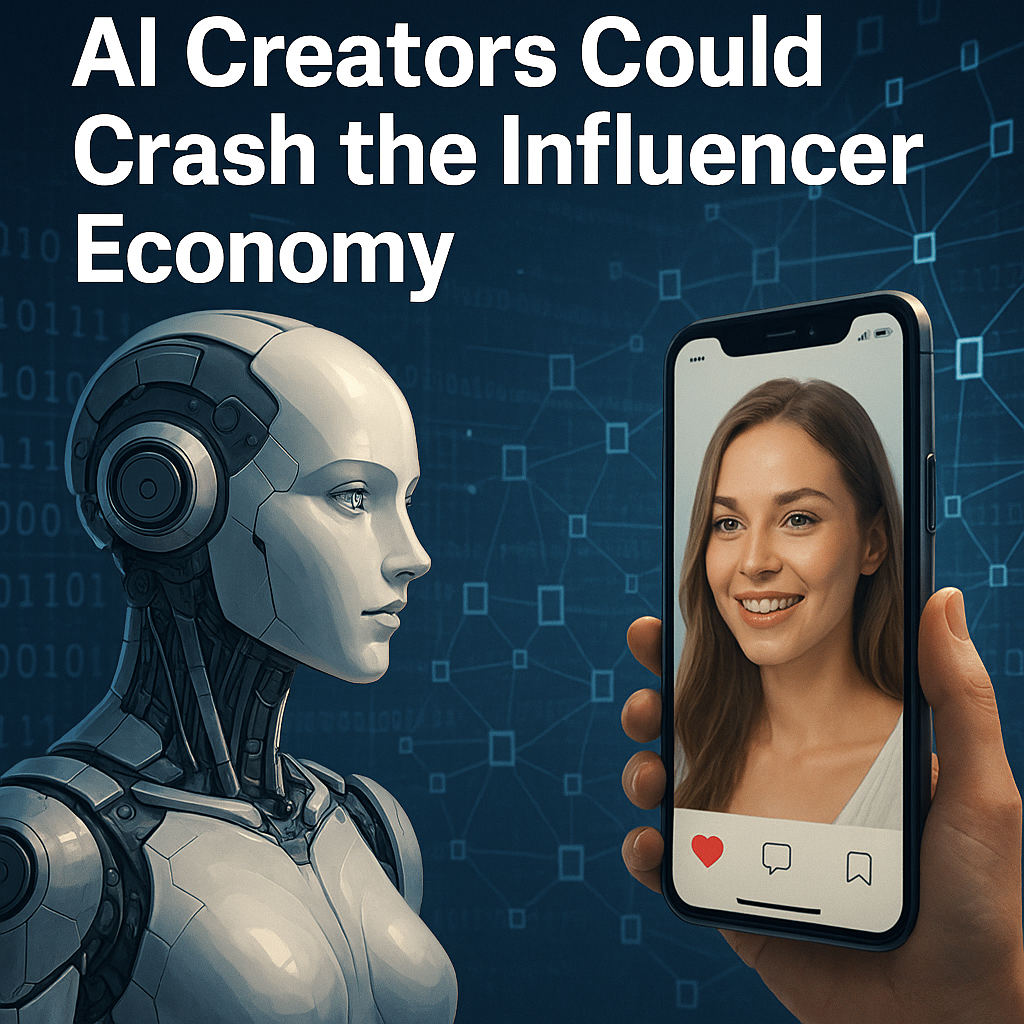
Brands have relied on human creators for a decade to drive awareness on Instagram, TikTok and YouTube. That model is under pressure. In 2024, a wave of synthetic-personality tools from startups and big tech is enabling brands to generate video, audio and social posts at scale — often for a fraction of the cost of hiring a human influencer.
Companies such as Synthesia, which raised $90 million in July 2023 to accelerate synthetic-video production, and Meta, which has invested heavily in generative AI across Reality Labs and its AI research teams, now let marketers create photorealistic spokespeople and multilingual campaigns in hours. OpenAI’s multimodal models, generative-video startups and avatar platforms have lowered the technical barrier to producing convincing, consistent personalities that can post daily and never tire.
Why the influencer economy is vulnerable
The global influencer marketing industry has been estimated at roughly $20 billion annually. That spend reflects not only creator fees but also the premium on perceived authenticity and audience trust. AI creators alter the economics in three clear ways:
- Cost and scale: Synthetic creators eliminate travel, scheduling and ongoing talent fees. A one-time avatar build plus template-driven content can reduce per-post costs dramatically compared with human talent.
- Audience targeting and localization: AI can instantly adapt language, accents and on-screen copy for regional audiences, improving CPM efficiency and conversion lift without local creators.
- Supply and pricing pressure: As more brands adopt synthetic spokespeople, demand for top-tier human creators could compress, pushing down rates and upending existing agency and talent-management contracts.
Programmatic-style creator buying and automated content generation could commodify what was once a relationship-driven market.
Authenticity, regulation and measurement
Not all brands will switch. Many campaigns hinge on perceived authenticity and personal storytelling: the kind of content that creators build over years. The U.S. Federal Trade Commission requires disclosure of endorsements, and synthetic influencers introduce thorny compliance questions about transparency and deception. Platforms including Instagram and TikTok have been experimenting with labels for AI-generated content; such measures will influence adoption.
Measurement is another battleground. Traditional KPIs like engagement rate and view-through conversions still matter, but AI-driven campaigns may score well on reach while failing to build long-term brand affinity. That forces marketers to refine attribution models and consider lifetime value, not just immediate clicks.
Industry perspectives
Industry observers say the shift is less about outright replacement and more about repricing and role specialization. “We’re not going to see human creators disappear overnight,” said an influencer-marketing consultant with experience at major CPG firms. “But brands will increasingly mix synthetic and human talent — reserving humans for storytelling and AI for scale, localization and 24/7 activations.”
A venture investor focused on creator tech added, “The unit economics for AI creation are compelling. Startups that enable credible avatars and workflows will gobble up mid-market spend, forcing agencies to evolve or lose margins.”
Implications for platforms, creators and advertisers
Platforms face trade-offs. User trust and safety teams must police deepfakes and political misinformation while enabling commercial uses. YouTube, Instagram and TikTok have invested in content moderation and labeling, and will likely add more policies specific to synthetic personalities. For creators, the near-term risk is downward pressure on rates. Top-tier influencers with niche authority should remain valuable, but many mid-tier and micro-influencers could see brief or sustained rate compression.
Advertisers will need new guardrails: mandated disclosure of AI usage, refreshed consent and appearance rights for virtual likenesses, and revised briefs that clarify who owns synthetic assets. Agencies and influencer marketplaces that add AI tooling and verification processes will gain an advantage in a fragmented buying environment.
Conclusion: a hybrid future
The most likely outcome is hybridization. Expect campaigns that blend human authenticity with AI efficiency: a real creator fronts a story while AI multiplies reach through localized, data-driven variants. That hybrid model preserves the value of trust while unlocking new scale and cost-per-engagement improvements.
For brands and creators, the message is clear: adapt or get repriced. For publishers and platforms, the challenge is to create standards that protect consumers without strangling innovation. Related coverage: our report on Synthesia’s growth and a guide to influencer ROI and FTC disclosure practices.
About the Author