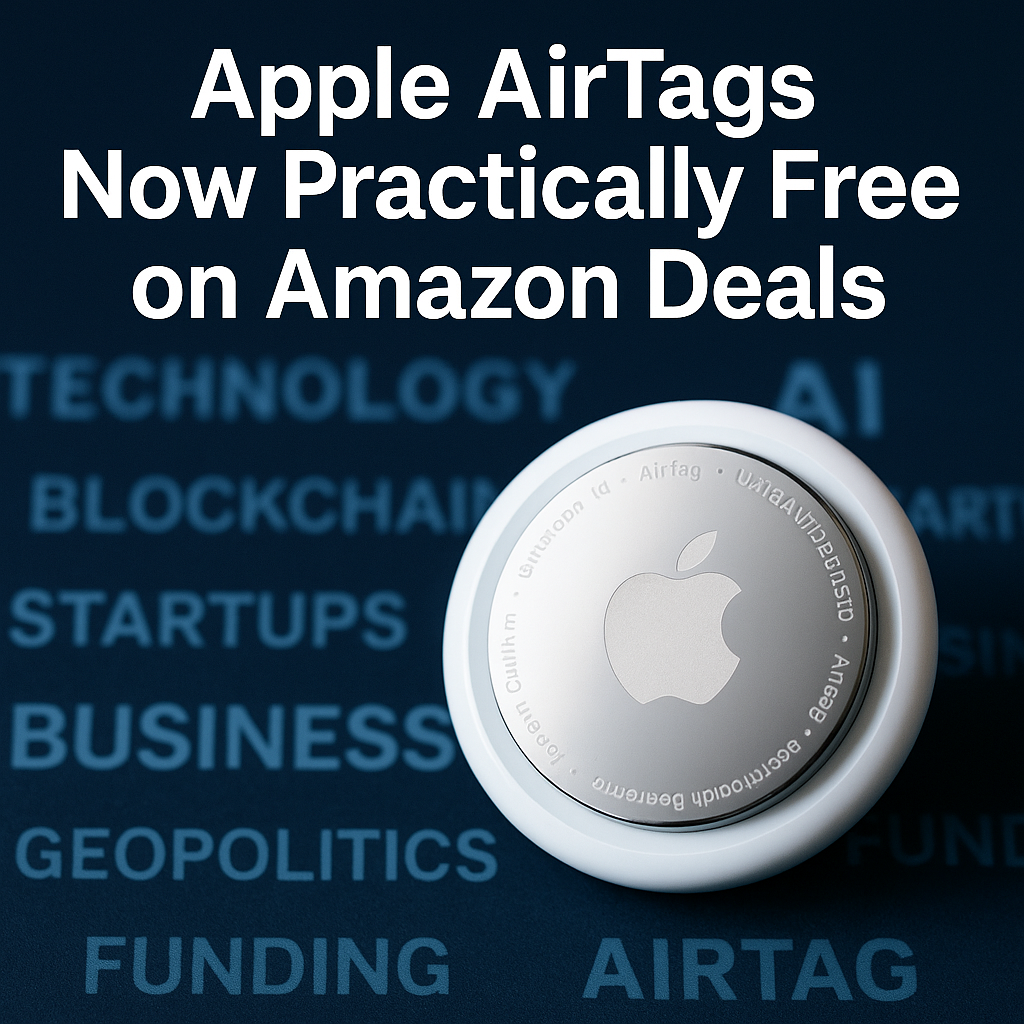
Why shoppers are seeing AirTags at rock‑bottom prices
Kotaku recently highlighted a flurry of Amazon promotions that effectively bring the sticker price of Apple’s AirTag trackers down to almost nothing for many buyers. The product itself — a small, puck‑shaped Bluetooth and Ultra Wideband tracker sold by Apple — has an MSRP of $29 for a single AirTag and $99 for a four‑pack. Since Apple introduced the device on April 20, 2021, retailers have periodically discounted AirTags during big shopping events such as Prime Day, Black Friday and clearance cycles. What’s different now is a mix of instant discounts, digital coupons and gift‑card incentives that stack and drive the effective price very low.
How the deals work (and why they feel “practically free”)
Amazon’s pricing tactics often combine multiple levers: a straight percentage off, a manufacturer coupon, and in some cases limited‑time gift‑card credits applied at checkout or after purchase. For shoppers who pay with a credit card that also offers statement credits or rewards, those savings can compound. In practice, a $99 four‑pack can be reduced to a single‑digit outlay for some customers after coupons and promotional credits — particularly when sellers run closeout or overstock promotions.
These are legitimate retail maneuvers rather than a change in Apple’s pricing. Apple’s own online store still lists AirTags at their original prices, though Apple occasionally participates in bundle offers through authorized resellers. The moves by Amazon and third‑party sellers underscore how commodity status and replacement‑rate products — like item trackers — are vulnerable to aggressive discounting when competition and inventory pressures rise.
What an AirTag is and what it can do
AirTags rely on Bluetooth Low Energy (BLE) and Apple’s Ultra Wideband (UWB) U1 chip for Precision Finding on compatible iPhones. They tap into Apple’s Find My network, a vast system of hundreds of millions of iPhones, iPads and Macs that can anonymously relay the location of a lost AirTag back to its owner. AirTags use a replaceable CR2032 battery with roughly a year of life under normal use, and they include an NFC chip that can surface owner info for anyone who finds one.
Industry context and competitive impact
Heavy discounting of AirTags reverberates across the broader tracking‑device market. Tile — one of the earliest Bluetooth tracker makers, acquired by Life360 in 2021 — and Samsung’s SmartTag lineup compete on price and cross‑platform availability, but they don’t have access to Apple’s Find My network. Deep discounts on AirTags could pressure those vendors to match prices or highlight features Apple can’t offer, like direct Android ecosystem integrations.
Analysts say discounts may reflect both retail inventory cycles and the fact that trackers are a low‑margin accessory for Apple. For many buyers, an AirTag is an impulse purchase paired with an iPhone or AirPods, and Amazon’s promotions are optimized to capture that moment.
Privacy, safety and regulatory implications
AirTags have been at the center of privacy and safety conversations since launch. Apple has iterated on anti‑stalking protections: unwanted tracking alerts that surface on iPhones, an Android app (Tracker Detect) for scanning nearby unknown trackers, and firmware updates that reduced the time a separated AirTag goes silent before alerting people nearby. Still, privacy advocates and some law‑enforcement officials continue to press for more robust detection tools and clearer safety features.
For consumers, a near‑free AirTag lowers the barrier to experimenting with item trackers — but it also increases the likelihood that trackers change hands frequently, complicating ownership verification and potential misuse scenarios. Industry observers note that cheap prices could flood the secondary market with trackers that have stale owner associations, undermining the reliability of Find My as a provenance tool.
Expert perspectives
Retail analysts point out this is textbook price elasticity: small, inexpensive accessories are highly responsive to promotional pressure. ‘‘When a product is low‑cost and widely adopted, retailers will use it as a loss‑leader or impulse item to boost larger purchases,’’ said a retail analyst familiar with consumer electronics pricing. Security researchers emphasize that while Apple has improved safeguards, consumers should remain cautious: ‘‘A discount doesn’t change the need to understand how trackers behave and how to detect unknown devices,’’ said a privacy consultant who studies location‑tracking tech.
Where this leaves consumers and the market
For shoppers who frequently lose keys, bags or luggage, today’s Amazon deals make AirTags an attractive, low‑risk experiment. For competitors and privacy advocates, the promotions amplify both the reach of Apple’s Find My ecosystem and the urgency of building better cross‑platform safety tools. If you’re buying because the price is irresistible, remember to register the device, keep firmware updated and be mindful of the safety settings in iOS.
Related topics worth exploring internally: Apple Find My network, Tile vs AirTag comparison, Amazon pricing strategies, privacy and anti‑stalking tech.
About the Author