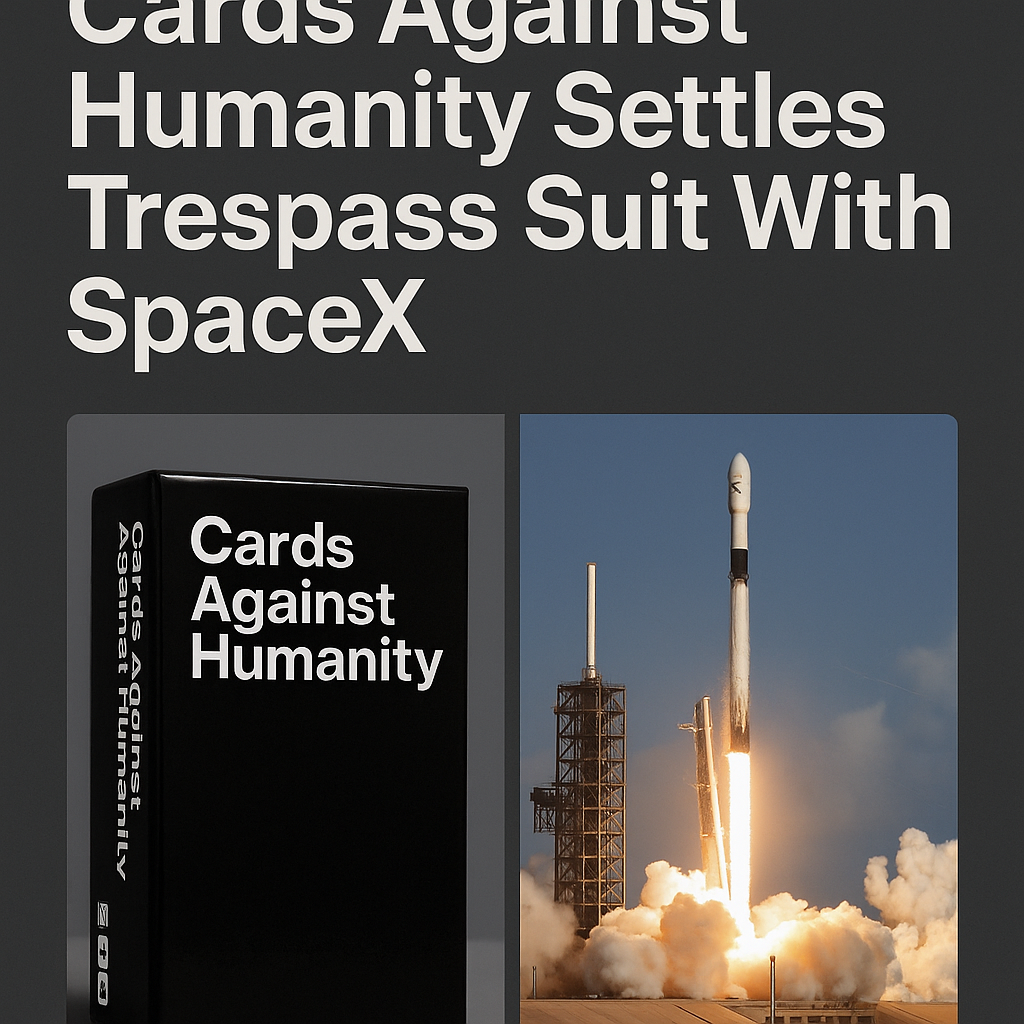
Cards Against Humanity and SpaceX have reportedly reached an out-of-court settlement to resolve a trespass lawsuit stemming from an incident near a SpaceX facility, according to multiple industry observers. While both parties declined to disclose the terms, the resolution closes a chapter that highlighted tensions between guerrilla marketing, launch-site security and the legal exposure startups and entertainment brands can face when stunts intersect with high-risk technology infrastructure.
The alleged trespass related to a promotional action that drew attention to both companies: Cards Against Humanity, known for provocative campaigns, reportedly carried out an activity that encroached on or near SpaceX property. The company is a high-profile maker of party games and viral marketing stunts; SpaceX is the private aerospace giant whose launch and manufacturing sites are often treated as sensitive facilities by regulators and investors alike.
Neither company released detailed statements immediately following reports of the settlement. Public records and filings available to date show the matter did not proceed to a contested, full trial, suggesting both sides found a negotiated resolution preferable to protracted litigation. Settlements of this kind commonly include nondisclosure provisions, insurance negotiations and sometimes modest monetary compensation — but without an official filing, specifics remain private.
Legal and Operational Implications for Tech and Startups
The incident underscores an important lesson for startups and consumer brands: stunts that generate publicity can also generate significant legal and operational risk when they intersect with regulated infrastructure. For aerospace companies and other firms operating in domains with strict safety perimeters — such as launch pads, data centers, and secure manufacturing sites — trespass events compel immediate security reviews, potential regulatory notifications and reputational management with partners and investors.
Investors in startups and growth-stage companies watch these episodes closely. A lawsuit — even a settled one — can raise questions about governance, risk management and the ability of founders or marketing teams to control escalation. Legal exposure can affect insurance premiums and due-diligence checklists, factors that weigh into follow-on funding rounds and valuations.
Technology, AI and Blockchain Considerations
The settlement also touches on adjacent technology trends. AI-driven reconnaissance tools and drone technology make it easier for brands to plan ambitious promotional content, but they also increase the likelihood of inadvertently capturing or intruding on restricted zones. Meanwhile, blockchain and NFT strategies that some consumer brands have used to monetize PR stunts introduce new compliance questions: tokenized promotions tied to physical actions can create legal obligations if the physical element runs afoul of property or safety laws.
From a corporate standpoint, companies operating at the crossroads of physical and digital assets will need clear policies that reconcile creative marketing with automated mapping, geofencing and AI-based planning tools. Startups in the marketing-technology space should bake compliance checks into product workflows to avoid costly missteps.
Geopolitics and Regulatory Scrutiny
There is a geopolitical angle as well. Spaceports and launch complexes are often near sensitive infrastructure and, in some cases, under federal oversight. Governments and regulators expect rigorous stewardship of these zones, particularly as space capabilities become a dimension of national competition. Incidents that raise safety or security concerns can accelerate tighter rules on access and surveillance, both of which influence how private industry and public agencies collaborate on launches and manufacturing.
For SpaceX, the swift resolution likely helps minimize distraction from core operations — rocket development, satellite deployments and commercial launches — while Cards Against Humanity will want to avoid prolonged legal exposure that could harm its brand or financial position.
Conclusion: The settlement ends the immediate dispute but leaves broader questions about how creative marketing, emerging technologies and sensitive industrial operations coexist. As AI, drones and blockchain expand capabilities for both companies and pranksters, robust compliance, geofencing and clear legal guardrails will become central to managing reputational and regulatory risk for startups and established tech firms alike.
About the Author