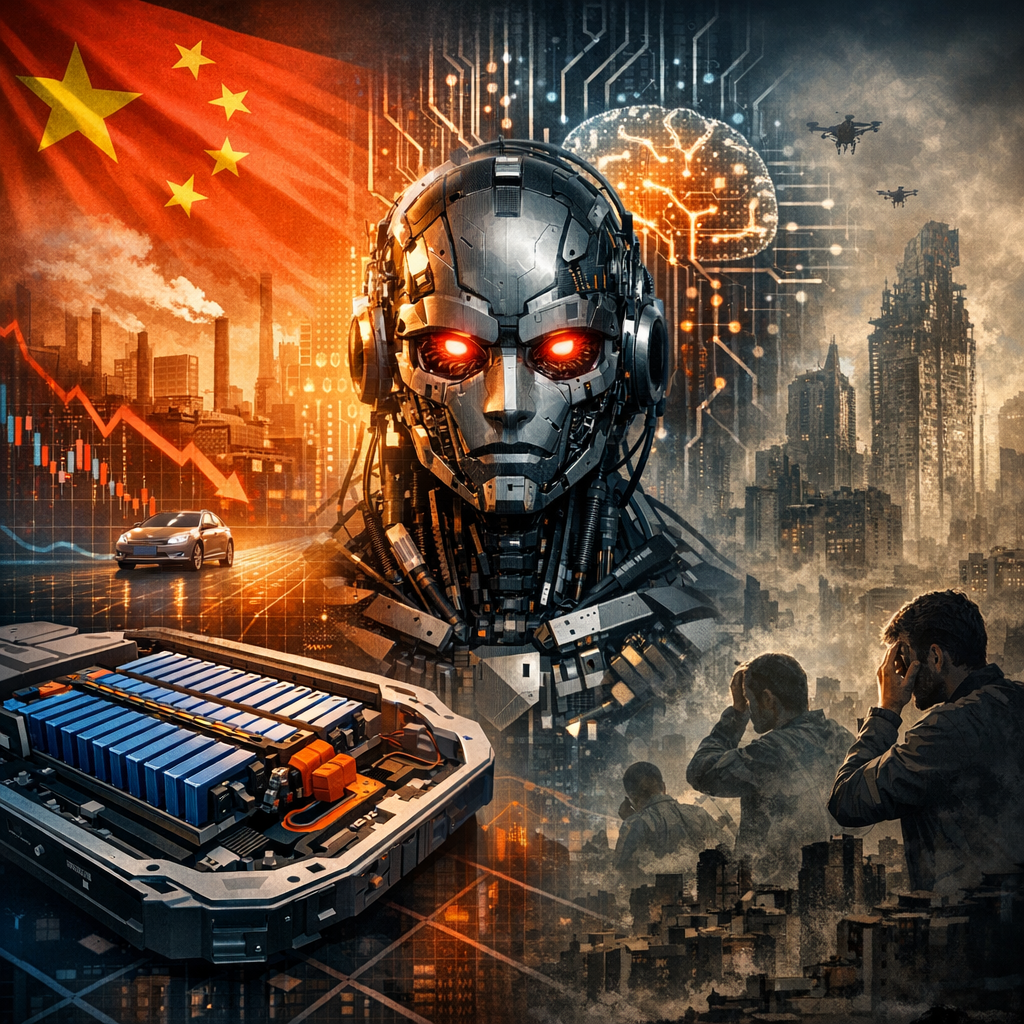
Who, what, when: the problem in brief
China — home to the world’s largest electric vehicle market and battery industry — is grappling with an increasingly visible problem: accelerating battery aging and failures in 2023–2025 that are testing warranties, resale values and recycling systems. Major battery and automaker names such as CATL, BYD, Tesla’s Shanghai operations and a host of domestic OEMs and cell suppliers are at the center of the debate as consumers report premature capacity loss and cities wrestle with end‑of‑life power packs.
What’s causing batteries to ‘die’
The root causes are multi‑factor. Lithium‑ion chemistries — notably nickel‑manganese‑cobalt (NMC) and lithium‑iron‑phosphate (LFP) — degrade with calendar time, high temperatures and aggressive fast charging. In China’s varied climates and ultra‑fast charging rollouts, that wear is showing up sooner for some owners. At the same time, variance in cell manufacturing, battery management systems (BMS) calibration, and vehicle thermal management can exacerbate state‑of‑health (SoH) losses.
Industry developments have shifted the landscape: BYD’s LFP “blade” cell (introduced to market in 2020 and used across BYD models) emphasized safety and long cycle life, while CATL — the world’s largest battery maker based in Ningde — has diversified into higher‑energy chemistries and announced new formats including sodium‑ion cells in 2023. Yet even with technological advances, large fleets mean a growing absolute number of packs exiting useful service each year.
Recycling, second life and policy gaps
China has policies encouraging battery recycling and extended producer responsibility, but practical systems lag the pace of vehicle deployment. Recovering critical materials such as lithium, cobalt and nickel typically relies on pyrometallurgical and hydrometallurgical processing — capital‑intensive and concentrated in a handful of firms. Second‑life use, where EV packs are repurposed for stationary storage, offers one route to extend value, but uncertainty about remaining capacity and warranty liabilities has slowed scaling.
Industry and regulator responses
Automakers and suppliers are responding. BYD has promoted its blade LFP for safety and longevity; CATL has invested in recycling partnerships and pilot reuse projects; and Tesla’s Shanghai factory has standardized LFP cells for some China‑market, lower‑range Model 3/Y variants since 2021 to simplify chemistry choices. Local governments and regulators have signaled they will tighten oversight on disposal and recycling chains, but comprehensive national enforcement and infrastructure investment will take time.
Why AI doomers are doubling down
At the same time, a separate but intersecting conversation has intensified: the faction often labeled “AI doomers.” These researchers, technologists and commentators warn that rapid advances in large language models and compute‑intensive AI systems — typified by OpenAI’s GPT‑4 launch in March 2023 and the subsequent race to ever larger models — are accelerating demand for energy and highly specialized supply chains.
AI pessimists argue this creates several systemic risks. First, massive data‑center power consumption can strain grids and increase competition for reliable electricity, complicating the decarbonization benefits of electrifying transport. Second, surging demand for semiconductors and advanced materials intensifies resource competition that already stresses battery supply chains. Third, geopolitical competition for chips and rare materials could amplify supply disruptions for both EVs and AI infrastructure.
Intersecting risks: energy, supply chains and governance
That convergence is why AI doomers have doubled down. They point to a feedback loop: electrification and AI both require new industrial capacity, and mismatches in policy, recycling and strategic reserves could magnify economic and environmental vulnerabilities. Analysts caution that without coordinated industrial policy — covering battery recycling, grid capacity planning and stricter lifecycle accounting for AI compute — these tensions will persist.
Expert perspectives and industry takeaways
Industry analysts note that technical fixes exist: better BMS algorithms, slower charging profiles, improved thermal design, and more robust warranties can reduce early pack retirements. Recycling technology is advancing, and pilot second‑life programs are commercially promising for stationary storage. But achieving scale requires clear regulation, capital investment and transparent SoH metrics for used packs.
Observers of the AI debate argue the right response is integrated policy: plan grid upgrades with both EV charging demand and data‑center growth in mind; incentivize closed‑loop material recovery; and build international cooperation on critical materials and chip supply to reduce geopolitical shocks.
Conclusion: what to watch next
In the near term, expect more consumer complaints and warranty claims to shape public perception of EV ownership in China, even as manufacturers roll out chemistry and BMS improvements. Policymakers will face pressure to accelerate recycling rules and support second‑life markets. Meanwhile, the AI conversation will continue to add urgency to energy and supply‑chain planning, reframing battery wear and recycling not just as automotive issues but as components of a broader industrial transition. The winners will be companies and regulators that treat batteries, data centers and grids as interconnected systems rather than siloed problems.
About the Author