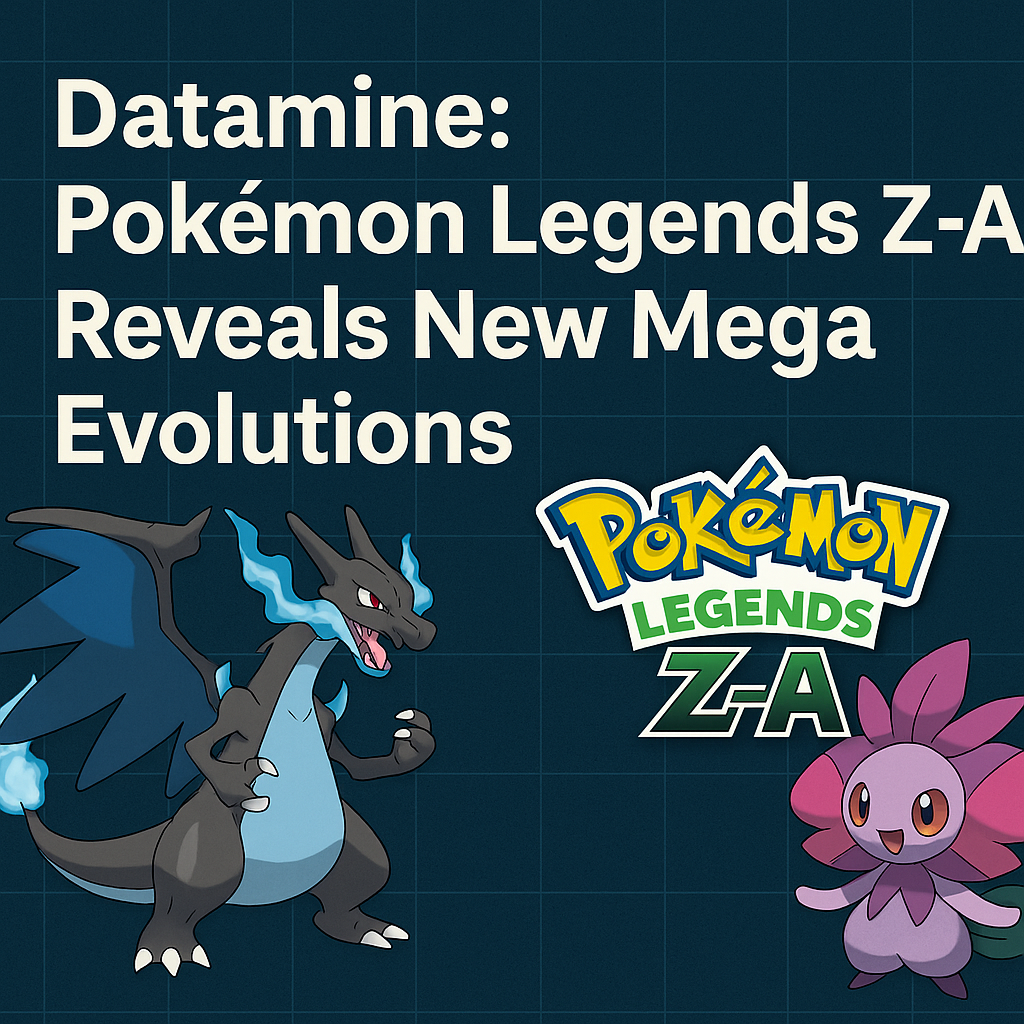
Recent datamining activity tied to Pokemon Legends Z-A has reignited community discussion after Nintendo Everything published findings that suggest a forthcoming DLC will include returning Pokemon and previously unseen Mega Evolutions. While Nintendo has not confirmed the specifics, the leaked asset data points to both nostalgic roster expansions and technical additions that matter beyond pure fandom—touching on how AI, data analytics, and business models shape modern game content delivery.
The initial report centers on raw game files and unused assets discovered by dataminers. These assets reportedly reference legacy Pokemon models and new evolution parameters that resemble Mega Evolution mechanics. If accurate, the DLC would represent a hybrid of throwback content and mechanical innovation, likely designed to boost engagement and drive DLC sales among long-time players.
From a technological perspective, the discovery underscores how automated analysis tools have changed how fans and researchers inspect game code. Modern datamining often employs machine learning pipelines, pattern recognition, and automated parsers to extract and classify 3D models, animation rigs, and configuration files at speeds unattainable by manual review. That efficiency accelerates the pace at which leaks surface and broadens the skills required to defend digital IP.
For Nintendo and other major publishers, this reality poses both opportunities and headaches. On one hand, community-driven findings create pre-launch buzz and free publicity. On the other, premature leaks can disrupt marketing plans and monetization strategies. The balance plays directly into corporate decision making: release schedules, DLC pricing, and regional launch windows are all business levers impacted by uncontrolled data exposure.
These dynamics also create a market for specialized startups. Companies focused on game security, anti-cheat, and asset monitoring have seen rising interest, and venture funding follows perceived need. Investors are increasingly attentive to firms building AI-powered tools that detect asset leaks, trace unauthorized distributions, or help publishers sanitize builds before release. The datamine around Pokemon Legends Z-A is a case study for why such solutions attract capital: leaks translate to lost strategic advantage and potential revenue erosion.
There is also noise about blockchain and play-to-earn economies whenever game economies expand. While there is no verified connection between this DLC datamine and blockchain integration, the broader industry trend is worth noting. Blockchain gaming startups and NFT platforms continue to court large IP holders with proposals for new revenue streams. Publishers like Nintendo have historically been cautious about third-party monetization, but market pressures and startup innovation keep the conversation alive.
Geopolitics and regulatory scrutiny further complicate matters. Cross-border digital distribution, data protection rules, and differing take-down regimes mean that leaks can propagate unevenly, forcing publishers to adopt region-specific strategies. For multinational companies, coordinating legal, PR, and technical responses to datamining incidents is now a routine part of product management.
What should players and industry observers expect next? Practically, confirmation will likely come through official Nintendo channels or an update to DLC announcements. Meanwhile, publishers will continue investing in tools and processes to harden builds and manage information flows. For startups and investors, the incident reinforces demand for AI-driven security and analytics in gaming. For the wider market, datamines like this accelerate debate about how open communities and tightly-managed IP can coexist in an era of powerful automated analysis.
In conclusion, the Nintendo Everything datamine story about Pokemon Legends Z-A is more than a roster rumour. It highlights how modern game development, AI-enabled research, startup innovation, and corporate strategy intersect. Whether the leaked Mega Evolutions and returning Pokemon arrive as part of an official DLC, the episode underscores shifting economics and technical imperatives that will shape the gaming industry for years to come.
About the Author