ElevenLabs opens marketplace to license famous voices
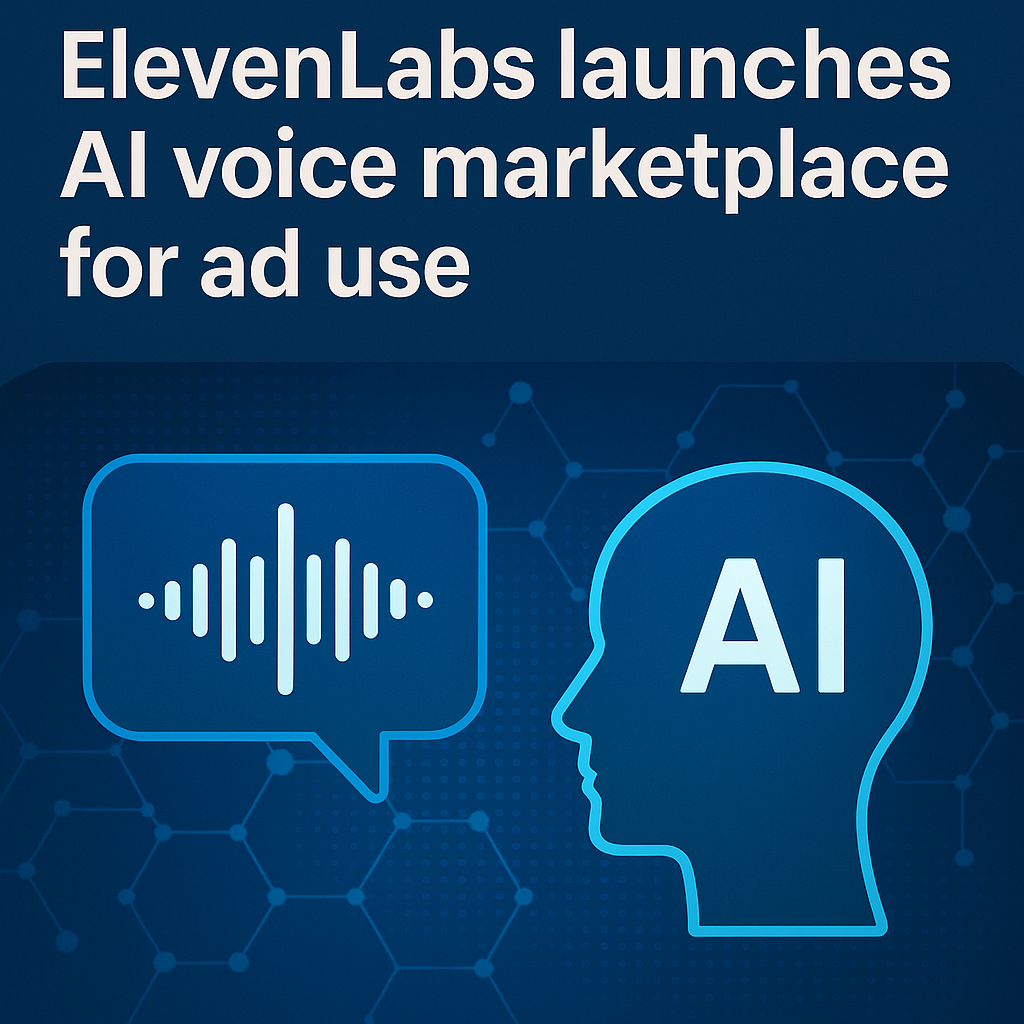
ElevenLabs, the synthetic-voice startup best known for its Studio text-to-speech tools and API, this month launched an AI marketplace that lets brands license high‑quality, humanlike voices — including celebrity and influencer talent — for advertising and commercial use. The move formalizes a monetization path for voice talent and creates a new channel for marketers to procure recognizable voices at scale, while reigniting debate around consent, compensation and deepfake regulation.
What the marketplace offers and how it works
The marketplace integrates with ElevenLabs’ existing Studio and API products and allows rights‑holders and voice creators to list licensed voice models that advertisers can buy for campaigns. According to ElevenLabs’ product pages and developer documentation, the storefront supports per‑use licensing, subscription models and enterprise contracts through the Eleven API, making it possible to embed licensed voices into radio, podcast, streaming and programmatic audio ads.
On the technical side, ElevenLabs continues to use its neural TTS engine — trained on high‑fidelity recordings and optimized for natural prosody, breath, and emotion — to deliver voice clones that are intended to be indistinguishable from human performance. The company has emphasized that listed voices are available only with explicit consent from the talent or rights owner and that listings will include metadata specifying permitted use cases and geographic or temporal limits.
Background: a fast‑evolving market
AI voice cloning has matured rapidly in the last two years. Competitors such as Resemble AI, Respeecher and Replica have all offered voice licensing, while audio tools in platforms like Descript and Murf let creators synthesize or overdub speech for podcasts and video. For advertisers, synthetic voice opens the door to global localization, 24/7 content updates and rapid iterative testing of messaging and tone.
But the technology’s growth has outpaced regulatory guardrails. High‑profile incidents in 2023 and 2024 — including unauthorized celebrity voice deepfakes and industry union talks — pushed ad buyers, talent representatives and regulators to demand clearer consent and compensation mechanisms. ElevenLabs’ marketplace attempts to respond to those concerns by building licensing into the platform rather than relying on ad hoc agreements.
Monetization and commercial dynamics
For brands, the appeal is straightforward: licensed celebrity voice models can be cheaper and faster than booking studio time and can be integrated directly into programmatic creative stacks. For voice actors and influencers, marketplaces create new revenue streams: ongoing royalties, performance fees and broader exposure. Agencies and ad tech platforms are likely to evaluate the marketplace for dynamic creative optimization (DCO) workflows, where audio variants are auto‑generated and tested in real time.
Industry reaction and legal implications
Ad agencies and in‑house brand teams that spoke with industry analysts welcomed the convenience and compliance model, but urged caution. Legal teams note that a marketplace does not eliminate risk: rights clearance for likenesses, translation into derivative works, residuals, and union rules (notably SAG‑AFTRA and global performers’ unions) remain thorny.
Privacy and deepfake regulators will be watching. In many jurisdictions, voice is treated as a biometric-like attribute; lawmakers in Europe and some U.S. states are already revising digital identity and deepfake statutes. Tech policy experts say platforms that centralize licensed voice assets may attract greater scrutiny but could also become models for safe commercialization if they maintain transparent provenance and enforceable contracts.
Expert perspectives
Industry analysts characterize the marketplace as a turning point for commercial voice tech. One ad‑tech strategist explained that a licensed storefront reduces friction for procurement teams and could accelerate adoption of audio DCO. At the same time, a media lawyer cautioned that “license management, auditing, and enforcement will have to be airtight” if brands and platforms want to avoid litigation and reputational risk.
Voice actors’ representatives have expressed conditional support: structured licensing can provide predictable pay and control, but only if union participation and residual frameworks are respected.
Conclusion: what comes next
ElevenLabs’ marketplace represents a maturation of synthetic voice from a developer novelty into a commercial channel for advertising. If it succeeds, marketers will gain a fast, scalable way to deploy recognizable voices across digital audio, while talent will have clearer pathways to monetize their voices. But adoption will hinge on how well the marketplace enforces consent, integrates with ad tech stacks, and navigates evolving legal regimes. Expect agencies, unions and regulators to scrutinize early deployments — and for industry best practices in provenance, auditing and royalty distribution to emerge quickly if the model proves commercially viable.
Related topics for editors and readers: ElevenLabs Studio, AI voice cloning ethics, programmatic audio ads, SAG‑AFTRA AI negotiations.
About the Author