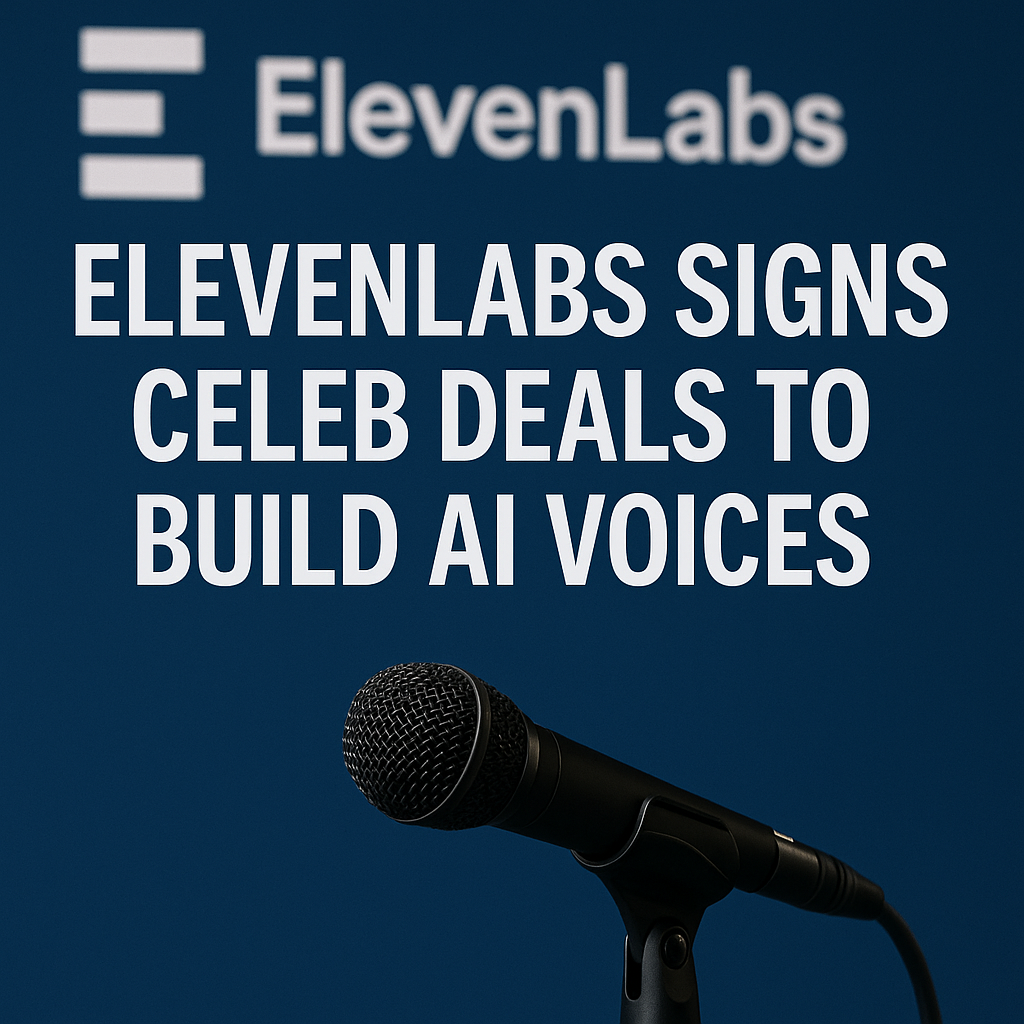
ElevenLabs inks celebrity licensing deals to sell AI audio
ElevenLabs, the startup behind advanced text-to-speech and voice-cloning tools, has begun striking commercial deals with celebrities to create licensed AI audio renditions of their voices. The move — aimed at populating a paid “voices” marketplace and opening new revenue streams for talent and the platform — marks a significant step in the commercialization of synthetic audio, a space dominated by players such as Descript, Resemble.ai and Respeecher.
Why this matters: context and timeline
ElevenLabs rose to prominence for its high-fidelity generative speech models that can reproduce natural prosody and nuanced articulation from relatively little recorded data. Since the technology entered the mainstream in 2022 and 2023, the industry has wrestled with how to balance creative opportunities against risks of misuse — including deepfake audio and unauthorized voice cloning. The actors’ union SAG-AFTRA and other stakeholders highlighted those issues during the 2023 labor disputes, where AI use and voice rights were major talking points.
By negotiating explicit licensing agreements with celebrities, ElevenLabs is attempting to create an opt-in ecosystem where voice talent are compensated and retain control over commercial uses of their likeness. Company representatives say licensed voices will be clearly labeled, available for commercial licensing, and subject to contractual terms governing distribution and revenue splits.
How the deals work and product implications
Under the reported model, celebrities or their representatives grant ElevenLabs permission to model a voice and to offer it to customers under specific commercial licenses. Buyers — ranging from advertisers and game studios to podcasters and audiobook producers — would then pay for access, with part of revenue flowing to the talent. That mirrors emerging business models in other creative AI verticals, like generative image marketplaces and music-sampling platforms.
Technically, ElevenLabs will rely on its neural TTS stack and metadata-driven delivery to differentiate licensed voices from user-created clones. The platform is expected to implement provenance features such as audible or embedded watermarking, metadata tags, and strict identity verification for voice uploads — measures that companies and regulators see as essential for traceability and combating fraud.
Use cases and market demand
Licensed celebrity voices have clear commercial appeal: branded advertising, character voices in games, localized narration and premium podcast segments are immediate opportunities. For creators, buying a licensed celebrity voice can reduce casting complexity and costs while delivering instant brand recognition. For celebrities, these deals offer passive income and tighter control over how their voice is monetized in the AI era.
Expert perspectives and industry reaction
Reactions among audio professionals and policy experts are mixed. An audio-industry strategist who asked not to be named said, “Licensed voice programs could professionalize the market and give talent real bargaining power. But success depends on transparency, enforceable contracts and technical safeguards that prevent unauthorized reuse.”
Other voices in the sector caution about enforcement: automated watermarking can help, but secondary markets, spoofing tools and jurisdictional gaps complicate policing. Legal scholars note that existing publicity and voice rights law varies by jurisdiction, meaning contract protections will be critical.
Risks, regulation and ethical considerations
Even with licenses, the expansion of celebrity AI voices raises questions about consent durability, derivative uses and long-term reputation risk. Rights holders will need clear restrictions on political, defamatory or pornographic uses, and platforms must develop rapid takedown and dispute-resolution processes. Regulators in Europe and the U.S. are increasingly scrutinizing synthetic media; companies that move quickly to implement best practices may avoid harsher regulatory interventions.
What this means for creators and the industry
For voice actors and talent agencies, licensed AI voices represent both competition and opportunity. Some performers worry that synthesized versions could undercut live performance fees; others see licensing as a new revenue stream that requires different safeguards and residual models. For the broader AI audio market, ElevenLabs’ approach may set commercial and technical precedents — from revenue-sharing norms to provenance standards.
Conclusion: the road ahead
ElevenLabs’ celebrity licensing push underscores a turning point in voice AI: companies are moving from experimental demos to formal marketplaces and commercial contracts. The long-term success of that model will hinge on enforceable rights management, robust anti-abuse technology, and clear industry standards. For publishers and platforms covering AI voice cloning, related topics to watch include copyright law updates, provenance watermarking advances and union negotiations — all fertile internal linking opportunities for coverage on AI ethics, synthetic media and creative industry labor.
About the Author