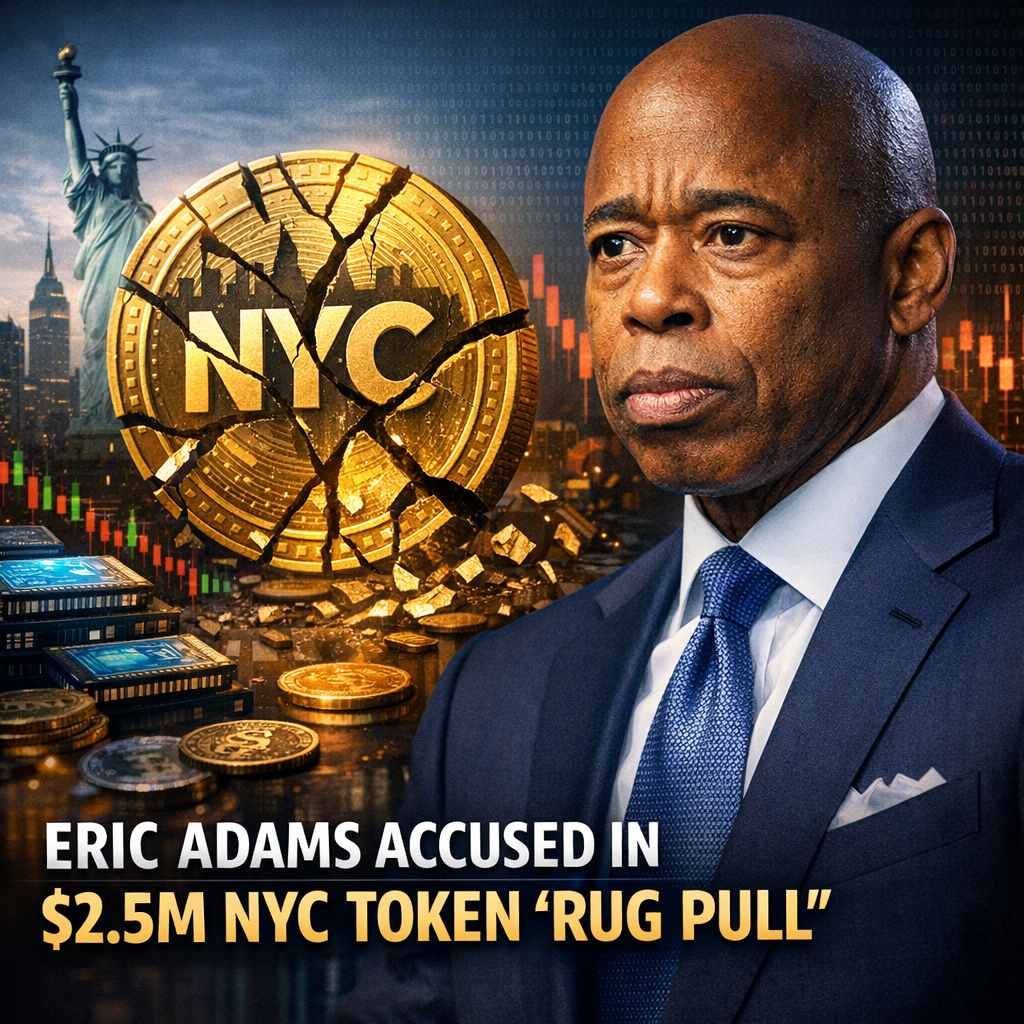
Allegations emerge as NYC Token crashes
Former New York City mayor Eric Adams has been accused this week of involvement in a $2.5 million cryptocurrency “rug pull” tied to a token marketed as “NYC Token,” according to widespread posts on social media and cryptocurrency forums. The allegations — which Adams and his representatives have not publicly confirmed or denied as of publication — say that large sell-offs tied to developer-controlled wallets precipitated a steep decline in the token’s market value, leaving retail holders facing heavy losses.
What is alleged and what is verified
Reporting so far centers on claims circulated by anonymous users and community sleuths who monitor blockchain transactions. Those posts allege that tokens marketed under the NYC Token name were dumped into open markets and converted to stablecoins and other assets, resulting in roughly $2.5 million being withdrawn from the protocol. Independent verification by major news outlets remains limited; blockchain records show transfers from several addresses associated with the token, but attribution of on-chain wallets to named individuals is notoriously difficult without corroborating evidence.
Rug pulls are a well-known form of crypto fraud in which project insiders or developers suddenly sell large token holdings and withdraw liquidity, causing prices to collapse. The term has entered mainstream reporting as regulators and law enforcement have intensified scrutiny of token launches, initial coin offerings (ICOs) and decentralized finance (DeFi) projects that lack clear governance or custodial protections.
Timeline and immediate fallout
The claims surfaced this week after trading activity around NYC Token spiked and the token’s price plunged on decentralized exchanges and smaller centralized venues. Community moderators and crypto watchers highlighted transfers from so-called developer wallets into liquidity pools and centralized exchanges. Marketplaces relisted and delisted orders in response to the volatility, and holders posted screenshots showing substantial unrealized losses. Official statements from exchanges, blockchain analytics firms, or Adams’ office were not available at press time.
Background and context
Allegations connecting a public figure to a crypto project raise questions about disclosure, endorsement and potential conflicts of interest. Over the past several years, celebrities, athletes and public officials have lent their names or support to token sales and NFT projects, sometimes without clear regulatory compliance or investor protections. That trend has made attribution and accountability difficult when projects fail or are accused of misconduct.
Regulators including the U.S. Securities and Exchange Commission (SEC) and the Commodity Futures Trading Commission (CFTC) have pursued enforcement actions against token issuers and platforms in cases where offerings were deemed to involve unregistered securities or where fraud was alleged. State authorities, particularly in New York, have also been active in bringing consumer-protection and fraud cases tied to virtual-asset activity.
Expert perspectives
A cryptocurrency compliance lawyer (who spoke on the condition of anonymity) said: “If the allegations are true and funds were diverted by insiders after marketing the token to retail buyers, regulators will have multiple avenues to investigate — from securities law to consumer fraud statutes. But proving on-chain attribution to a named individual is a hurdlesome process without accompanying off-chain evidence.”
A blockchain security researcher added: “Rug pulls often rely on opaque tokenomics and centralization of liquidity. The immediate priority for victims is gathering transaction records and preserving evidence; for investigators it’s tracing flows through mixers, exchanges and custodial accounts.”
Political and legal implications
Beyond the forensic and regulatory angles, allegations tying a high-profile public official to a token collapse carry political risk. Even unproven claims can prompt ethics inquiries, legislative scrutiny, or civil suits by investors seeking restitution. If exchanges or on-chain analytics firms can tie proceeds to identifiable accounts or fiat withdrawals, that could accelerate subpoenas and formal enforcement actions.
Conclusion and outlook
As with many crypto controversies, the story hinges on the slow work of blockchain tracing, subpoena power and corroborating off-chain records. For now, the incident underscores persistent vulnerabilities in token launches and the reputational hazards of associating public figures with nascent digital-asset products. Investors and policymakers are likely to press for clearer disclosure, stronger custody and anti-fraud safeguards as scrutiny increases. The coming days may bring more definitive statements from Adams’ representatives, blockchain analytics firms or regulators that clarify whether misconduct occurred and who, if anyone, bears legal responsibility.
About the Author