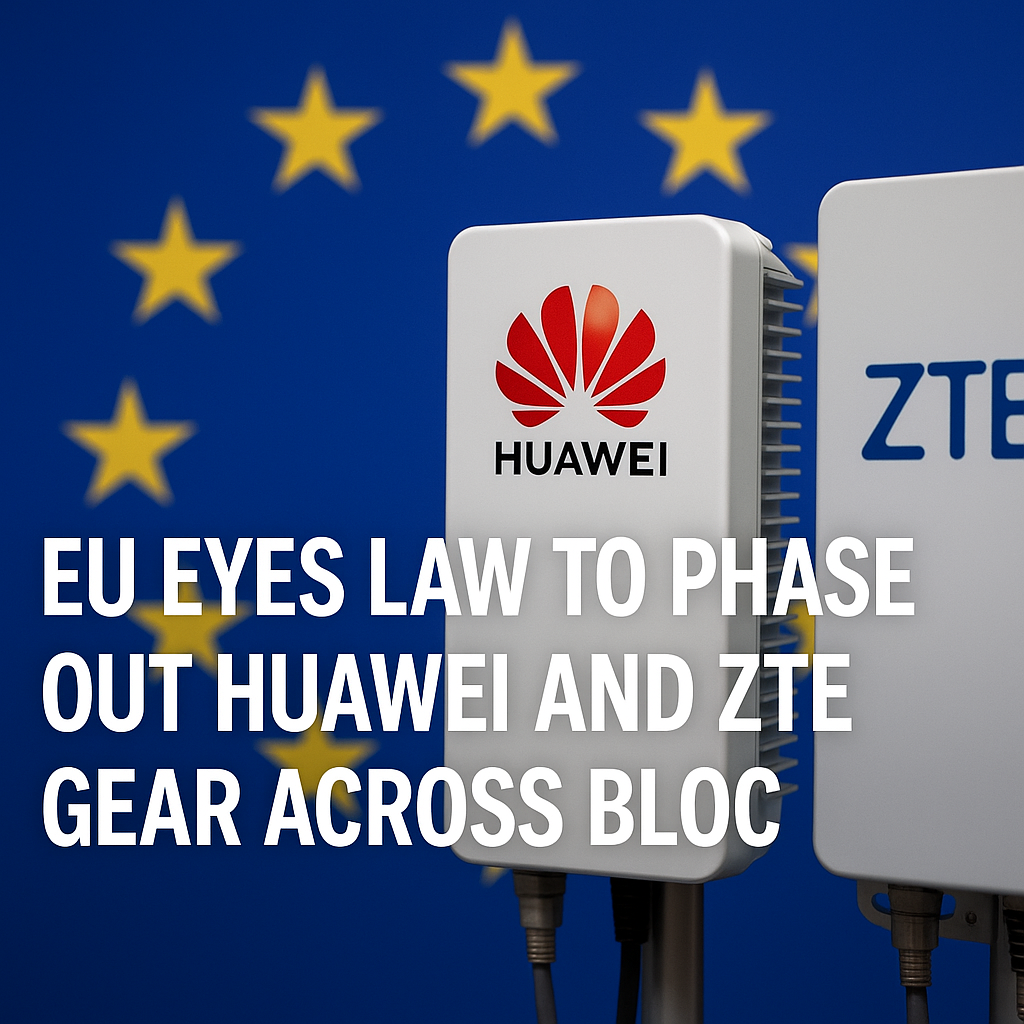
EU weighs a formal phase-out of Huawei and ZTE equipment
The European Commission is considering legislation that would require telecom operators across the European Union to remove and replace equipment from Chinese vendors Huawei and ZTE from critical parts of the bloc’s telecom networks. The proposal, still under debate in Brussels and among member states, would mark a significant tightening of the EU’s approach to 5G and wider telecom security as regulators push to reduce strategic dependencies and strengthen supply-chain resilience.
Background: from the 5G Toolbox to national bans
The move builds on earlier EU work such as the 5G cybersecurity toolbox introduced in 2020 and the bloc-wide focus on resilience encapsulated in measures like the NIS2 directive, adopted in 2022. Several EU member states have already taken national steps: Sweden, Latvia, Lithuania and Poland imposed restrictions on certain Chinese vendors; the United Kingdom instituted a formal ban on Huawei equipment in 5G networks and ordered removal of legacy Huawei kit by the end of 2027.
Huawei and ZTE have been major suppliers of radio access network (RAN) and core network gear globally and in Europe. Operators in the bloc use a mix of vendors — Nokia, Ericsson and Samsung among them — together with Huawei and ZTE. Replacing non-EU kit will require significant engineering work, coordination with national regulators and, in many cases, large capital expenditures by carriers.
Technical and commercial implications
From a technical perspective, the most sensitive tasks involve the radio access network and certain elements of the core network where vendor-specific software and interfaces are pervasive. Operators will face interoperability, testing and downtime challenges when rip-and-replace programs are carried out. The cost could be substantial: past industry estimates for large-scale equipment swaps run into the hundreds of millions per large operator, particularly when removal deadlines force accelerated timelines.
Strategically, the proposed law is likely to accelerate adoption of alternatives such as Ericsson’s Radio System and Nokia’s AirScale, along with Samsung’s 5G RAN offerings. It could also boost the case for cloud-native virtualized RAN and Open RAN architectures, which promise more vendor-neutral ecosystems by disaggregating hardware and software. However, Open RAN is not yet a drop-in replacement at scale for all operators and will require further maturation on performance, integration and security assurance.
Supply chain and market effects
Telecom equipment supply dynamics will be affected across procurement, maintenance and aftermarket services. Operators that relied on Huawei or ZTE for low-cost kit may see near-term increases in capital expenditure and operating costs. Vendors such as Ericsson and Nokia may see accelerated order flows but will also be under pressure to deliver at scale and at competitive prices. Component suppliers, software integrators and managed service firms will all play roles in the transition.
Expert perspectives
Security advocates argue the law would reduce systemic risk to critical communications infrastructure, aligning EU policy more closely with long-standing U.S. restrictions and national measures across NATO allies. Telecom industry representatives warn the costs and logistics of replacing embedded equipment could be disruptive and may lead to higher consumer prices or slowed rollout of future network upgrades.
Analysts note that timing and implementation details will determine the economic impact. A phased, risk-based approach tied to certification and substitution pathways would ease operational strain, while an abrupt deadline could create supply bottlenecks for Ericsson, Nokia and other approved vendors.
Regulatory path and parliamentary debate
Any formal law would need approval from the European Parliament and EU member states in the Council. Debates will likely center on scope (which parts of the network are covered), transition timelines, financial support mechanisms for operators, and mechanisms for assessing and certifying replacement vendors. The EU’s existing cybersecurity certification framework and telecom regulators such as BEREC will play central roles in setting technical and assurance requirements.
Conclusion: market reset or measured transition?
The EU’s consideration of a law to phase out Huawei and ZTE equipment signals a potential reset in how European governments manage telecom security and strategic dependence. If enacted, it would accelerate diversification away from non-EU suppliers and could catalyze investment in European and alternative vendors and in Open RAN ecosystems. But much will depend on implementation details: timelines, costs, and whether regulators provide transition support. Observers should watch for draft text from the Commission and ensuing negotiations in the Parliament and Council over the coming months.
See also: Open RAN adoption, NIS2 directive transposition, UK Huawei removal policy, Ericsson and Nokia market response.
About the Author