Lede: Who, what, when, where, why
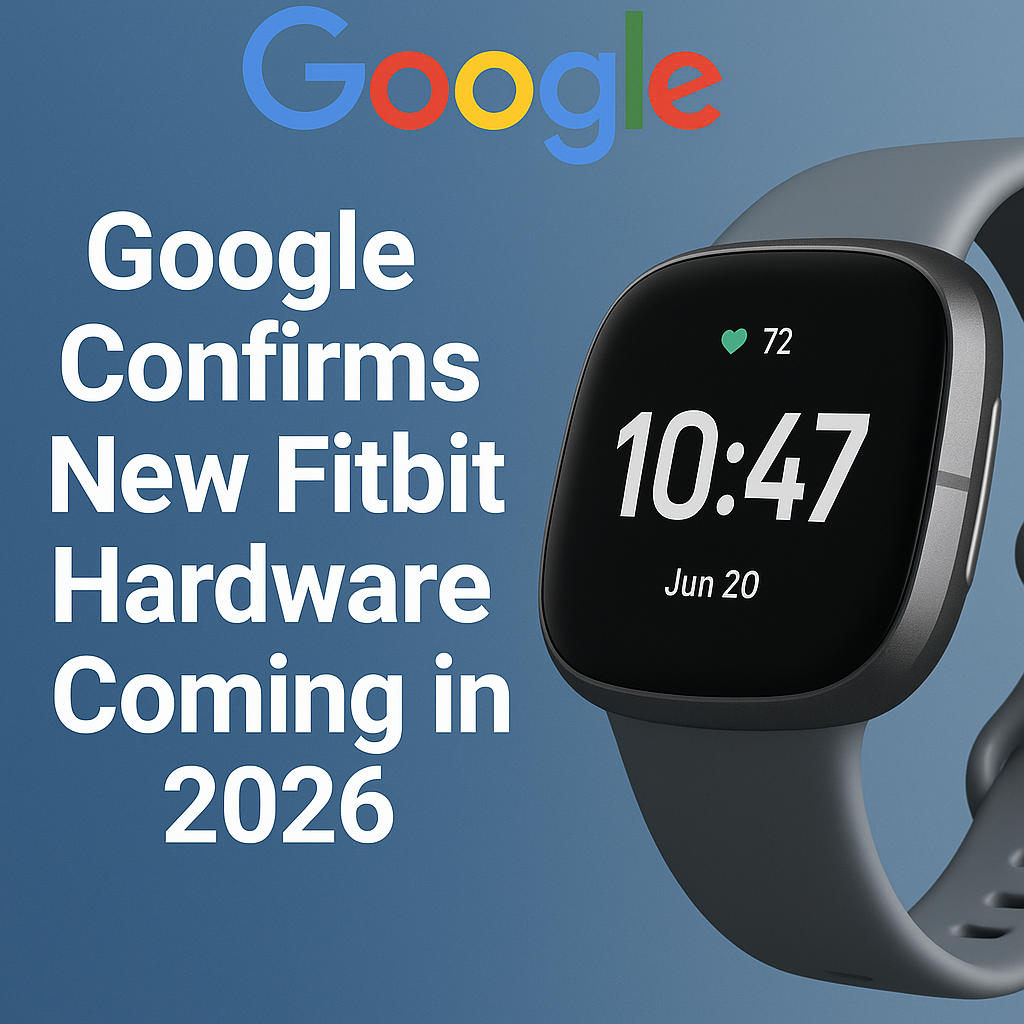
Google (Alphabet Inc.) has confirmed that new Fitbit-branded hardware is slated to arrive in 2026, according to reporting by 9to5Google. The announcement signals a strategic reboot for Fitbit as Google moves to sharpen its wearable strategy and better position Fitbit against entrenched rivals such as Apple. The 2026 timeline gives Google roughly two years to develop hardware, software and ecosystem ties that mesh with Wear OS and Google Health initiatives.
What 9to5Google reported and official context
9to5Google’s coverage summarized Google’s messaging that Fitbit remains an active product line and that new devices are planned for 2026. Google acquired Fitbit in 2021 for $2.1 billion, and since that acquisition the company has balanced Fitbit’s identity with integration into Pixel Watch and Wear OS efforts. The 2026 hardware timeline is the clearest public signal to date that Google intends to keep the Fitbit brand alive alongside its Pixel Watch hardware.
Why this matters: market dynamics and competition
Fitbit’s return to new hardware under Google matters because the smartwatch and fitness-tracker market is highly concentrated. Industry data over recent years shows Apple controls roughly half of the global smartwatch market, leaving challengers like Samsung, Garmin and Google to carve out the rest. A renewed Fitbit hardware program could help Google compete across price tiers — from low-cost fitness bands to mid-range smartwatches — and provide differentiation from the Pixel Watch, which launched in October 2022 and positioned Google directly against Apple Watch on flagship features.
Implications for users and ecosystems
For Fitbit users, new devices in 2026 could mean refreshed sensors, longer battery life and deeper integration with Google Health and Fitbit’s legacy app features. Device owners who favor Fitbit’s simplified fitness-first approach may see new models that emphasize long battery life and health tracking over full smartwatch functionality. For developers and partners, a 2026 launch window provides clarity on roadmap timing and opportunities to align apps, services and accessories.
Fitbit’s evolution since the 2021 acquisition
After Google completed the $2.1 billion acquisition of Fitbit in 2021, the brand continued to ship wearables while Google worked on Wear OS integration and the Pixel Watch. The acquisition came with regulatory scrutiny and consumer privacy commitments; now, five years on, Google appears ready to invest further in Fitbit hardware rather than retire the brand. That choice could help Google address multiple segments of the wearable market simultaneously: Fitbit for fitness-first buyers and Pixel Watch for integrated Google services and premium smartwatch buyers.
Supply-chain, chipset and software considerations
A 2026 release gives Google time to secure supply-chain agreements, choose chipsets and refine software stacks. Qualcomm remains a common supplier of wearable SoCs for Android-based watches, and Google could also extend deeper collaboration between Fitbit’s health algorithms and Google’s machine-learning stack. Expect Google to focus on power efficiency, sensor accuracy and data privacy — areas investors and consumers cite as key buying factors.
Expert insight and analysis
Industry observers have noted that bringing Fitbit back with new devices could be a pragmatic move to capture broader price tiers and user preferences. Analysts say that keeping both Fitbit and Pixel Watch lines allows Google to pursue volume through affordable fitness trackers while reserving premium features for Pixel hardware. The 2026 timeframe sets clear expectations for partners and competitors and creates a runway for Google to demonstrate measurable improvements in health tracking and battery life.
Outlook: what to watch between now and 2026
Between now and 2026, watch for three signals that will indicate how ambitious Google’s Fitbit relaunch will be: (1) patent filings or job postings hinting at new sensor work, (2) tighter integration between Fitbit data and Google Health/Workspace services, and (3) supply-chain moves such as chipset partnerships. If Google follows through, the Fitbit revival could reshape wearable pricing and feature competition as we approach 2026.
Conclusion
Google’s confirmation that new Fitbit hardware is coming in 2026 — as reported by 9to5Google — marks a turning point for the company’s wearable strategy. The shift reflects a two-pronged approach: retain Fitbit’s fitness-first audience while pushing Pixel Watch as a flagship experience. For consumers, developers and competitors, the 2026 timeline provides clarity and a chance to prepare for the next wave of hardware and health-focused features.
About the Author