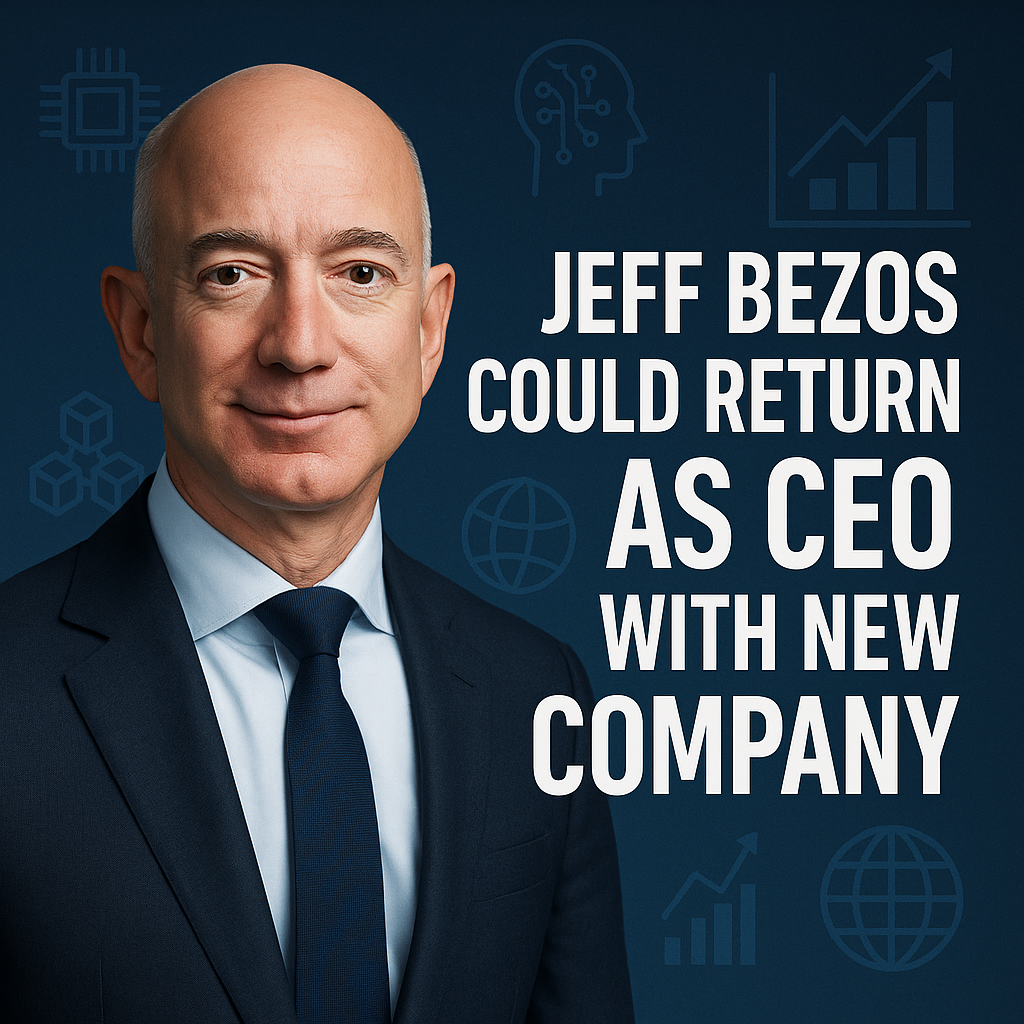
Bezos back in the hot seat? The what, when and why
Jeff Bezos stepped down as Amazon’s CEO on July 5, 2021, handing the role to Andy Jassy while remaining executive chair of the company he founded in 1994. Since then Bezos has focused public attention on ventures outside of Amazon: Blue Origin (founded in 2000), which develops suborbital and orbital rockets; the Bezos Earth Fund, announced in 2020 with a $10 billion pledge to fight climate change; and ownership of The Washington Post (acquired in 2013). But one simple move — launching a new company and taking the CEO title — would mark his formal return to an operating chief executive role, with implications for investors, competitors and regulators alike.
Background: why a Bezos-led startup would matter
Bezos’s track record as a founder-CEO is well established. Under his leadership Amazon scaled from an online bookseller to a $1+ trillion company (market valuations fluctuated in the late 2010s and 2020s) and reshaped retail, cloud computing with Amazon Web Services, logistics and advertising. Blue Origin has given Bezos a profile in aerospace; his July 20, 2021 New Shepard flight was another high-profile milestone. Returning to a CEO post — whether for an aerospace spin-off, a climate-tech venture, a new consumer platform or a biotech play — would immediately attract capital, media attention and regulatory scrutiny.
What this would mean for Amazon and other holdings
If Bezos became CEO of a newly formed company, the first question would be conflict of interest and time allocation. As executive chair of Amazon, he still exerts influence over strategy and culture. A new operational role could prompt governance discussions at Amazon’s board and among large shareholders. For investors, Bezos’s operational return could be a catalyst for rapid growth but also raise concerns over divided attention, potential resource overlap, or competitive entanglements — for example, in cloud services (AWS), logistics, or AI initiatives.
Regulatory and antitrust implications
Bezos has overseen hyper-scale expansion before; regulators in the U.S. and EU have shown increasing interest in the market power of technology giants. A startup led by Bezos that leveraged Amazon partnerships or spun out technology tied to his holdings would likely face heightened antitrust and data-privacy scrutiny. That dynamic played out in scrutiny of major tech M&A and platform behavior through the 2020s; a new Bezos-led company would not operate in a regulatory vacuum.
Capital markets and talent advantages
Bezos’s entry as CEO would be a signal event in venture capital and public markets. Founders and investors routinely court experienced operators; Bezos brings not only capital but brand, recruiting leverage and a Rolodex of executives and engineers. That could compress fundraising timelines, lift valuations and attract senior talent away from established players. On the flip side, well-capitalized incumbents and sophisticated institutional investors would watch burn rates, governance structure and succession planning closely.
Expert perspectives
Industry observers note that founder-CEOs often accelerate product development through decisive resource allocation and cultural prioritization. Analysts who cover leadership transitions point out two relevant patterns: first, founders who return to chief executive roles tend to pursue big, high-risk bets rather than incremental improvements; second, such returns can re-energize teams but also unsettle boards and management layers. In the case of Bezos, his prior experience scaling Amazon and launching Blue Origin suggests a focus on long-term, capital-intensive projects rather than quick exits.
Strategic possibilities and sectors to watch
Where might Bezos lead next? Climate tech — aligned with the Bezos Earth Fund — is an obvious fit, as is advanced aerospace, where Blue Origin already operates. Artificial intelligence and semiconductor supply chains are other logical theaters given global investment trends in the mid-2020s. Any move into consumer platforms or commerce would put a new Bezos venture in direct conversation with Amazon’s core businesses, raising inevitable questions about competitive separation and shared infrastructure.
Conclusion: implications and the road ahead
The prospect of Jeff Bezos once again taking a CEO title — by launching and running a new company — would be more than a personal career move. It would reshape capital flows, talent markets and regulatory conversations across tech and aerospace. For now, Bezos remains executive chair of Amazon and active in several outside ventures; whether he chooses to return to day-to-day executive leadership depends on strategy, ambition and governance trade-offs. If he does, the market will watch closely: history shows that when Bezos commits to a mission, he brings scale, appetite for long timelines and an ability to marshal resources that few founders can match.
Internal links: See related coverage on Amazon leadership transitions, Blue Origin updates, and Bezos Earth Fund investments. Related topics to explore include tech industry governance, founder-CEO returns, and regulatory trends in antitrust and data privacy.
About the Author