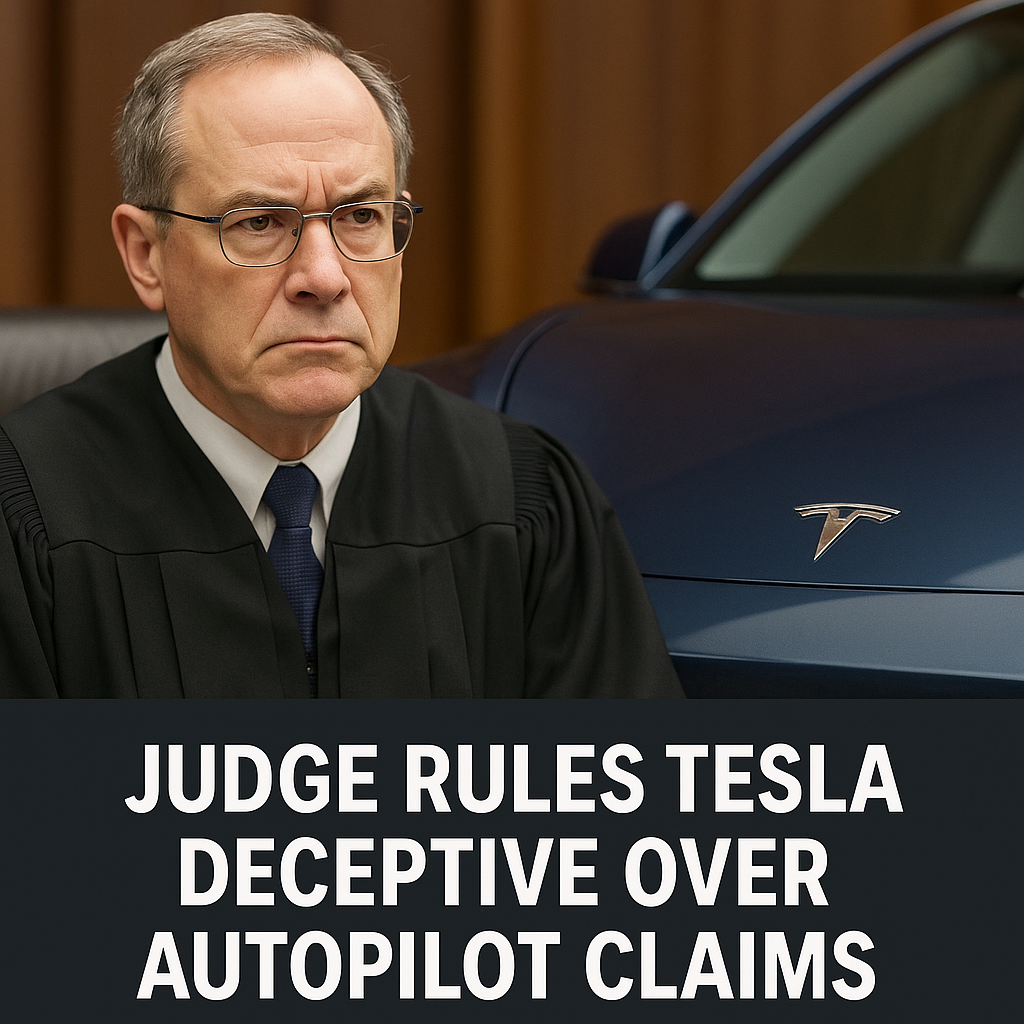
Judge says Tesla misled buyers on Autopilot and FSD
In April 2024 a U.S. district judge ruled that plaintiffs plausibly alleged Tesla engaged in deceptive marketing for its Autopilot and Full Self-Driving (FSD) features, allowing a high-profile false-advertising suit to proceed. The decision, issued in a federal court in California, concluded that marketing materials and product names could have created the impression that Teslas were capable of fully autonomous driving — a claim the judge found consumers could reasonably interpret as misleading.
Background: Autopilot, FSD and a long-running controversy
Tesla markets two controversial driver-assistance packages: Autopilot, a suite of features that includes adaptive cruise control and lane-keeping assist; and Full Self-Driving (FSD), a paid option the company has sold for thousands of dollars (at times advertised in the market for as much as about $15,000 and offered as a subscription around $199/month). Tesla’s website states explicitly that these systems are “driver assistance” technologies and “require active driver supervision,” language the company has used repeatedly amid criticism and regulatory scrutiny.
Despite Tesla’s disclaimers, plaintiffs in the class-action alleged that names, videos, and ads — including footage of hands-free driving and claims about the cars “driving you” — encouraged consumers to believe the systems were capable of full autonomy. The suit cites a body of public scrutiny: NHTSA investigations into numerous crashes involving Teslas operating on Autopilot, multiple state motor vehicle agencies probing Autopilot claims, and critical coverage from outlets including Consumer Reports and the Insurance Institute for Highway Safety (IIHS).
What the ruling means: legal and commercial implications
The judge’s decision does not yet determine liability or damages; it denies Tesla’s bid to dismiss the case and clears the way for discovery and potential class certification. For Tesla, that sequence raises several risks: costly litigation, potential statutory damages under state consumer protection laws, and injunctive relief that could require changes to advertising language, disclaimers, or even product naming.
Practically, the ruling amplifies pressure on Tesla’s longstanding marketing choices. Industry lawyers and consumer advocates have for years argued that terms like “Autopilot” and “Full Self-Driving” connote hands-off operation to lay users. If courts or regulators force clearer labeling, the company may face operational costs, slower adoption of its FSD beta program, or limits on how it markets OTA (over-the-air) feature rollouts.
Regulatory backdrop and safety concerns
The ruling arrives against an intensifying regulatory backdrop. The National Highway Traffic Safety Administration (NHTSA) has repeatedly investigated crashes involving Autopilot-equipped vehicles, and in recent years agencies have pushed for stricter oversight of advanced driver-assistance systems (ADAS) and clearer consumer-facing communications. Separately, state motor-vehicle regulators have scrutinized whether “Full Self-Driving” is an accurate descriptor for a system that requires continuous human attention.
Expert perspectives
Legal and safety experts say the judge’s decision is significant even if it stops short of a finding on the merits. A consumer-protection attorney who has worked on ADAS litigation told reporters the ruling signals courts are increasingly skeptical of marketing that blurs the line between assistance and autonomy. “This decision could set a template for other suits and for regulators seeking clearer disclosures,” the attorney said.
From Tesla’s perspective, the company has long maintained that its materials and owner manuals caution drivers to remain attentive. Tesla’s public documentation states Autopilot and FSD are not autonomous systems and that drivers must keep their hands on the wheel and be ready to intervene. Tesla declined to comment directly on the ruling beyond saying that its systems are designed to improve safety and that it intends to defend its products.
Analysis: what comes next
Next steps include discovery — depositions, internal documents, and marketing materials — and a likely fight over whether a nationwide class will be certified. Settlement is possible, but courts have also pushed for injunctive changes in tech-adjacent consumer cases, which could force Tesla to alter advertising, naming, or the way it demonstrates features to the public.
For the broader autonomous-vehicle industry, the decision is a reminder that product names and marketing matter. Startups and legacy automakers alike will watch closely: regulators and courts may increasingly insist on plain-language explanations of ADAS capabilities and limits to prevent consumer confusion.
Conclusion: a turning point for ADAS marketing
While this ruling does not end the dispute, it represents a noteworthy procedural win for plaintiffs and a reputational challenge for Tesla. As discovery unfolds, the case could influence not only Tesla’s messaging and potential remedies for owners but also wider industry practices around how driver-assistance technology is named, demonstrated and sold.
Internal linking opportunities: see our coverage of Tesla’s FSD beta program, NHTSA Autopilot investigations, and autonomous vehicle regulation for related reporting.
About the Author