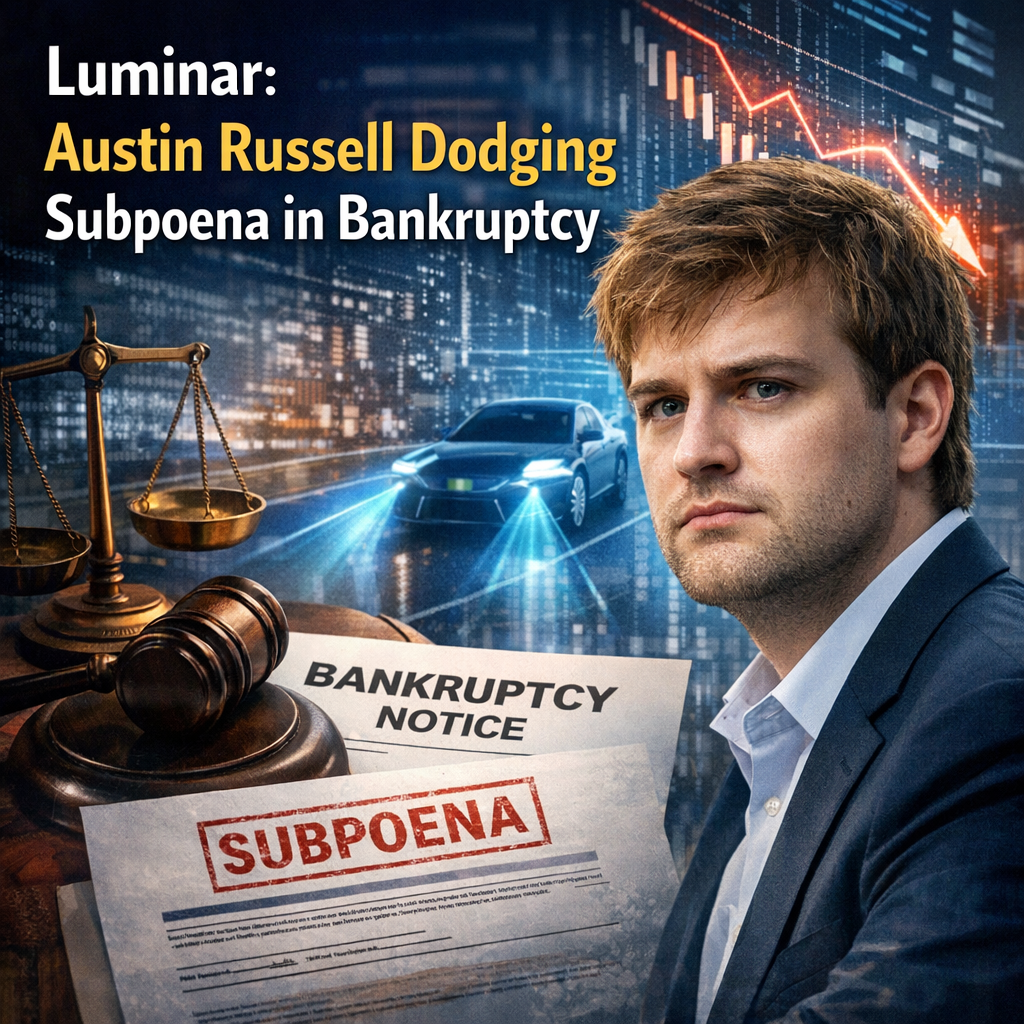
Luminar alleges founder Austin Russell failed to comply with subpoena
Luminar Technologies, the lidar maker that went public via a SPAC in 2020, said this week that founder and chief executive Austin Russell has not complied with a subpoena connected to a bankruptcy proceeding. The company characterized the issue as a failure to cooperate with investigatory steps tied to litigation linked to the bankruptcy, elevating tensions inside the company and prompting questions about legal exposure and governance.
What Luminar says and what is known
In a statement, Luminar said it had been seeking testimony and documents in connection with a bankruptcy-related matter and that efforts to secure compliance from Russell had been unsuccessful. The company did not publicly identify the debtor, the court, or the exact scope of the subpoena in its statement, and court records available to the public were limited at the time of reporting.
Austin Russell founded Luminar in 2012 and has led the company through product development and commercialization efforts for lidar sensors aimed at the automotive and autonomous-vehicle markets. Luminar remains a high-profile technology company in the sector, trading publicly under the ticker LAZR. The company has invested heavily in research and development and forged commercial relationships with automakers and suppliers as it scales production.
Why a subpoena in a bankruptcy case matters
Subpoenas in bankruptcy proceedings are often used to trace assets, analyze transactions, and obtain testimony from key players who might have information relevant to creditor claims or trustee investigations. When a subpoenaed party does not comply, the issuing party can seek relief from the bankruptcy court, including motions to compel, contempt proceedings, and sanctions.
Noncompliance can complicate the bankruptcy process and prolong litigation timelines. For a public company such as Luminar, unresolved disputes that implicate senior executives can also generate investor uncertainty and attract regulatory attention if the matter touches on disclosures or corporate controls.
Legal mechanics and potential remedies
Bankruptcy judges have broad authority to enforce subpoenas and can impose fines, order testimony under oath, or authorize other sanctions. Typical procedural steps include a motion to compel, a hearing on compliance, and, if necessary, contempt proceedings. The scope and timing of remedies depend on the court, the nature of the subpoena, and whether the noncompliance is willful or based on asserted privileges or other legal objections.
Context, background and company implications
Luminar’s rise since its founding in 2012 and public listing via a SPAC in 2020 put its leadership in the spotlight. Austin Russell has been a visible figure for the company, frequently cited in media coverage and investor materials. Allegations that a founder or CEO is not complying with legal process can prompt questions about internal controls, board oversight, and disclosure practices.
For investors, the practical concerns include potential legal costs, management distraction, and volatility in the share price if the situation escalates. For customers and partners, the concern is reputational risk and whether the dispute could affect product delivery or collaboration timelines.
Expert perspectives and industry analysis
Legal and bankruptcy practitioners say that cooperation with court-ordered discovery is a fundamental part of resolving bankruptcy disputes. Observers note that companies facing such allegations often pursue a dual path: seeking expedited judicial resolution while managing public messaging to reassure stakeholders.
Industry analysts add that, in capital-intensive hardware businesses like lidar, management continuity and clear governance matter to long-term strategic partnerships. Any contest between corporate leadership and legal processes can magnify scrutiny from creditors, insurers, and regulators.
What to watch next
Key developments to monitor include whether Luminar files a motion asking the court to compel compliance or obtain a ruling on the dispute; whether the bankruptcy court issues orders or sanctions; and whether Austin Russell or Luminar provide fuller disclosures to shareholders. The board’s response and any internal investigations or policy changes will also be material to investors.
At present, publicly available information is limited to Luminar’s announcement. Parties involved in the underlying bankruptcy case and the court will be the primary sources for definitive next steps. For market participants and observers, the immediate takeaway is that the dispute introduces legal and governance uncertainty that could have downstream consequences for Luminar’s operations and investor confidence.
Conclusion
Luminar’s assertion that its founder has not complied with a subpoena in a bankruptcy matter raises procedural and reputational questions for the company. While the legal mechanics for forcing compliance are well established, the speed and outcome of any court action will shape investor sentiment and influence how customers, partners, and regulators view the company during a critical period for lidar commercialization and corporate execution.
About the Author