Introduction
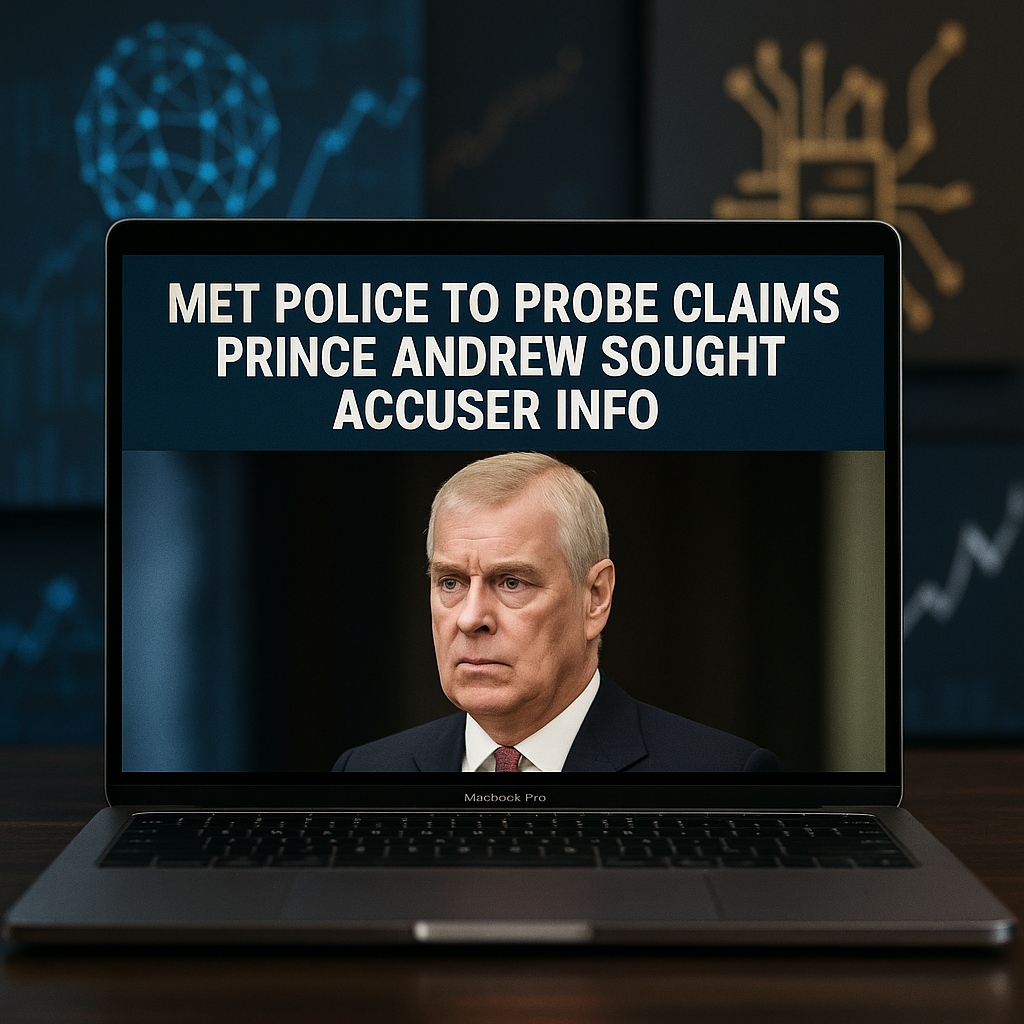
The Metropolitan Police said it will review reported claims that Prince Andrew sought information about his accuser, prompting renewed scrutiny of how high-profile investigations intersect with digital technology, data brokers and emerging startups. The move follows media reports and public interest in whether any new evidence exists that would warrant a criminal inquiry. The development has implications for digital forensics, AI-driven analysis, blockchain-based evidence chains and the wider legal and business ecosystems that support modern investigations.
Background and what’s reported
Background context is essential. Prince Andrew settled a civil claim in 2022 brought by Virginia Giuffre; he did not admit liability but agreed a financial settlement and publicly stepped back from official royal duties. Recent reports allege that third parties may have sought information about the accuser — claims the Metropolitan Police will now assess to determine if they give rise to fresh evidence or criminal offences.
The Met’s approach appears measured: reviewing whether the new material is actionable rather than immediately opening a formal criminal probe. That mirrors standard practice in high-profile cases where digital trails, overseas activity and large volumes of material require careful triage by specialist units.
Technology and digital forensics
This development highlights the central role of digital forensics. Investigations now routinely rely on data from social media platforms, phone records, cloud services and data brokers. Police digital units use forensic tools to preserve and authenticate evidence, and increasingly rely on AI to sift large datasets for relevant patterns. Startups offering e-discovery, automated metadata extraction and tamper-detection have seen demand surge as institutions seek to move faster while maintaining evidentiary integrity.
But technology also creates risks. AI-generated deepfakes, doctored documents and manipulated metadata complicate authenticity assessments. Digital forensics teams must combine manual expertise with machine-assisted analysis to detect synthetic content. This raises costs and creates opportunities for companies building robust provenance and verification tools.
Blockchain, chain-of-custody and provenance
Blockchain proponents argue distributed ledgers can strengthen chain-of-custody by time-stamping evidence and creating immutable audit logs. While blockchain won’t solve all authenticity issues, pilot projects in the legal tech and evidence-management sectors are attracting funding as courts and police explore tamper-resistant record-keeping. Startups that integrate cryptographic provenance with traditional forensics tools may be particularly well placed to win contracts as institutions prioritize digital resilience.
Startups, funding and commercial impact
High-profile inquiries tend to accelerate investment into adjacent tech sectors. Legaltech, cyber-forensics and OSINT (open-source intelligence) startups could see renewed interest from both public and private buyers. Investors are already backing firms that provide automated redaction, verifiable logging and AI-driven document review — capabilities that reduce investigative time and legal exposure.
However, the public sensitivity around data-gathering also drives regulatory scrutiny. Data brokers, surveillance-tech firms and certain AI tools face potential reputational risk if implicated in ethically dubious activities. That may push more startups to adopt stricter compliance frameworks, privacy-by-design and transparent governance to attract institutional customers.
Geopolitics and institutional trust
Beyond technology and commerce, the episode touches geopolitics and public trust. Investigations involving prominent figures can affect diplomatic relationships, media narratives and 국민 confidence in institutions. How the Met handles evidence — particularly digital evidence that crosses borders — will test international cooperation protocols and data-sharing agreements between law enforcement agencies.
Conclusion
The Metropolitan Police’s review of claims that Prince Andrew sought information about his accuser underscores how modern investigations are inseparable from technology. AI, digital forensics and even blockchain can both aid and complicate inquiries. For startups and investors, the situation represents both market opportunity and reputational risk. For the public and regulators, it is a reminder that ethical safeguards, transparent processes and robust technical verification are essential to maintaining trust when high-profile, digitally mediated claims arise.
About the Author