Microsoft flags new risks from Windows 11 AI agents
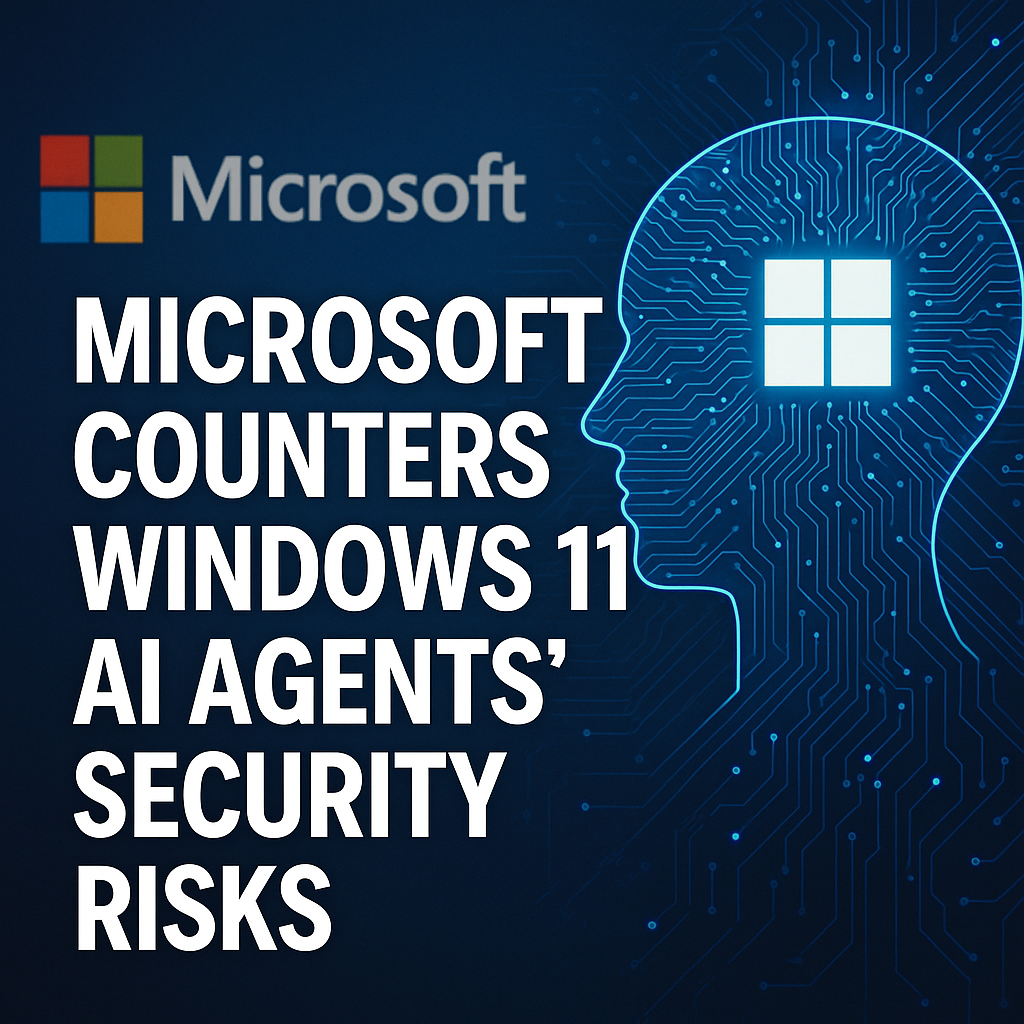
Microsoft has moved quickly to warn enterprise customers about what it calls “novel security risks” posed by autonomous AI agents running on Windows 11, responding to coverage by Ars Technica and other outlets. In guidance aimed at IT and security teams, the company outlined the kinds of threats that software agents — programs that can take actions on behalf of users — could present and recommended technical and policy controls to limit damage.
What Microsoft is worried about and why it matters
AI agents are software components that can orchestrate workflows, interact with web services, read and write files, and call APIs without constant human supervision. With Microsoft folding ever-more generative AI functionality into Windows — notably Windows Copilot and integrations with Microsoft 365 Copilot — enterprise environments face a new attack surface in which an agent can be used to automate data exfiltration, escalate privileges, or move laterally across networks.
Microsoft’s advisory (summarized in reporting by Ars Technica) warns that autonomous agents could abuse cached credentials, access tokens, or network services in ways traditional endpoint protections may not expect. The company urged organizations to treat agent-driven automation as a distinct class of risk, requiring controls beyond standard patching and perimeter defenses.
Key mitigations Microsoft recommends
The guidance stresses a layered approach: tighten identity and access, reduce attack surface, and beef up detection. Recommended controls include enforcing least privilege with Microsoft Entra ID (formerly Azure AD) and Conditional Access policies, shortening token lifetimes, using managed identity and secret-vaulting for automation, and applying Windows Defender for Endpoint for behavioral detection. Microsoft also suggests using Intune or Group Policy to restrict which applications and scripts can run, and combining AppLocker or Windows Defender Application Control (WDAC) with endpoint monitoring to detect unexpected agent behavior.
Network-level restrictions such as network segmentation, per-app proxying, and egress controls can limit an agent’s ability to reach attacker-controlled infrastructure. Logging and telemetry — including Microsoft Defender and Azure Monitor — were emphasized as critical for investigating agent-driven incidents.
Context: AI agents across the industry
AI agents are not unique to Microsoft. Open source frameworks like LangChain and commercial offerings such as Google’s and Anthropic’s agent toolkits are pushing similar capabilities into enterprise workflows. Security teams are grappling with how to secure automation that can browse, authenticate, and act autonomously. For organizations that adopted Windows 11 — first released in October 2021 — the addition of integrated AI features increases the urgency to revisit endpoint and identity controls.
Expert perspectives and industry reaction
Security analysts who follow enterprise risk say Microsoft’s advisory is a welcome, if overdue, acknowledgement that AI changes the attack model. Industry practitioners note that many traditional EDR (endpoint detection and response) tools rely on heuristics that assume human-driven actions; autonomous agents break those assumptions by generating high-volume, scripted, and context-aware activity.
Practical takeaways from analysts include re-evaluating automation runbooks, isolating agent execution in constrained environments, and auditing third-party agents before granting them access to sensitive data. Others warn that overly restrictive controls could stifle legitimate productivity gains from AI, making the balance between security and usability a commercial and operational challenge.
Implications for enterprises and vendors
The guidance signals that vendors and customers alike must design for an era where software agents are first-class actors in IT environments. For security vendors, that means improving telemetry around cross-application workflows, credential use, and API calls. For enterprises, it means updating risk assessments, hardening identity systems like Microsoft Entra, and ensuring that privileged access practices account for machine-driven activities.
Conclusion: Where things go from here
Microsoft’s advisory — and the broader industry conversation it reflects — is an early step in a longer process. As enterprises deploy more AI-powered assistants and automation, security teams will need new controls, monitoring strategies, and governance models to manage agent risk. Expect follow-on guidance from Microsoft and third-party vendors, more built-in agent controls in future Windows updates, and increased scrutiny of how agents handle secrets, tokens, and lateral-network operations.
Related topics to explore: Microsoft Entra ID conditional access, Defender for Endpoint, Windows Defender Application Control, Windows Copilot, AI agent frameworks, enterprise identity security.
About the Author