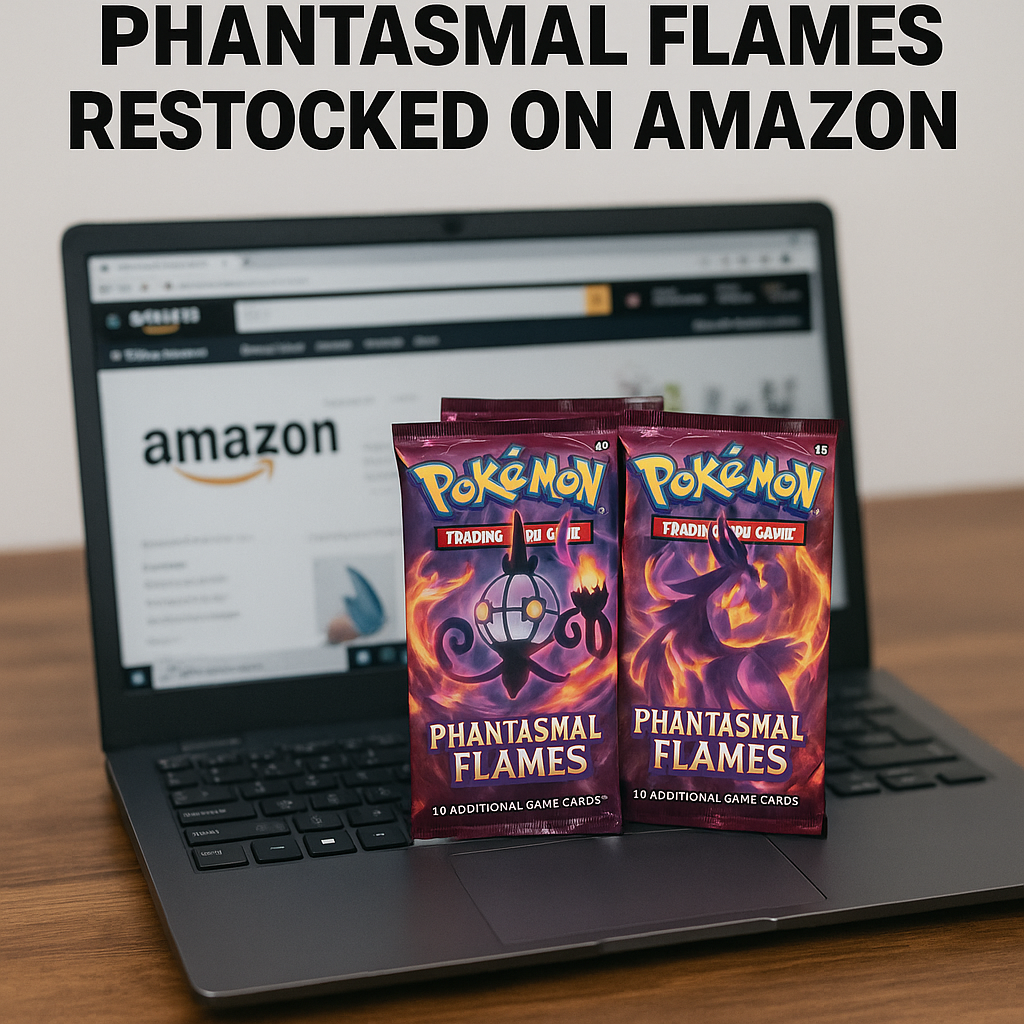
Amazon restocked Phantasmal Flames on launch day
Amazon briefly restocked the new Pokemon TCG “Phantasmal Flames” set on launch day, according to a GameSpot report. The restock — which appeared on Amazon’s storefront and sold through quickly — came as collectors and competitive players rushed to secure booster boxes and product bundles typically snapped up within minutes of availability.
GameSpot’s coverage noted that Amazon showed inventory for a limited window on the day of release before listings returned to “out of stock” or shifted to third-party sellers charging premiums. The quick sell-through mirrors the ongoing pattern for high-demand Pokémon TCG releases, where initial retailer allocations and online fulfillment windows often determine who gets product at manufacturer suggested retail price (MSRP).
Background: why Pokémon TCG restocks matter
The Pokémon Trading Card Game market has become a high-profile segment of the wider collectibles economy. New expansions — whether full sets, elite trainer boxes, or booster boxes — routinely generate intense demand from three overlapping groups: casual collectors, competitive players seeking new cards for decks, and speculators/resellers. When a major online retailer like Amazon shows inventory on launch day, it can temporarily ease pressure in the secondary market, but brief windows and buy programs often leave many buyers empty-handed.
Distribution for Pokémon products is coordinated by The Pokémon Company International and its licensed manufacturers, such as Creatures Inc. and often involves regional distribution partners. Launch-day availability depends on initial shipments to retailers, Amazon’s fulfillment allocation (including FBA stock), and how quickly listings are purchased or pulled by third-party merchants. Historically, expansions that introduce powerful or chase cards produce the fastest sellouts and steepest aftermarket markups.
Analysis: implications for collectors, retailers, and scalpers
A launch-day restock at Amazon has several implications:
- Pricing pressure: Brief Amazon availability can briefly lower aftermarket prices, but if supply remains tight, third-party listings on eBay and other marketplaces typically revert to premium pricing within hours.
- Retail dynamics: Amazon’s inventory windows are influenced by allocation strategy and warehouse logistics. When Amazon lists product for immediate sale rather than pre-order, it signals that some units have cleared distribution checkpoints and entered its fulfillment network.
- Scalper behavior: Bots and bulk-buying services focus on such windows. Retailers may implement purchase limits, CAPTCHA checks, and other anti-bot measures, but these are not foolproof.
For competitive players, the primary concern is access to sealed product to build and test decks; for collectors, it’s both collecting chase cards and sealed product for long-term value. For retailers — both brick-and-mortar and e-commerce — launch-day sellouts can mean increased heat on restock timing and the need to manage backorders and customer expectations.
Market context and recent trends
Over the last several years, Pokémon TCG releases have repeatedly demonstrated the volatility of collectible markets. Limited print runs for specific promo cards, chase holo-rare variants, and region-exclusive items drive scarcity. Meanwhile, major retailers such as Walmart, Target, Best Buy, and Amazon experiment with different distribution models: staggered drops, pre-orders, exclusive bundles, and in-store events. These strategies affect secondary-market trading volumes and price stability.
Expert perspectives
Industry observers say Amazon’s intermittent restocks are part of broader fulfillment challenges in collectibles. Analysts point to a combination of logistical constraints, high consumer demand, and the market for resold cards as drivers of the current environment. Many recommend that buyers monitor multiple channels (official retailers, local game stores, and verified pre-order programs) and set alerts on marketplaces to increase their odds of buying at MSRP during short availability windows.
Local game stores (LGS) remain important distribution points for serious players. LGS retailers often receive sealed product for tournaments or pre-release events, providing an alternative to online drops and supporting the organized-play ecosystem that keeps the TCG healthy.
Conclusion: what to watch next
The Amazon restock of Pokemon TCG Phantasmal Flames on launch day underscores persistent demand and supply friction in the trading-card market. Buyers should expect more brief online availability windows and continued aftermarket volatility until distribution scales to meet demand or policy changes curb bulk-buying. For ongoing coverage, readers can follow retailer restock updates, secondary-market price trackers, and official announcements from The Pokémon Company International. Related coverage includes our reporting on Pokémon TCG release strategies and tips for buying new card sets at MSRP.
About the Author