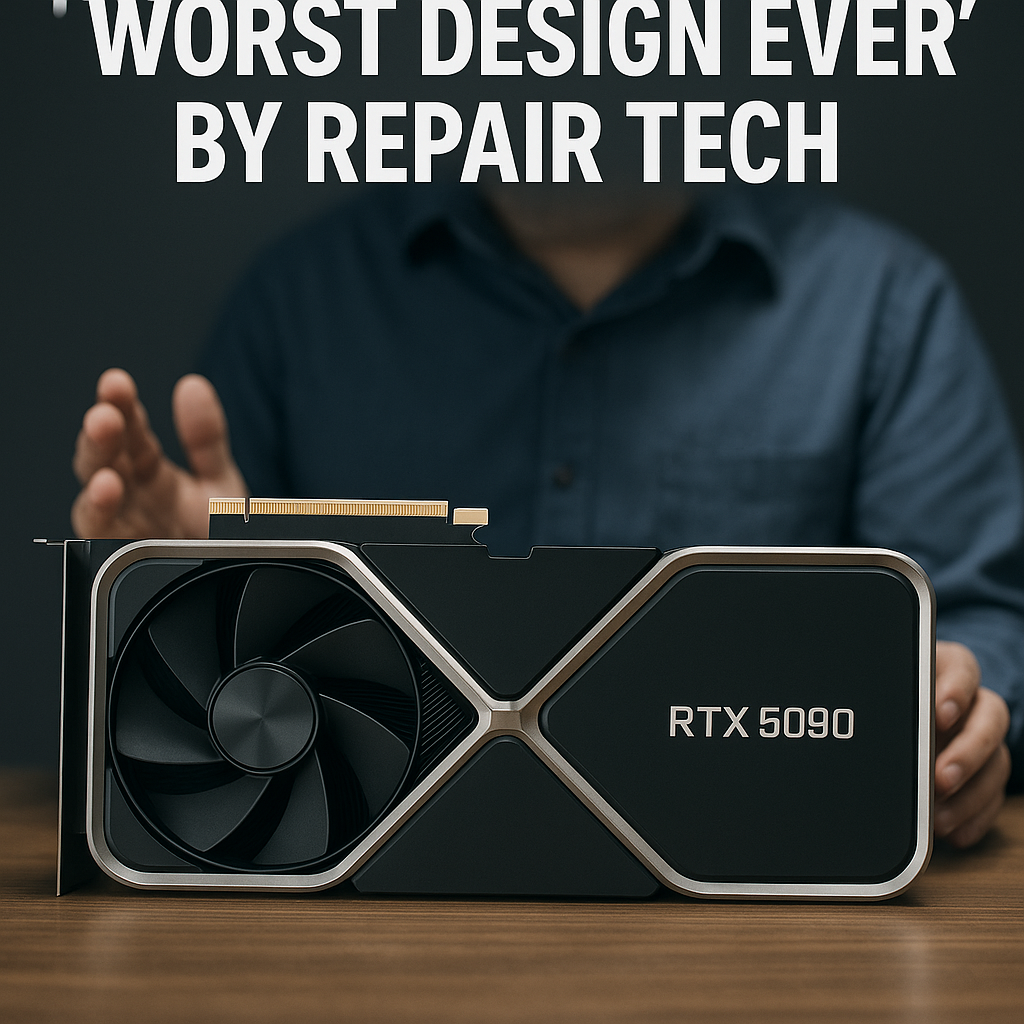
PC repair specialist slams NVIDIA RTX 5090 Founders Edition
Who: A PC repair specialist speaking to Wccftech. What: Called the NVIDIA RTX 5090 Founders Edition “one of the ‘worst designs ever'”. When & Where: In a Wccftech report published October 27, 2025. Why: Concerns cited around serviceability, modularity and cooling architecture that, according to the technician, complicate real-world repairs and returns.
What the specialist reported
In the Wccftech story, the unnamed repair technician highlighted specific serviceability issues: a dense, layered shroud and cooler assembly that requires extensive disassembly to access the PCB and VRMs, nonstandard fasteners, and a cooling layout that routes heat away from key components in ways the specialist called counterproductive. The technician told Wccftech the combination of these choices has made routine tasks—thermal-paste replacement, fan swaps and VRM diagnosis—far slower than previous Founders Edition cards.
Design criticism in context
Critiques of the RTX 5090 Founders Edition land on two fronts: thermal-management choices and maintenance complexity. Reviewer benchmarks showed the card hits high performance targets, but the repair technician’s perspective emphasizes post-sale costs and downtime. For small repair shops, increased labor time translates directly to higher bills for customers and longer turnaround windows—an important consideration in markets where warranties and in-warranty RMA lanes already strain logistics.
Industry reaction and market context
NVIDIA remains the dominant supplier of discrete GPUs, with industry trackers such as Jon Peddie Research estimating roughly 80% market share for NVIDIA-class products in recent discrete-GPU measurements. That dominance gives NVIDIA influence over ecosystem design norms; when a flagship Founders Edition takes a non-modular approach, many AIB partners and end-users pay close attention.
Independent hardware outlets — including TechPowerUp and Tom’s Hardware — have in past product cycles flagged trade-offs between compact reference designs and aftermarket serviceability. On social platforms such as Reddit’s r/hardware, community response to the Wccftech piece included concerns about warranty voiding, difficulty of component-level repairs, and long-term ownership costs.
Why serviceability matters for consumers and repair shops
Repair professionals calculate value differently than reviewers who only measure FPS and thermals. For repair shops, a design that adds 30–60 minutes to routine procedures (battery swaps, fan replacements, or VRM testing) reduces throughput and profitability. For enterprise buyers and enthusiast owners, increased difficulty in repairing a card can shorten effective lifetime or raise total cost of ownership if OEM repairs or full-RMA replacements become the only practical options.
Potential causes behind the design choices
Manufacturers sometimes prioritize acoustic performance, OEM supply-chain constraints, or a signature industrial aesthetic over modular repairability. The Founders Edition line is intended to showcase NVIDIA’s reference engineering and cooling concepts; however, that does not immunize it from criticism when the design makes maintenance impractical for repair shops and end-users.
Implications for NVIDIA and the GPU market
If repair professionals increasingly call out high-profile designs, OEMs could face pressure on several fronts: warranty logistics, public perception among enthusiast communities, and legislative trends in right-to-repair policy emerging globally. In 2024–2025, right-to-repair conversations intensified in the EU and U.S. states considering expanded consumer repair rights, and criticism of flagship products can accelerate those debates.
Expert insights and future outlook
While independent performance testing still places the RTX 5090 among the fastest consumer GPUs, the repair community’s criticism as reported by Wccftech underscores a growing tension between peak performance engineering and practical ownership realities. Industry analysts note that if consumer complaints and professional repair feedback mount, NVIDIA and AIB partners may pivot future Founders Edition releases toward easier servicing or provide clearer modular options for prosumer markets.
For customers deciding now, the practical takeaway is to weigh peak benchmarks against potential long-term serviceability: buyers who value easy field repairs and low repair-shop labor should consider AIB partner cards with more conventional, modular coolers or extended service programs.
About the Author