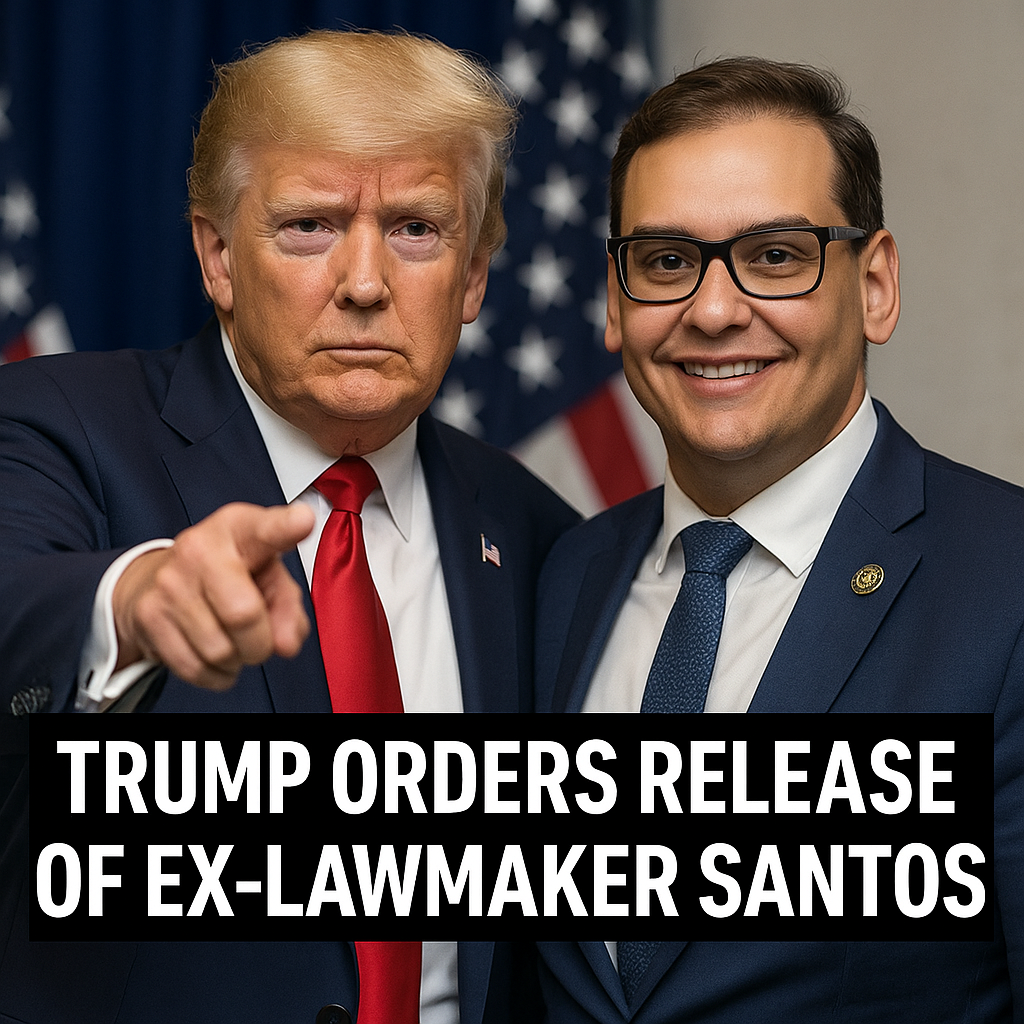
Reports emerged that former President Donald Trump has ordered the release of disgraced ex-lawmaker George Santos, prompting fast-moving debates about the scope of presidential clemency, the rule of law, and ripple effects across technology, startup funding and geopolitics. Trump was reported to have punctuated the move with the comment ‘Have a great life!’, a line that immediately fueled partisan outrage and media scrutiny.
Legal experts note that a president’s power to pardon or commute sentences is broad for federal convictions but does not extend to state charges. Santos, a former congressman who faced numerous criminal charges and ethics investigations during and after his tenure in office, has been at the center of controversy and legal scrutiny for years. If the reported order is a commutation or pardon for federal offenses, it would be legally binding for those convictions; any state-level matters would remain unaffected.
Beyond the courtroom, the decision has practical implications for industries that prize regulatory certainty. Technology companies and startups rely on predictable governance and consistent enforcement of laws. A high-profile clemency that appears politically motivated may introduce new reputational and compliance risks for founders and investors, who could face increased investor scrutiny over political ties and governance standards.
Startups in regulated spaces — fintech, healthtech and AI — are especially sensitive. Venture investors often evaluate legal and geopolitical tail risks when underwriting deals; an erosion of norms around legal accountability can translate into higher perceived risk premiums. Some limited partners and institutional VCs could rethink allocations to early-stage funds if geopolitical instability and institutional unpredictability are seen as escalation risks for portfolio companies.
AI and legaltech players are already positioned to capitalize on heightened demand for judicial transparency and case analysis. Companies using machine learning to surface patterns in pardons, sentencing disparities and legal outcomes could see increased interest from non-profits, defense attorneys and policy shops seeking data-driven advocacy. Similarly, blockchain projects focused on immutable public recordkeeping are likely to highlight use cases that underscore resistance to discretionary alteration of legal history, lending a new narrative to decentralized governance messaging.
Cryptocurrency and blockchain communities reacted with a split tenor: some observers welcomed any move that supports political allies, while others warned that concentrated political influence over legal outcomes undermines long-term institutional trust — a foundational principle often invoked by proponents of decentralized finance.
Geopolitically, allies and adversaries will watch closely. Democracies that criticize U.S. democratic backsliding may use the episode to press arguments about selective justice, while competitors could frame it as evidence of unpredictability in U.S. governance. In markets where rule of law is a key consideration for foreign direct investment, such headlines can feed into sovereign risk assessments and influence multinational corporate strategies.
For the broader civic-tech and philanthropic ecosystem, the move may spur renewed funding interest in organizations that provide legal defense support, transparency tools, and public-interest AI. Foundations and donors focused on rule-of-law initiatives could accelerate grants to legal aid, watchdogs and civic-data startups to document and respond to evolving clemency patterns.
Conclusion: Whether permanent or temporary, the reported release of George Santos is more than a headline. It underscores how high-level political actions cascade into the technology sector, investor sentiment, and geopolitical narratives. For startups and investors, the message is clear: legal and political tail risks must be integrated more formally into diligence processes, while startups in AI, blockchain and legaltech may find both new demand and responsibility to improve transparency around consequential legal decisions.
About the Author