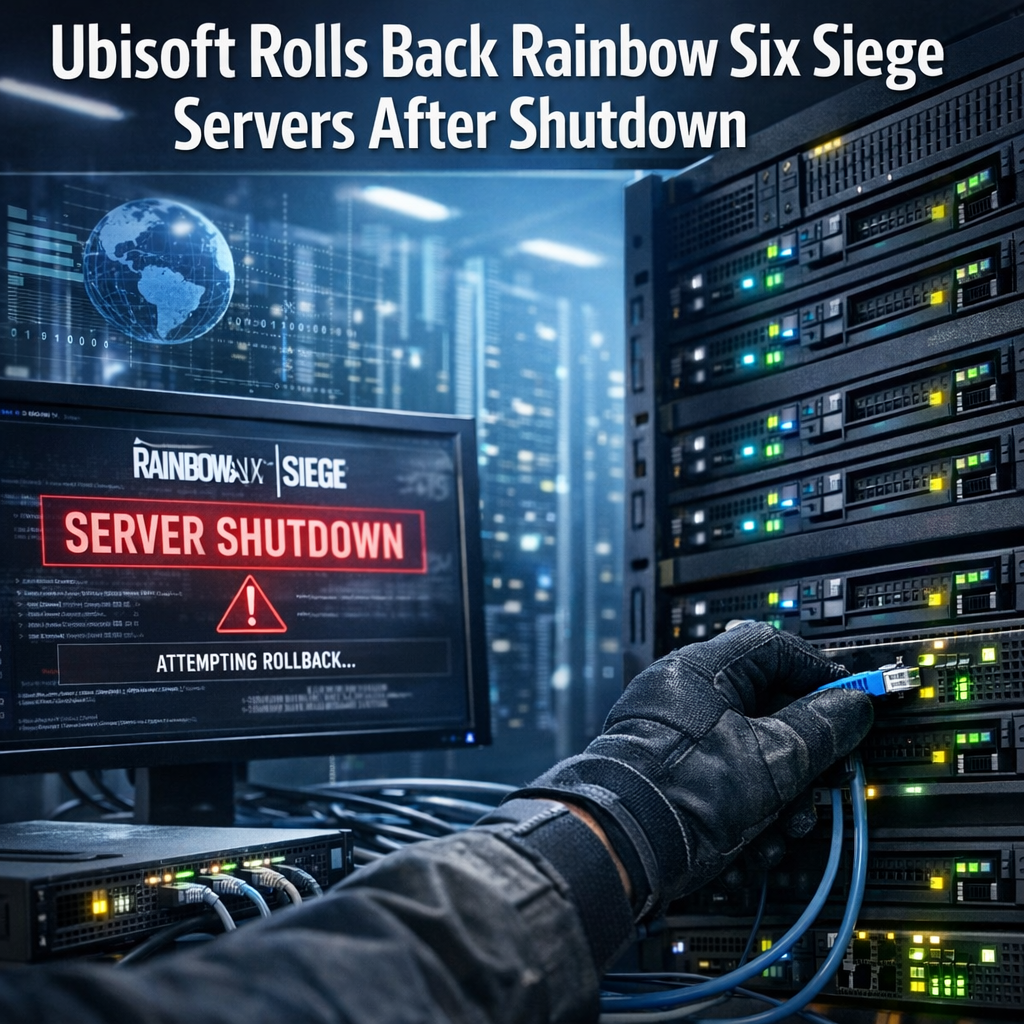
Ubisoft pulls back server changes after forced outage
Ubisoft announced it is rolling back recent server-side changes to Tom Clancy’s Rainbow Six Siege after an enforced shutdown of online services disrupted play for many users. The publisher said the action aims to restore stability and investigate the root cause of the outage — a move that highlights the fragility of live-service operations for major multiplayer titles.
What happened and why it matters
According to community posts and official support updates, players experienced connection failures and match-making errors during the outage, which led Ubisoft to take Siege services offline temporarily. The company followed with a server rollback, reverting server state and recent updates to a previous stable configuration. Rollbacks are common emergency measures in LiveOps to remove a problematic change from production while teams debug the issue.
For Rainbow Six Siege, a perennial competitive shooter with a long-running season model and an active esports ecosystem, server integrity is critical. Even a short interruption can affect ranked ladders, ongoing tournaments, and third-party betting markets, and it often triggers a wave of player frustration on forums and social platforms.
Background on Rainbow Six Siege and Ubisoft LiveOps
Released in 2015, Rainbow Six Siege operates as a long-term LiveOps title with seasonal content drops, balance patches, and regular backend updates. Ubisoft has invested heavily in keeping Siege current with weapons tuning, operator reworks, maps, and anti-cheat measures, and those ongoing changes run against a complex server and matchmaking infrastructure.
Maintaining consistent service across console and PC platforms, regional data centers, and cross-play systems requires tight orchestration. Server-side errors can stem from many sources: a faulty configuration pushed during a maintenance window, a database migration gone wrong, load-related failures, or external factors such as DDoS attacks. Ubisoft’s decision to rollback indicates the company judged the safest path was to return to a previously known-good state while engineers isolate and remediate the cause.
Technical and operational implications
Rolling back servers avoids shipping additional hotfixes that might introduce further instability. However, it can also undo legitimate fixes or content that had been scheduled to go live. For competitive players and tournament organizers, rollbacks present scheduling headaches and integrity concerns, since progress made during the affected window may be lost or require manual reconciliation.
From an operations standpoint, the incident will likely prompt post-mortem analysis focusing on deployment safeguards, rollback automation, and the robustness of Canary and A/B rollout practices that gate changes to a subset of regions before full deployment.
Community reaction and industry perspective
Players took to official forums and third-party sites to report match failures, disrupted ranked games, and lost progression. Community managers typically handle surge communication during outages, and a clear incident timeline is important to rebuild trust. Ubisoft’s transparency about the rollback and its next steps will factor heavily in how the player base responds.
Industry observers note that live-service publishers face a trade-off between frequent updates that keep games fresh and the operational risk each change carries. One senior games-industry analyst, speaking on condition of anonymity, said the incident is a reminder that the operational playbook for multiplayer titles must prioritize safe deployment pipelines as much as feature velocity.
What players and stakeholders should watch for
Players should monitor Ubisoft’s official channels and in-game notices for confirmation that services are restored and for any compensation policies, such as account credits or in-game currency, that Ubisoft may offer to affected users. Tournament organizers and esports leagues will be looking for formal statements about match validity, rescheduling procedures, and any data integrity guarantees.
For Ubisoft, the immediate priorities are restoring full service, completing a root-cause analysis, and communicating results and mitigations to the community. Longer term, expect renewed attention to deployment hygiene, increased use of staging and canary environments, and possibly public-facing status dashboards that provide more granular outage information.
Conclusion: short-term recovery, long-term scrutiny
The rollback is a pragmatic step to get Rainbow Six Siege back online quickly and limit damage. While not uncommon in the industry, such incidents invite scrutiny of LiveOps practices and can erode player confidence if communication is poor. Ubisoft’s handling of follow-up investigations and its willingness to share lessons learned will determine whether this outage becomes an operational blip or a catalyst for procedural change across its multiplayer operations.
About the Author