The moment: who, what, when and why
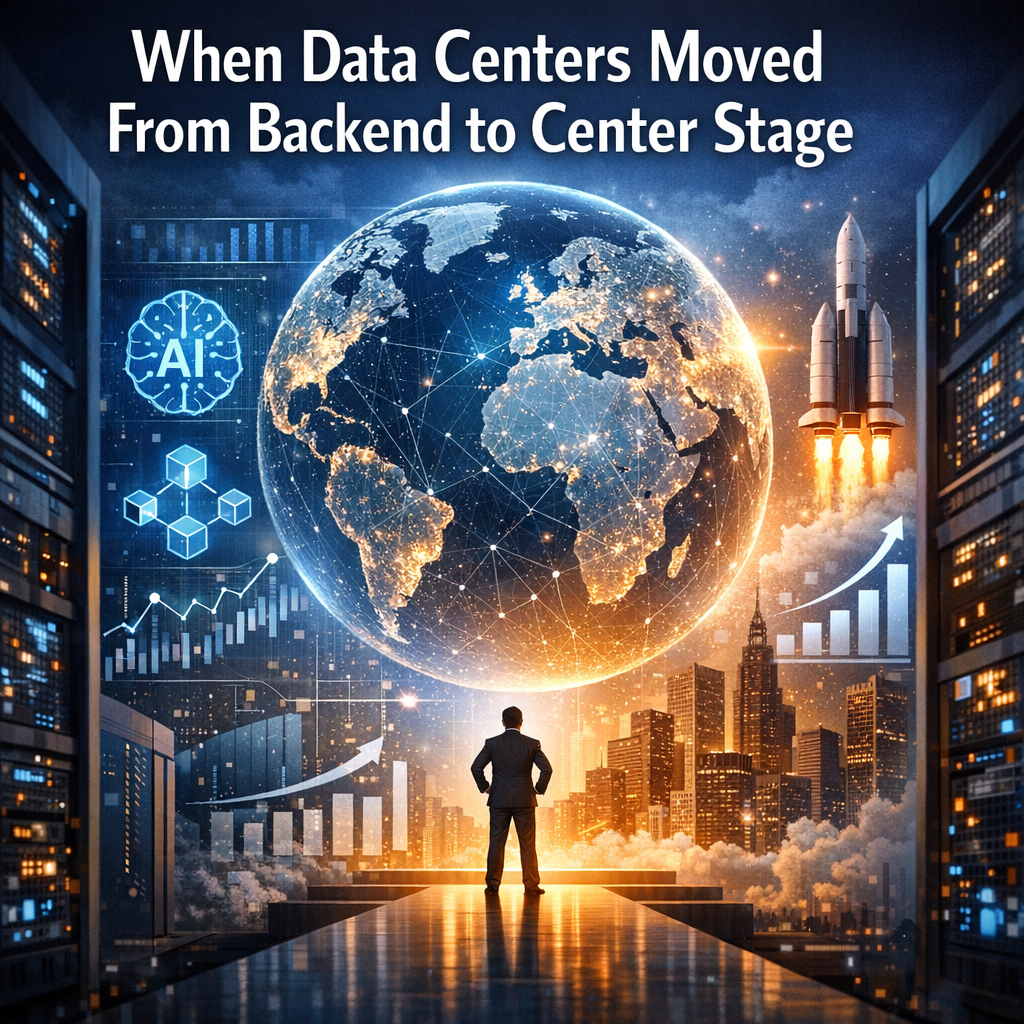
Between 2022 and 2024, data centers stopped being anonymous utility backrooms and became strategic, visible assets for cloud providers, colocation companies and enterprises. The era was catalyzed by a trio of forces: the sudden mainstreaming of generative AI after OpenAI’s ChatGPT debut in November 2022 and GPT‑4 in March 2023; a sustained surge in cloud adoption by enterprises across AWS, Microsoft Azure and Google Cloud; and intensifying pressure on power, cooling and real‑estate capacity. The result was a global data‑center boom that pulled previously invisible infrastructure into the headlines and boardrooms.
Background: demand, hardware and geopolitics
Generative AI workloads — large language models and high‑throughput inference — are extremely compute‑ and energy‑intensive. The industry pivot that began with Nvidia’s Hopper architecture and H100 GPUs in 2022 accelerated capital spending on specialized racks and accelerators through 2023 and 2024. Cloud vendors, hyperscalers and AI startups all raced to secure GPU inventory, chassis designs and power contracts, pushing colocation providers such as Equinix and Digital Realty to accelerate expansions and open new campuses.
At the same time, public policy and geopolitics shaped where and how capacity could be deployed. The U.S. CHIPS and Science Act (signed in August 2022) signaled a broader push to onshore semiconductor and advanced computing supply chains. Export controls and trade tensions also influenced customers’ choices about regional deployments and redundancy, reinforcing the strategic value of geographically distributed data centers.
How operators and suppliers adapted
Operators responded on several fronts. First, real estate and electrical capacity planning moved from five‑year to rolling 12‑ to 24‑month horizons. Second, cooling technologies — from direct liquid cooling to immersion systems — transitioned from pilot projects to production deployments to handle higher rack densities. Third, procurement practices modernized: firms negotiated long‑term power purchase agreements (PPAs), invested in on‑site renewable generation, and rethought substation and grid interconnect timelines with utilities.
Hardware and software also evolved. Companies like Nvidia, AMD and Intel delivered denser accelerators; server OEMs redesigned racks for higher power delivery; and software teams built orchestration layers to schedule GPUs efficiently across tenants and workloads. Edge computing and regional data centers grew in importance, too, as companies balanced latency requirements against concentrated hyperscale builds.
Operational and environmental implications
These shifts created operational headaches and environmental debates. Grid strain in certain regions prompted close cooperation between data‑center developers and utilities to upgrade substations and reinforce transmission. Sustainability teams pressed for improvements in power usage effectiveness (PUE) and for contracts tied to renewable energy. Some operators announced multi‑year renewable deals; others invested in on‑site battery storage to smooth peaks and participate in demand response programs.
Expert perspectives
“Data centers are no longer a line item in facilities budgets — they’re strategic assets that determine competitive advantage,” said a senior data‑center executive who asked not to be named. “Securing power, chips and the right cooling architecture is now a market differentiator.”
An energy analyst added, “The grid has become the new bottleneck for AI scale. It’s not just about getting GPUs — it’s about getting the megawatts to feed them while meeting sustainability commitments.”
Industry observers also note a redistribution of value up the stack. “Colocation and interconnect providers are capturing more of the economic upside as enterprises seek turnkey, high‑density pods rather than building from scratch,” said an independent cloud infrastructure consultant.
What this means going forward
For enterprises, the window to build bespoke hyperscale campuses is narrowing; many will opt for hybrid strategies that mix cloud, colocation and regional edge sites. For suppliers, the boom creates opportunity — and risk. Longer lead times for chips and components can bottleneck deployments, while rising expectations for sustainability and resiliency raise capital intensity and operational complexity.
Policy makers will be pulled into the conversation, too. Expect continued scrutiny of permitting, grid upgrades and incentives to align energy policy with digital infrastructure needs. Markets where permitting is faster and power is reliable will see disproportionate growth.
The three‑year span from late 2022 through 2024 made clear that data centers are no longer merely a backend necessity. They are a core part of corporate strategy, public policy and the tech economy — and their visibility will only grow as AI and cloud compute demand continue to scale.
About the Author